The Document That Reveals More Than Its Authors Intended
There is a particular kind of political document that tells you more about its authors' frustrations than about their governing philosophy. The DSA's 2024 program document — the foundation for what has been popularly labeled the "Workers Deserve More!" platform — is precisely that kind of text. Read charitably, it is an urgent cry from a movement that believes existing institutions are structurally incapable of delivering the economic justice Americans workers genuinely need. Read critically, it proposes solutions that, if enacted, would almost certainly make the underlying problems worse. Read historically, it repeats mistakes so well-documented that political scientists have constructed entire taxonomies around them.
This deep dive does not aim simply to attack or defend the DSA's proposals. The existing analysis of this platform has too often collapsed into tribal shouting — either dismissed as dangerous radicalism or celebrated as necessary revolutionary thought. Both reactions avoid the harder work: actually understanding what the platform says, what intellectual tradition it emerges from, why intelligent people find it compelling, why other intelligent people find it terrifying, and what it reveals about the state of American democratic theory in the early twenty-first century.
To do that work properly requires going substantially further than the surface-level constitutional objections that dominate existing commentary. We need to examine the specific mechanics of unicameral parliamentary supremacy as a governing model, trace the intellectual genealogy of the DSA's institutional critique, grapple seriously with the empirical evidence on single-chamber versus bicameral governance outcomes, explore the paradox at the heart of majoritarian democracy, and — crucially — ask the question that critics of the platform rarely ask: What would American politics actually look like if the proposal somehow succeeded?
That last question is not hypothetical idle speculation. It is the lens through which the entire platform must be evaluated.
Understanding the Actual Document: What "Workers Deserve More!" Actually Proposes

Before any serious analysis can proceed, the platform deserves careful reading rather than caricature. The DSA's 2024 Program document — available in full through Scribd and various DSA chapter websites — is a lengthy, multi-part document that spans electoral strategy, labor organizing, housing policy, anti-imperialism, and governance reform. The governance reform section, which has attracted the most controversy, proposes what the document frames as "democratic centralization": eliminating the Senate, making the Supreme Court accountable to congressional majority, and concentrating federal legislative authority in the House of Representatives.
The specific language is important. The platform does not simply say "abolish the Senate." It frames the Senate as a structurally anti-democratic institution because of how representation is allocated — Wyoming's roughly 580,000 residents receive the same two Senate votes as California's nearly 40 million. This is not a fringe observation. It is a mainstream critique in political science literature. Scholars including Frances Lee, George Edwards, and Sanford Levinson have made versions of this argument in peer-reviewed journals and widely-read books. Levinson's Our Undemocratic Constitution (2006), published by Oxford University Press, makes precisely this critique with considerable academic rigor.
The platform also proposes eliminating lifetime tenure for Supreme Court justices, making them removable by a congressional supermajority. Again, this is not a uniquely radical position — term limits and democratic accountability for the Court have been proposed by mainstream constitutional scholars including Erwin Chemerinsky (dean of UC Berkeley's law school) and supported in various forms by President Biden's Supreme Court reform commission in 2021.
What makes the DSA document genuinely radical is not these individual critiques — many of which are defensible — but the synthesis: abolishing the Senate plus subordinating the Court plus concentrating power in a single chamber, all simultaneously. Each piece in isolation has mainstream academic supporters. The combination produces something qualitatively different from any of its parts.
This combinatorial radicalism is what demands serious analysis, and it is what the existing commentary has largely failed to provide.
The Intellectual Genealogy: Where These Ideas Actually Come From

The DSA's governance proposals do not emerge from nowhere. They have a rich, contested, and genuinely interesting intellectual history that runs through multiple traditions of democratic theory.
The Westminster Model and Its Genuine Strengths
The most intellectually serious version of the DSA's argument draws on the Westminster parliamentary tradition, specifically as theorized in the work of British constitutional scholars. The United Kingdom, Canada, Australia, New Zealand, and many other functioning democracies operate with systems in which parliament is supreme, the executive derives its legitimacy from the legislative majority, and judicial review is limited or nonexistent.
New Zealand provides the most direct precedent. In 1950, New Zealand abolished its upper chamber, the Legislative Council, and has operated as a unicameral democracy ever since. Far from collapsing into tyranny, New Zealand has consistently ranked among the world's most democratic nations in Freedom House indices, the Economist Intelligence Unit's Democracy Index, and V-Dem (Varieties of Democracy) measures. It passed universal healthcare, robust worker protections, and progressive environmental legislation. It has peacefully transferred power between left and right governments for over seventy years.
The DSA's platform, read generously, is asking: why can't America have what New Zealand has?
This is a genuinely fair question, and it deserves a more sophisticated answer than "because Madison said so."
The political scientist Arend Lijphart, in his landmark comparative work Patterns of Democracy (1999, updated 2012), developed a framework distinguishing "majoritarian" from "consensus" democracies. Majoritarian systems — characterized by unicameralism, single-party government, and concentrated executive power — produce faster, more decisive policy-making. Consensus systems — characterized by bicameralism, coalition government, and distributed power — produce more incremental, compromise-driven policy-making. Lijphart's empirical finding, widely cited but also widely contested, was that neither model is unambiguously superior; they produce different trade-offs. Consensus democracies tend to perform better on indicators like income equality and environmental policy. Majoritarian democracies sometimes perform better on policy responsiveness to electoral mandates.
The DSA wants America to move toward the majoritarian end of this spectrum. This is a coherent political-theoretical position. What the platform conspicuously fails to address is why the American context — with its deep regional, racial, and political heterogeneity, its lack of strong proportional representation, and its history of majority faction abuse — makes the majoritarian model a particularly high-risk choice.
The Marxist Critique of Bourgeois Institutions
Alongside the comparative-politics argument, the DSA platform draws on a Marxist tradition that views constitutional structures not as neutral frameworks for democratic competition but as superstructural arrangements that reflect and preserve the interests of dominant economic classes. This argument runs from Marx's own analysis of the French constitution of 1848 — which he dissected in The Eighteenth Brumaire of Louis Bonaparte (1852) — through Antonio Gramsci's concept of hegemony, through the twentieth-century state theory of Ralph Miliband and Nicos Poulantzas.
In this tradition, the Senate's malapportionment is not an unfortunate design flaw but a deliberate mechanism for preserving the interests of property-owning rural elites against urban working-class majorities. The lifetime-appointed Supreme Court is not an independent guardian of constitutional principles but an instrument of ruling-class ideology dressed in judicial robes. The separation of powers is not a safeguard against tyranny but a set of veto points that systematically advantages the status quo — and since the status quo serves capital, these veto points serve capital.
This is a coherent analytical framework. It is also, importantly, an empirically testable one. Political scientists Keith Poole and Howard Rosenthal's NOMINATE scores, which track Congressional voting patterns over two centuries, do show that legislative outcomes in the American system systematically favor higher-income constituents. Martin Gilens' Affluence and Influence: Economic Inequality and Political Power in America (2012, Princeton University Press) provides extensive empirical evidence that American policy outcomes correspond much more closely to the preferences of wealthy constituents than to those of median or lower-income citizens. Larry Bartels' Unequal Democracy reaches similar conclusions.
So the Marxist-influenced critique embedded in the DSA platform is not simply ideological rhetoric. It engages with real empirical findings about the distributive outcomes of American institutional design.
Where it becomes analytically problematic is in the leap from "these institutions produce bad outcomes" to "concentrating power in a single chamber will produce better outcomes." That leap assumes that a unicameral Congress, freed from the checks of the Senate and Court, would systematically represent working-class interests better than the current system. But that assumption requires ignoring a very large body of evidence about what legislatures actually do when external constraints are removed.
The Paradox at the Heart of Majoritarian Democracy
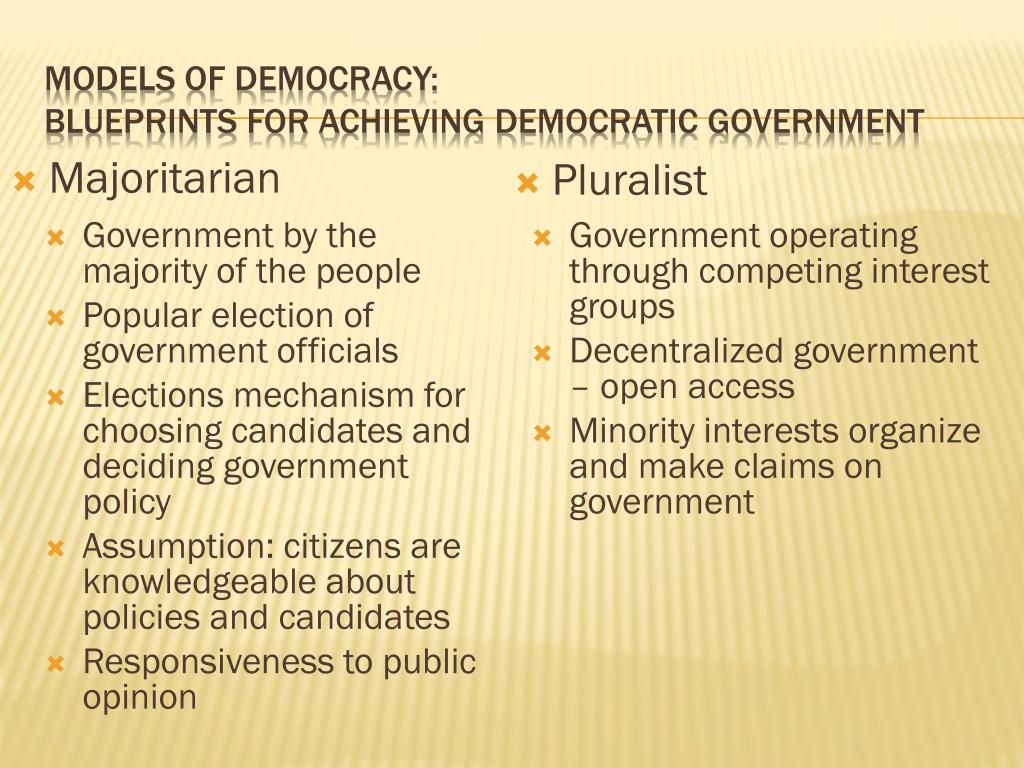
The most intellectually challenging dimension of the "Workers Deserve More!" proposal — and the one most underexplored in existing commentary — is what political theorists call the paradox of democratic majoritarianism. This paradox runs as follows: the very mechanisms designed to make government more responsive to majority will can simultaneously make it more vulnerable to capture by well-organized minorities who operate within the legislature.
This is not a conservative talking point. It was articulated most forcefully by Roberto Michels, a socialist political sociologist, in his 1911 work Political Parties, where he developed what he called "the Iron Law of Oligarchy." Michels observed that all large organizations — including democratic ones, including socialist ones — inevitably develop self-serving leadership elites who pursue institutional self-preservation over the organization's stated goals. The mechanism is structural: large organizations require professional administrators, professional administrators develop interests distinct from membership interests, and eventually the administrators dominate the organization's direction.
Applied to a unicameral supreme legislature: eliminating the Senate removes a veto player that, yes, often blocks progressive legislation. But it simultaneously removes a friction point that forces coalition-building, public deliberation, and multiple rounds of scrutiny for any proposed legislation. A unicameral chamber with supreme authority becomes vulnerable to the very concentration of professional political power that the DSA ostensibly opposes.
The Venezuelan case is instructive here, and deserves more careful analysis than the existing article's brief mention provides. The Chavista project under Hugo Chávez genuinely began as a democratizing movement. The 1999 Bolivarian Constitution was drafted through a constituent assembly with extensive popular participation. It included robust worker protections, expanded social rights, and progressive social spending. What it also included — and this is the crucial institutional detail — was the concentration of legislative authority in a unicameral National Assembly combined with a powerful executive presidency. When Chávez's movement captured both institutions, the structural checks that might have constrained overreach were insufficient. When Nicolás Maduro needed to govern against a hostile legislature, the concentration of power that had been designed to serve popular interests became the instrument of authoritarian consolidation.
The DSA would respond — and this response deserves engagement rather than dismissal — that the Venezuelan failure reflects specific contextual factors: oil-dependent economic structure, U.S. imperial interference, and the retention of presidential power rather than genuine parliamentary supremacy. These are not dishonest points. But they illustrate the fragility of institutional design arguments that rely heavily on "trust us, this time will be different."
The Senate Abolition Argument: More Nuanced Than Either Side Admits
The case for abolishing the Senate is stronger than conservative critics acknowledge, and weaker than DSA advocates admit. Examining it seriously requires separating several distinct arguments that are routinely conflated.
The Malapportionment Problem Is Real
The representational distortion in the Senate is not a small quirk. According to calculations based on 2020 Census data, the 26 least populous states, which hold a majority of Senate seats (52 out of 100), represent approximately 18% of the American population. This means that a Senate majority can be constructed representing roughly one-sixth of the country's population. When paired with the filibuster — which the DSA's platform also opposes — the result is a chamber where a minority representing a small fraction of Americans can indefinitely block legislation.
Political scientist Frances Lee, in Insecure Majorities (2016), documents how this structural imbalance has produced systematic distortions in federal spending allocation, tax policy, and regulatory outcomes. Rural states, disproportionately represented in the Senate, receive substantially more federal spending per capita than urban states with equivalent need profiles. This is not an abstract democratic concern — it has concrete distributive consequences.
But the Senate Is Not Simply Anti-Worker
Here is where the DSA's analysis becomes selectively historical. The Senate has not been a uniformly anti-progressive institution. The Civil Rights Act of 1964 required Senate passage. Social Security's initial passage in 1935 went through a Senate with substantial Southern conservative representation. The Clean Air Act, the Clean Water Act, the Americans with Disabilities Act — all passed through the Senate. More relevantly, the Senate has sometimes been the institution that protected progressive legislation from House-initiated rollbacks.
Moreover, the malapportionment that benefits rural states does not map neatly onto class lines in the way the DSA's framing implies. Rural working-class voters exist. Rural states include significant populations of low-income workers, agricultural laborers, and resource-extraction workers whose interests are not identical to corporate agriculture or mining interests. The DSA's equation of "Senate" with "ruling class interests" and "House" with "working class interests" is analytically crude.
The Filibuster Is the Proximate Problem, Not the Senate's Existence
This point is critical and largely absent from the platform's analysis: the most acute anti-democratic features of the contemporary Senate are not constitutionally mandated. The filibuster is a Senate rule, not a constitutional provision. It has been modified multiple times in recent history — most significantly by Harry Reid's invocation of the "nuclear option" in 2013 for executive and judicial nominations, extended to Supreme Court nominations by Mitch McConnell in 2017.
A Senate without the filibuster, subject to simple-majority cloture, would be a substantially different institution. The progressive legislation blocked in recent years — the John Lewis Voting Rights Act, the PRO Act (labor organizing reform), the Build Back Better climate provisions — was blocked primarily by the filibuster, not by Senate malapportionment. Eliminating the filibuster, which requires only a Senate majority vote, would be transformative without requiring constitutional amendment.
This matters because it suggests that the DSA's constitutional maximalism — abolish the Senate entirely — may actually be strategically counterproductive. It directs political energy toward an impossible constitutional objective when a more achievable procedural change would address the proximate problem.
Judicial Subordination: The Most Constitutionally Dangerous Proposal
The proposal to make the Supreme Court subordinate to congressional majorities — removable by supermajority vote, with its constitutional interpretations overridable by legislation — is the most constitutionally radical element of the platform and deserves sustained analysis separate from the Senate question.
The Counter-Majoritarian Difficulty
American constitutional scholars have long wrestled with what Alexander Bickel called "the counter-majoritarian difficulty" in his 1962 work The Least Dangerous Branch. The problem is this: how do we justify a court of nine unelected justices, serving lifetime terms, having the final word on what democratically enacted legislation means and whether it survives? This is a genuine democratic legitimacy problem. The DSA is not wrong to identify it.
But the counter-majoritarian difficulty has a counter: majority rule without constitutional constraint is also a democratic legitimacy problem. The history of American majority-rule legislation includes the Chinese Exclusion Act, the internment of Japanese-Americans, the systematic disenfranchisement of Black voters across the post-Reconstruction South, and the criminalization of dissent under the Espionage Act of 1917. These were popular measures — some of them overwhelmingly popular — that violated the fundamental rights of minorities precisely because the institutional constraint of judicial review was either absent or captured.
The DSA's response to this counter would presumably invoke the platform's other provisions: expanded civil rights protections, anti-discrimination statutes, constitutional amendments enshrining worker rights. But these provisions raise the question of who enforces them if not an independent court. A legislature-subordinated court has no mechanism to enforce constitutional rights against the legislative majority that controls its existence. The logic is circular.
International Comparisons Are More Mixed Than Advocates Admit
DSA advocates point to the United Kingdom's system, where Parliament is supreme and there is no judicial review of primary legislation, as evidence that independent courts are not necessary for democracy to function. The UK's Human Rights Act (1998) and its relationship with the European Court of Human Rights (prior to Brexit) provided some external constraint, but Parliament can and has passed legislation that violates human rights norms.
What this actually demonstrates is that Parliamentary supremacy works reasonably well when combined with strong political culture, independent civil society, a free press, coalition politics that distributes power, and external accountability mechanisms. Remove those contextual factors and Parliamentary supremacy becomes something different.
More relevantly, the countries that have most recently made their courts subordinate to legislative majorities — Hungary under Viktor Orbán, Poland under the Law and Justice party, Turkey under Erdoğan — have done so precisely as a mechanism for authoritarian consolidation. The DSA would argue these are right-wing governments doing bad things, and a progressive unicameral Congress would do good things. But institutional design cannot be evaluated solely based on who currently controls the institution. It must be evaluated based on what it enables under any controlling coalition.
The Constitutional Amendment Impossibility: Strategic Vision or Political Theater?
The existing article briefly mentions that passing the DSA's governance reforms would require constitutional amendments, which are extraordinarily difficult. This deserves much deeper examination, because the impossibility of the proposal is not just a practical obstacle — it is analytically revealing about what the proposal actually is.
The Article V Gauntlet
Article V of the Constitution specifies two paths for amendment: a two-thirds vote of both chambers of Congress followed by ratification by three-fourths (38) of state legislatures, or a constitutional convention called by two-thirds of state legislatures followed by ratification by three-fourths. Either path for abolishing the Senate faces a unique additional obstacle: Article V itself specifies that "no State, without its Consent, shall be deprived of its equal Suffrage in the Senate." This provision is itself unamendable by ordinary Article V procedure — it requires the consent of every state.
This means that abolishing the Senate is not merely politically difficult. It is constitutionally impossible under current Article V procedures without unanimous state consent. Wyoming and North Dakota will not consent to their own disproportionate power being eliminated. This is not a contingent political reality that might change; it is a structural feature of the amendment process that was deliberately designed to make Senate abolition impossible.
What Does It Mean to Propose the Impossible?
Political scientists and rhetoricians distinguish between what they call "constitutive" and "regulative" political speech. Regulative speech aims at practical outcomes — passing legislation, winning elections. Constitutive speech aims at identity formation, agenda-setting, and the articulation of values independent of immediate practical feasibility.
The DSA's governance reform proposals are clearly constitutive rather than regulative. They are not seriously intended as legislative blueprints; they are statements about what a just democratic system would look like. As such, they serve several functions simultaneously:
- Legitimation of grievance: By pointing to the Senate's structural anti-democratic features, the platform validates the frustration of progressive activists who have watched popular policies blocked by Senate minorities.
- Coalition identity formation: Radical programmatic demands serve as loyalty tests and identity markers within movements. Signing onto an impossible demand signals genuine commitment rather than pragmatic accommodation.
- Overton Window shifting: Advocating for Senate abolition may make somewhat less radical proposals — filibuster elimination, Supreme Court expansion, statehood for DC and Puerto Rico — seem moderate by comparison.
- Internal movement competition: Within the DSA and the broader left, the boldness of one's program signals one's position in the ideological hierarchy. More radical demands confer status.
None of these functions require the proposal to be practically achievable. But they also mean that the proposal's political significance lies almost entirely in its symbolic and rhetorical dimensions rather than its governance dimensions — which raises the question of whether the governance analysis it offers deserves serious engagement or should be evaluated primarily as political messaging.
The honest answer is: both.
Who Actually Benefits? The Political Economy of Congressional Power Concentration
The existing article gestures toward the question of who actually benefits from concentrated congressional power, but the analysis is underdeveloped. A rigorous political economy analysis requires examining what we know empirically about how concentrated legislative power distributes benefits.
Concentrated Power and Organized Interests
A fundamental insight of public choice theory — developed by economists James Buchanan (Nobel Prize, 1986), Gordon Tullock, and Mancur Olson — is that concentrated, well-organized interests systematically outperform diffuse, poorly-organized interests in lobbying legislatures, regardless of the legislature's formal structure. This "logic of collective action," as Olson termed it in his 1965 book of the same name, predicts that a supreme unicameral Congress would be at least as vulnerable to capture by organized interests as the current bicameral system — and potentially more so, because the elimination of veto players reduces the number of access points that competing interests must capture.
In the current system, a corporation seeking favorable legislation must navigate multiple veto points: House committee, House floor, Senate committee, Senate floor, presidential signature, and potential judicial review. Each veto point is a site where opposing interests can intervene. Eliminating several of these veto points does not simply accelerate progressive legislation — it accelerates all legislation, including legislation favorable to organized corporate interests.
The AFL-CIO and SEIU have substantial lobbying operations, but they are consistently outspent by the Chamber of Commerce, the Business Roundtable, and industry-specific trade associations. In a legislative environment with fewer friction points, the advantage of financial lobbying superiority becomes more decisive, not less. The Koch network's model — blanket support for candidates across hundreds of legislative races combined with massive direct lobbying — is ideally suited to a unicameral, parliamentary-style legislature where controlling a majority means controlling everything.
The Racial Justice Dimension
The DSA's platform frames its proposals in part through a racial justice lens, arguing that Senate malapportionment disadvantages urban communities of color. This is partially true — urban-heavy states like California, New York, Illinois, and Texas have substantially larger non-white populations than rural-heavy states like Wyoming, Montana, and Idaho.
But the relationship between institutional structure and racial justice is considerably more complex. Constitutional scholars including Derrick Bell and Lani Guinier have argued that majority rule itself — even in properly-apportioned, unicameral systems — systematically disadvantages racial minorities when voting is racially polarized. Guinier's concept of "authentic representation," developed in The Tyranny of the Majority (1994), argues that genuine democratic inclusion requires not just proportional representation but structural mechanisms that prevent permanent majority coalitions from consistently ignoring minority interests.
The Supreme Court's role in enforcing the Voting Rights Act, striking down discriminatory electoral practices, and protecting minority voting rights — however inconsistently and imperfectly — represents precisely the kind of constitutional constraint on majority power that protects racial minorities. A Court subordinated to congressional majorities loses this protective function at the moment it is most needed: when the congressional majority has incentives to ignore minority interests.
Cross-Domain Connections: What Systems Theory Tells Us About Institutional Design
One of the most underexplored dimensions of the governance reform debate is what systems theory and complexity science tell us about institutional design. This cross-domain perspective offers insights neither traditional constitutional law nor political theory typically provides.
Redundancy, Robustness, and Institutional Resilience
In complex systems engineering, redundancy is not inefficiency — it is resilience. Systems with multiple redundant components fail more gracefully than optimized, single-path systems. A power grid with multiple transmission paths survives the failure of individual nodes; a single high-capacity transmission line fails catastrophically when it fails at all.
The American constitutional system's apparent inefficiency — multiple veto players, separated powers, countermajoritarian courts — is, from a systems perspective, a form of institutional redundancy. It makes routine policy-making slower and more difficult, but it also means that the failure of any single institutional component does not cascade into system-wide failure.
The DSA's proposal is essentially an institutional optimization: eliminate the redundant components (Senate, independent judiciary) and streamline the system for efficient policy-making. Systems engineers would recognize this as a classic optimization trap — you gain efficiency under normal operating conditions and lose resilience under stress conditions.
The stress condition that matters most in democratic governance is democratic backsliding — the gradual or rapid replacement of democratic norms with authoritarian ones. Political scientists Steven Levitsky and Lucan Way's research on "competitive authoritarianism," documented in Competitive Authoritarianism: Hybrid Regimes After the Cold War (2010), shows that democratic backsliding almost always works through existing institutions rather than against them. The autocrat does not typically overthrow the legislature; they capture it, then use its supremacy to eliminate remaining constraints.
A supreme unicameral legislature, in systems terms, has eliminated its own circuit breakers.
Network Effects and Information Processing
A less-discussed dimension of bicameral versus unicameral governance involves information processing. Political scientists have modeled legislative chambers as information-aggregating institutions — they process the preferences and knowledge of diverse constituencies into collective decisions. Multiple chambers with different representative bases aggregate different information sets, and the requirement for both chambers to agree functions as a form of error-correction.
This is directly analogous to ensemble methods in machine learning, where multiple weaker models that aggregate to a single decision systematically outperform single complex models on out-of-sample predictions. The intuition is the same: diverse error structures cancel out when aggregated; correlated errors in a single model compound.
A unicameral legislature eliminates this institutional diversity. It makes the legislature's information-processing and decision-making dependent on a single institutional culture, a single set of incentives, and a single information aggregation mechanism. Under favorable conditions, this is more efficient. Under adverse conditions — when the legislature is systematically misinformed, captured, or operating on ideologically distorted preferences — there is no institutional correction mechanism.
The Labor Economics Disconnect: What Workers Actually Need
Setting aside constitutional and institutional debates entirely, it is worth asking a purely empirical question: would the DSA's proposed governance changes actually produce better outcomes for working-class Americans? The existing article dismisses this as unclear, but we can be more specific.
The Policy-Institution Mismatch
The policies that would most materially improve working-class economic outcomes are relatively well-identified in labor economics literature: higher minimum wages, stronger collective bargaining rights, universal health insurance, paid family and medical leave, affordable childcare, expanded Earned Income Tax Credit, and housing affordability measures. These are not radical proposals — they exist in comparable form in most wealthy democracies.
The empirical evidence on their effectiveness is substantial. Arindrajit Dube's research on minimum wage increases shows minimal employment effects and significant wage gains for low-income workers. Lawrence Katz and Alan Krueger's foundational research on the New Jersey-Pennsylvania natural experiment established this finding decades ago. Universal health coverage's labor market benefits — including reduced "job lock," increased entrepreneurship, and improved health outcomes in low-income populations — are well-documented in comparative international data.
None of these policies require abolishing the Senate. All of them have, at various points, had majority support in the House, would have had majority support in a filibuster-free Senate, and would have survived presidential veto in recent administrations. The primary institutional obstacle to their passage has been the Senate filibuster, not Senate existence, and the primary political obstacle has been the Democratic Party's reluctance to eliminate the filibuster.
This creates an uncomfortable implication: the DSA's maximalist constitutional radicalism may actually provide cover for Democratic institutional conservatism. By making the demand "abolish the Senate," the DSA allows moderate Democrats to position themselves as reasonable reformers while blocking filibuster elimination — the actually achievable change that would unlock most of the progressive policy agenda.
Union Density and the Real Labor Crisis
The DSA's platform correctly identifies the collapse of union density as a central driver of American working-class economic deterioration. Union density has fallen from approximately 35% of the private sector workforce in the 1950s to under 6% today. The correlation between this collapse and rising income inequality is strong, well-documented, and supported by theoretical mechanisms — unions both directly raise wages for members and generate wage spillovers to non-union workers in unionized industries.
But the restoration of union density does not primarily require constitutional reform. It requires passage of the Protecting the Right to Organize (PRO) Act, which passed the House in 2021 and was blocked by the Senate filibuster. It requires National Labor Relations Board enforcement, which is an executive-branch function. It requires sectoral bargaining arrangements, which can be implemented through statute.
Again, the proximate obstacle is the filibuster, not bicameralism, not the Senate's existence, not the Supreme Court's independence.
The mismatch between the DSA's diagnosis (constitutional structure) and its prescription (constitutional overhaul) and the actual pathways to improving worker outcomes (statutory reform, regulatory enforcement, filibuster elimination) represents the platform's most significant analytical failure.
The DSA as a Political Organization: Internal Tensions and Contradictions
Understanding the "Workers Deserve More!" platform requires understanding the DSA not just as a vehicle for political ideas but as an organization with its own internal dynamics, factional tensions, and strategic disputes.
A Movement in Tension With Itself
The DSA's membership grew explosively following the 2016 Bernie Sanders campaign, expanding from roughly 8,000 members in 2016 to over 90,000 by 2019 — a more than ten-fold increase in three years. This rapid growth brought together activists with substantially different political orientations: electoralists focused on winning offices within the Democratic Party, anti-capitalists seeking revolutionary transformation, labor organizers focused on workplace organizing independent of electoral politics, and single-issue activists on housing, climate, and criminal justice.
The "Workers Deserve More!" platform is a product of internal DSA coalition politics as much as it is a coherent governance vision. The maximalist constitutional proposals serve partly to satisfy the revolutionary-socialist faction that views electoral participation with suspicion and demands programmatic radicalism as a price of their engagement. The labor organizing emphasis satisfies the movement-socialist faction. The electoral focus on winning DSA-endorsed candidates satisfies the electoralist faction.
This coalition dynamic explains some of the platform's internal inconsistencies. It proposes abolishing the Senate while simultaneously planning to run DSA candidates for Senate races. It advocates for concentration of power in Congress while expressing suspicion of existing congressional institutions. It calls for transformative constitutional change while organizing primarily within the existing electoral framework.
The "Dirty Break" Debate
Within DSA strategic circles, there has been sustained debate about what is called the "dirty break" — the question of when and whether the DSA should formally separate from the Democratic Party and run as an independent political force. This debate directly shapes how the governance platform should be understood.
If the DSA is building toward an independent political identity, the maximalist platform serves as a differentiating marker — a set of demands that no Democratic mainstream politician would adopt, clearly distinguishing DSA candidates from standard progressives. If the DSA remains embedded in Democratic Party politics, the same platform becomes a negotiating position — an extreme opening bid in a political bargaining process.
These are fundamentally different strategic logics, and the "Workers Deserve More!" platform is ambiguous about which one it serves. This ambiguity is not accidental; it is the product of an organization that has not resolved its own strategic contradictions.
Madison, Federalist No. 47, and What the Founders Actually Feared
The existing article cites Madison's Federalist No. 47 warning about the accumulation of powers. But engaging seriously with the Federalist Papers requires confronting what Madison and his colleagues were actually worried about — and it is not what either liberal or conservative commentators typically emphasize.
The Founders' Primary Fear Was Faction, Not Government Per Se
Madison's most sophisticated analysis of institutional design appears not in Federalist No. 47 but in Federalist No. 10, where he develops his theory of faction. The primary threat Madison identified was not government tyranny in the abstract but the capture of government by a self-interested faction — a group that pursues its own interests at the expense of the common good and the rights of minorities.
Madison's solution in Federalist No. 10 is counterintuitive and often misunderstood. He argues that the solution to faction is more scale — a larger, more diverse republic rather than a smaller, more homogeneous one. In a large republic with many diverse interests, no single faction is likely to constitute a majority, forcing coalition-building and compromise. The extended republic theory is essentially an argument for structural pluralism built into the political system's demography.
What Madison could not anticipate — and what subsequent American political development has made clear — is that the demographic diversity of a large republic does not automatically prevent factional capture if the institutional structure allows well-organized minorities to exercise disproportionate power. The party system, which Madison deeply feared, became precisely the factional organization mechanism he worried about. And the party system operates most efficiently not in a large, diverse republic but in a geographically sorted, partisan electorate — exactly what contemporary America has become.
This means that the Madisonian argument against the DSA's platform is more complex than simply citing checks and balances. The underlying Madisonian concern — preventing factional tyranny — requires engaging with contemporary empirical political science on how factions actually operate in twenty-first century American politics.
The Anti-Federalists Were Not Wrong
A less-cited but highly relevant body of founding-era thought is the Anti-Federalist tradition — Brutus, the Federal Farmer, Centinel — which argued against the Constitution's concentration of power in a national government and predicted that the Supreme Court would eventually become an instrument of elite power rather than popular sovereignty. This tradition has historically been claimed by both libertarian right (states' rights, limited federal power) and communitarian left (local democracy, participatory governance). The DSA's critique of constitutional structure has more in common with Anti-Federalist populism than it does with Madisonian republicanism, but the platform rarely acknowledges this genealogy.
The Anti-Federalists' prediction that an unaccountable federal judiciary would serve elite interests has substantial empirical support in the historical record. The Court's protection of property rights against labor regulation from the 1890s through the 1930s — the Lochner era — is the most straightforward example, but the pattern recurs throughout constitutional history. The DSA's judicial critique is, in this respect, historically grounded.
Current Research Frontiers and Open Questions
The scholarly literature on democratic institutional design is not settled. Several active research frontiers are directly relevant to evaluating the DSA's proposals.
Democratic Backsliding Research
The most active area in contemporary comparative politics is the study of democratic backsliding — the gradual erosion of democratic norms and institutions. Scholars including Levitsky and Ziblatt (How Democracies Die, 2018), Mounk (The People vs. Democracy, 2018), and Runciman (How Democracy Ends, 2018) have identified institutional concentration of power as a primary mechanism of backsliding. Their research suggests that the DSA's proposals would increase America's democratic backsliding risk substantially, regardless of the ideological direction in which they are initially enacted.
The research finding that is most uncomfortable for the DSA is this: democratic backsliding under left-wing governments and democratic backsliding under right-wing governments use identical institutional mechanisms. The difference between Venezuela's Bolivarian Revolution and Hungary's Orbánization is one of ideological direction, not institutional pathway. Both followed the same sequence: electoral victory, institutional concentration, subordination of independent judiciary, elimination of opposition veto points.
Deliberative Democracy Theory
A growing body of research on deliberative democracy — associated with scholars including Jürgen Habermas, James Fishkin, and Hélène Landemore — offers a different kind of critique of both the current American system and the DSA's proposal. Deliberative democrats argue that the legitimacy of democratic decisions depends not just on who holds the majority but on the quality of the deliberative process through which decisions are reached. A system in which legislation is rushed through a supreme unicameral legislature without meaningful public deliberation, minority input, or iterative revision is not more democratic simply because it is more majoritarian.
Fishkin's work on deliberative polling — empirical experiments in which representative samples of citizens are given structured opportunities to deliberate on policy questions — consistently shows that informed deliberation shifts public opinion in more nuanced, less polarized directions than survey opinion. The institutional implication is that slowing down legislation and forcing multiple rounds of deliberative scrutiny can produce more legitimate, more durable, and paradoxically more popular outcomes than rapid majoritarian passage.
Proportional Representation as an Alternative Path
Perhaps the most important current debate in American electoral reform circles concerns proportional representation — specifically, the multi-member district systems used in most European democracies. Political scientists Lee Drutman (Breaking the Two-Party Doom Loop, 2020), Katharine Gehl, and Michael Porter (The Politics Industry, 2020) have argued that the single-member district, winner-take-all electoral system is the primary driver of American political pathologies — polarization, extremism, non-responsiveness to median voter preferences.
Crucially, proportional representation achieves many of the goals the DSA's platform pursues — stronger representation of working-class interests, reduced corporate capture, greater policy responsiveness — without the democratic risks of institutional concentration. A Congress elected by proportional representation in multi-member districts would look substantially different from the current Congress without abolishing the Senate, subordinating the courts, or triggering the democratic backsliding risks identified in the comparative politics literature.
The DSA's platform does not engage seriously with proportional representation as an alternative to its governance proposals. This omission is intellectually significant — it suggests that the governance reform proposals are motivated as much by the symbolic politics of radical demand-making as by careful analysis of what would actually improve democratic representation.
The Platform's Genuine Contributions: What Defenders Get Right
Fair analysis requires acknowledging what the "Workers Deserve More!" platform gets right, and where its critique is not just politically useful but analytically sound.
The platform is correct that the American constitutional system systematically distorts representation in ways that favor sparsely populated, predominantly white, predominantly rural states over densely populated, more diverse, primarily urban ones. This is not a political preference claim; it is a structural fact about the Electoral College, Senate apportionment, and the geographic distribution of partisan preferences.
It is correct that the Supreme Court's recent decisions — Dobbs v. Jackson Women's Health Organization (2022), Students for Fair Admissions v. Harvard (2023), West Virginia v. EPA (2022) — represent a rightward shift in constitutional interpretation that conflicts with majority public opinion on multiple significant policy questions. The counter-majoritarian difficulty is not an abstraction; it is a concrete feature of current American governance.
It is correct that the filibuster has become a near-universal veto on progressive legislation even when Democrats hold Senate majorities. The traditional justification for the filibuster — protecting deliberative debate, forcing consensus-building — has been thoroughly undermined by its routine use as a procedural weapon.
And it is correct that the American working class has experienced four decades of stagnating real wages, rising insecurity, declining union representation, and worsening health outcomes relative to peer nations, while those at the top of the income distribution have experienced extraordinary wealth accumulation. This is a genuine democratic failure, and it demands serious institutional response.
The DSA's error is not in its diagnosis. Its diagnosis is, on multiple dimensions, well-supported by empirical evidence. Its error is in its prescription — proposing solutions that would increase the very institutional concentration and fragility that produced the crisis, while not engaging seriously with the actually achievable reforms (filibuster elimination, PRO Act passage, proportional representation, Supreme Court term limits, DC and Puerto Rico statehood) that would address the documented problems without generating new catastrophic risks.
Conclusion: What the Platform Really Reveals
"Workers Deserve More!" is a document that reveals the DSA's genuine and in many ways justified rage at a political system that has consistently failed the people it claims to represent. It is a document that accurately identifies structural features of American democracy that produce anti-democratic outcomes. And it is a document that proposes solutions so structurally dangerous that, if enacted by any government — progressive or otherwise — they would likely produce outcomes far worse than those they claim to remedy.
The deepest problem with the platform is not that it is too radical. Political history is full of reforms that seemed radical at the time and proved wise in practice. Social Security was called socialism. The minimum wage was called tyranny. The Civil Rights Act was called unconstitutional.
The deepest problem is that the platform is radical in the wrong direction. Rather than distributing power more widely — through proportional representation, direct democracy initiatives, municipal empowerment, expanded civic participation — it concentrates power more narrowly, in a single legislative chamber, without the checks that protect against the institutional capture by faction that Madison rightly feared and that modern comparative politics research has documented extensively.
The workers who deserve more — and they genuinely do — deserve a political platform whose institutional proposals are as rigorous and empirically grounded as its economic diagnosis. That platform has not yet been written. The "Workers Deserve More!" document is a passionate, flawed, revealing, and in the end insufficient beginning of that conversation, not its conclusion.
The conversation it demands — about what democratic institutions actually serve democratic values, about how constitutional structure shapes distributive outcomes, about what forms of institutional redundancy protect minority rights without enabling oligarchic veto — is one of the most important conversations American politics can have. The DSA deserves credit for forcing it, even if their answers are more cautionary tale than governing blueprint.
References and Further Reading
Primary Sources and Platform Documents - DSA 2024 Program Document, available via Scribd and lvdsa.org - James Madison, Federalist No. 10 and No. 47 (1788) - Karl Marx, The Eighteenth Brumaire of Louis Bonaparte (1852)
Constitutional Theory - Sanford Levinson, Our Undemocratic Constitution (Oxford University Press, 2006) - Alexander Bickel, The Least Dangerous Branch (Bobbs-Merrill, 1962) - Lani Guinier, The Tyranny of the Majority (Free Press, 1994)
Comparative Democratic Theory - Arend Lijphart, Patterns of Democracy (Yale University Press, 1999; 2nd ed. 2012) - Steven Levitsky and Lucan Way, Competitive Authoritarianism (Cambridge University Press, 2010) - Steven Levitsky and Daniel Ziblatt, How Democracies Die (Crown, 2018)
Political Economy and Inequality - Martin Gilens, Affluence and Influence (Princeton University Press, 2012) - Larry Bartels, Unequal Democracy (Princeton University Press, 2008) - Mancur Olson, The Logic of Collective Action (Harvard University Press, 1965)
Electoral Reform - Lee Drutman, Breaking the Two-Party Doom Loop (Oxford University Press, 2020) - Frances Lee, Insecure Majorities (University of Chicago Press, 2016)
Labor Economics - Arindrajit Dube, research on minimum wage effects (UC Santa Cruz and NBER working papers) - Lawrence Katz and Alan Krueger, "The Effect of the Minimum Wage on the Fast-Food Industry" (1994)
Organizational Theory - Roberto Michels, Political Parties (1911; English translation Free Press, 1962) - James Buchanan and Gordon Tullock, The Calculus of Consent (University of Michigan Press, 1962)