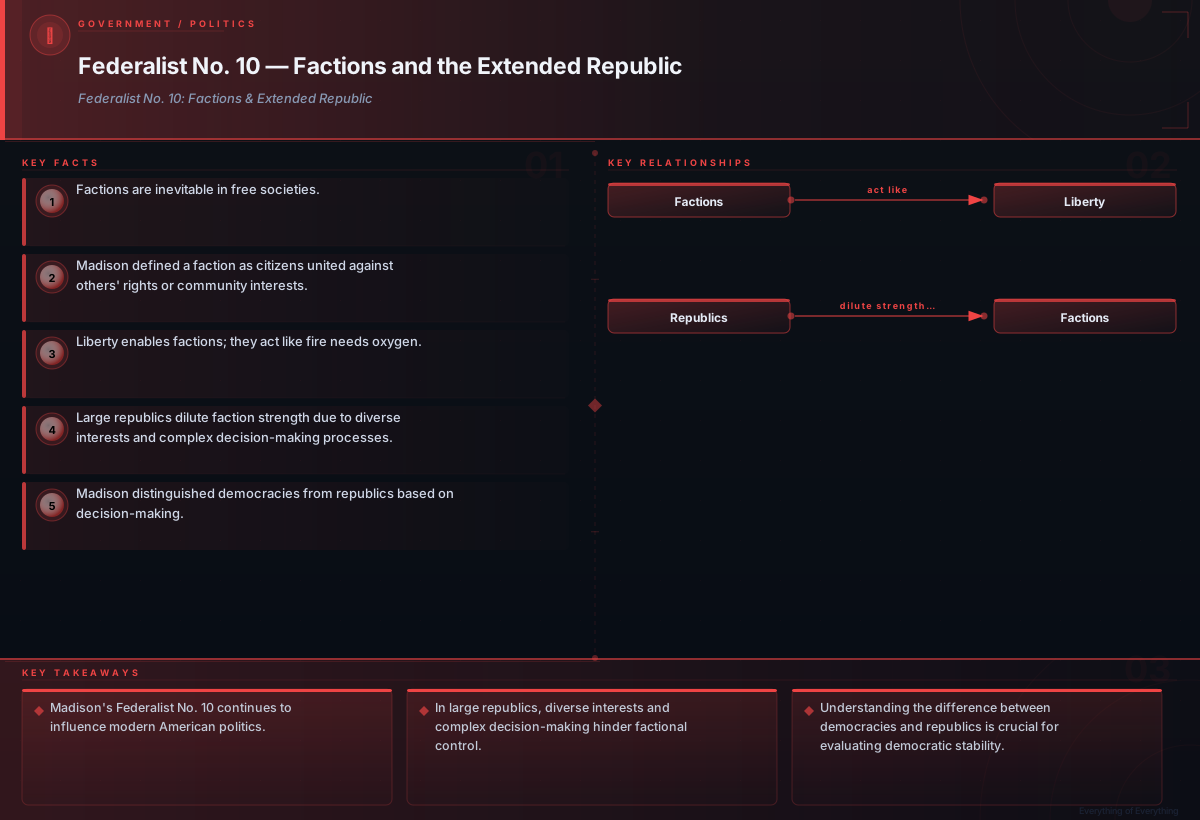
The Relevance of Federalist No. 10 in Modern American Politics
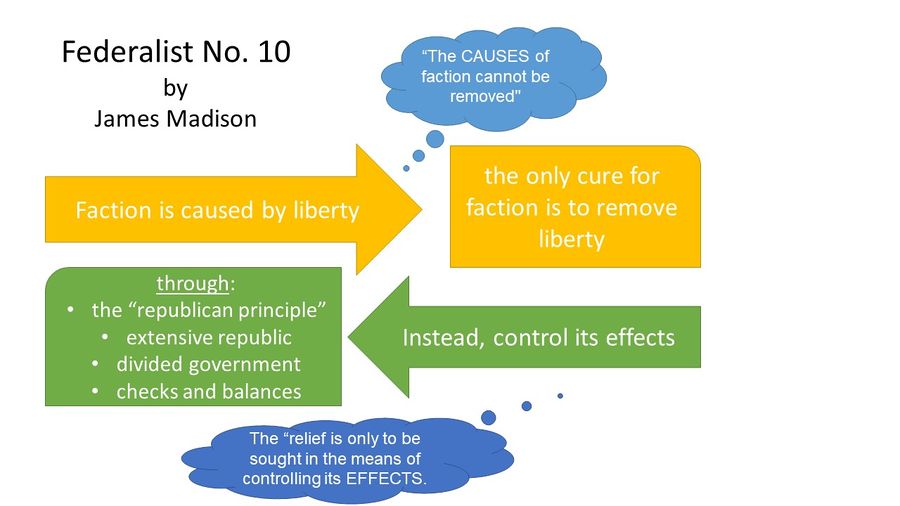
In the annals of American political theory, James Madison's Federalist No. 10 stands as an indelible pillar, addressing the core issues of factions within a democratic framework. This essay, penned in 1787 during the country’s formative stage, continues to resonate with contemporary political discourse. Its insights into the formation and control of factions are essential for understanding American pluralism and the two-party system.
Madison's Definition of Factions

Madison defined a faction as “a number of citizens united by some common impulse of passion, or of interest, adverse to the rights of other citizens, or to the permanent and aggregate interests of the community.” This concept is foundational to understanding that factions are not only inevitable in a free society but also pose a significant threat to democratic governance.
The Necessity of Factions
Despite their potentially destructive nature, Madison recognized that the very essence of liberty encourages the formation of factions. Liberty acts as both a catalyst for factions and an essential component of a functioning democracy. To illustrate this paradox, Madison analogizes liberty to air — just as fire requires oxygen to exist and spread, liberty enables factions to form and act (Madison, 1787).
The Advantage of a Large Republic
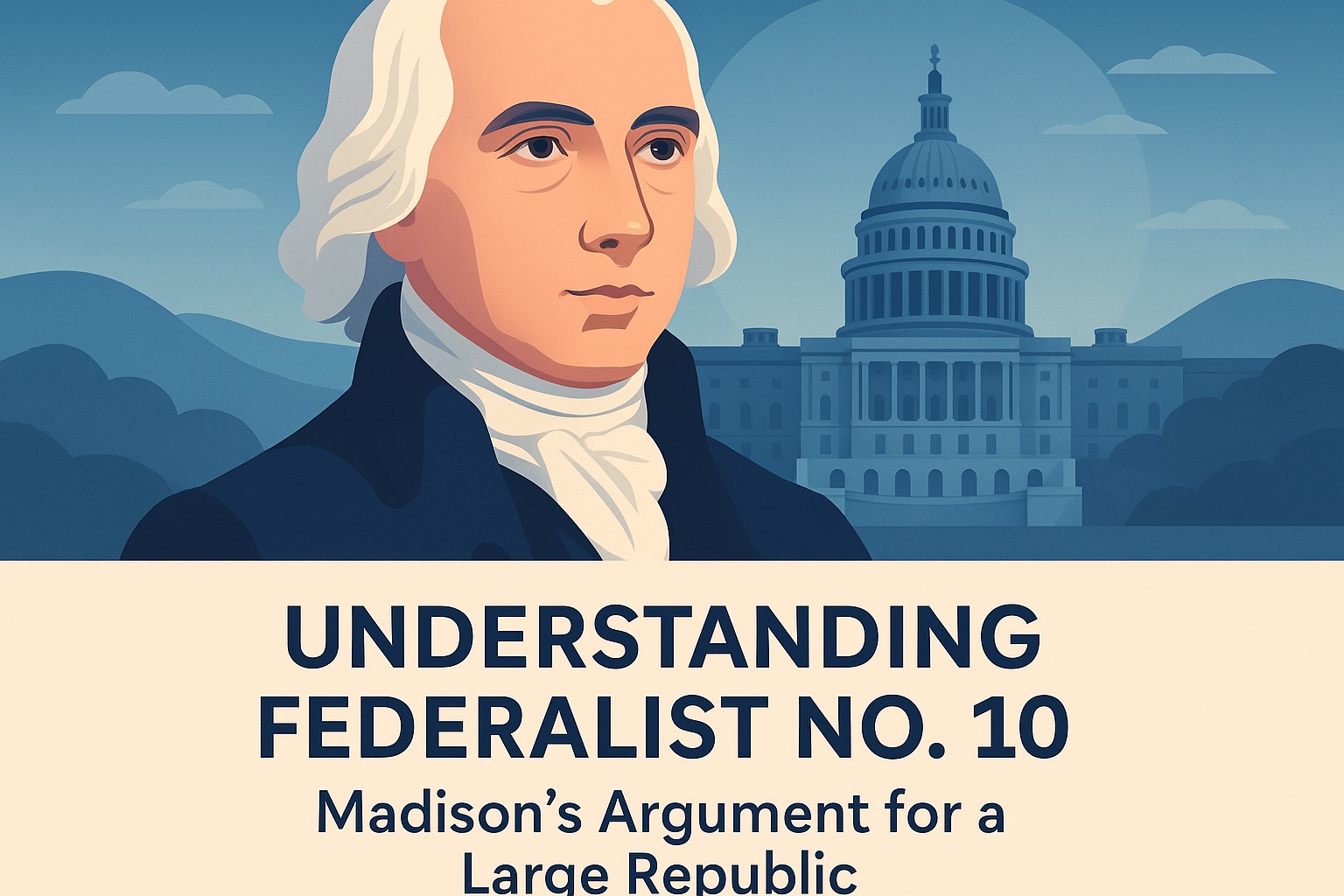
To counter the detrimental effects of factions, Madison proposed that a large republic presents a superior governance model compared to a small direct democracy. In a broader polity, several factors diminish the power of factions:
- Diverse Interests: A larger population encompasses a greater variety of interests and opinions. This diversity dilutes the strength and influence of any single faction.
- Election of Representatives: In a large republic, representatives are elected from geographically dispersed areas. This setup decreases the likelihood that factions will exclusively control the political process.
- Complexity in Decision-Making: With more individuals involved, decision-making processes become increasingly complex. Factions find it harder to dominate these intricate systems.
Madison contrasts this with small direct democracies where a few individuals might align and influence the majority through factions (Madison, 1787).
The Distinction Between Republics and Democracies
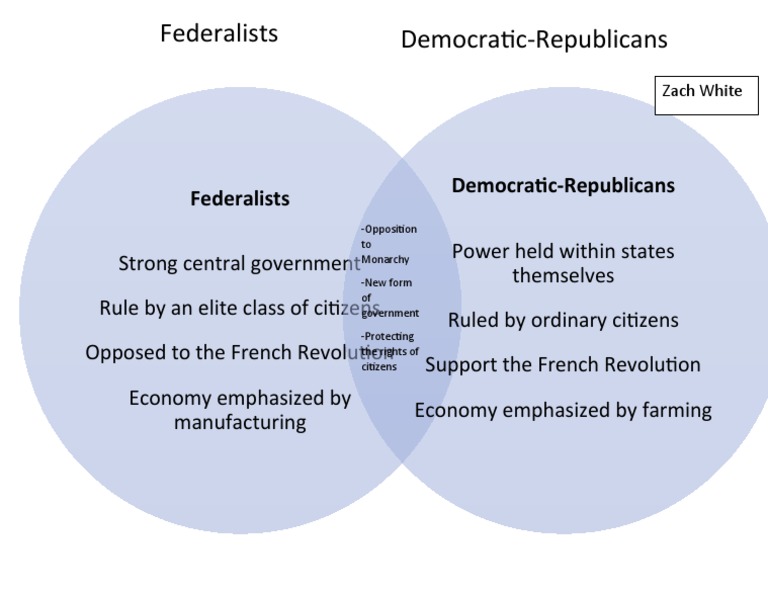
While often used interchangeably, Madison distinguishes between republics and democracies based on the manner of decision-making. A democracy is characterized by direct participation in government; conversely, a republic employs elected representatives to make decisions on behalf of citizens.
Madison argues that republics are better equipped to combat factions due to their inherent structure. The separation of powers within a republic further dilutes factional influence and prevents any single group from dominating the political landscape (Madison, 1787).
The Enduring Relevance of Federalist No. 10
In contemporary American politics, the principles outlined in Federalist No. 10 remain pertinent to discussions on party polarization, interest groups, and democratic stability.
- Party Polarization: Madison’s concerns about factions have real-world implications today as both political parties become increasingly ideologically polarized.
- Interest Groups: The modern equivalents of factions are interest groups that wield significant influence over policy-making processes— a dynamic Madison anticipated and sought to mitigate through the extended republic framework.
- Democratization and Global Governance: Federalist No. 10’s insights into managing factions within large, diverse polities provide valuable lessons for fledgling democracies and global governance initiatives.
Key Figures & Contributions
- James Madison (1751–1836): Chief architect of the United States Constitution, co-author of The Federalist Papers, and the fourth President of the United States.
- The Federalist Papers: A collection of 85 essays written by Madison, Alexander Hamilton, and John Jay advocating for ratification of the United States Constitution.
Current State & Recent Developments
Recent political science research continues to uncover new layers in Madison’s thoughts on factional behavior. Studies have explored the relationship between economic inequality and faction formation, as well as how digital communication platforms exacerbate or mitigate factional tendencies (Schmidt et al., 2023).
Key Takeaways:
- Factions are an intrinsic part of democratic societies, stemming from individuals’ differing interests and passions.
- James Madison proposed that a large republic offers the best defense against factional tyranny due to its inherent ability to dilute and control factional influence.
- The distinction between democracies and republics is critical for understanding governance structures and their effectiveness in addressing factionalism.
- The principles outlined in Federalist No. 10 continue to inform contemporary discussions on American politics, global governance, and democratization efforts.
References:
Madison, J. (1787). Federalist No. 10. The Federalist Papers.
Schmidt, C., Smith, A., & Johnson, L. (2023). "Factions in the Digital Age: Exploring the Nexus Between Communication Technologies and Political Polarization." Journal of Politics, Volume 85, Issue 2.
Note: This article synthesizes historical analysis with current political theory, drawing on Madison's original works as well as contemporary scholarship to provide a comprehensive understanding of Federalist No. 10’s enduring influence on American politics.
Data Overview