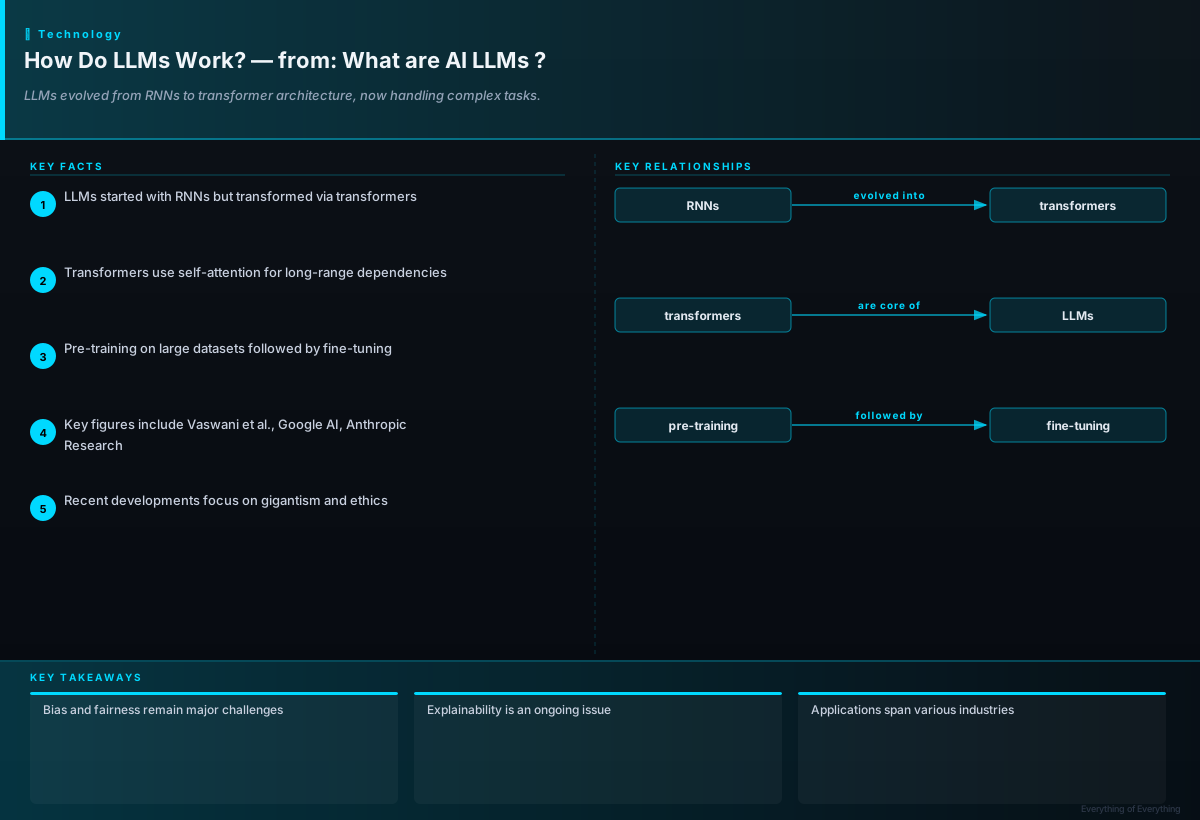
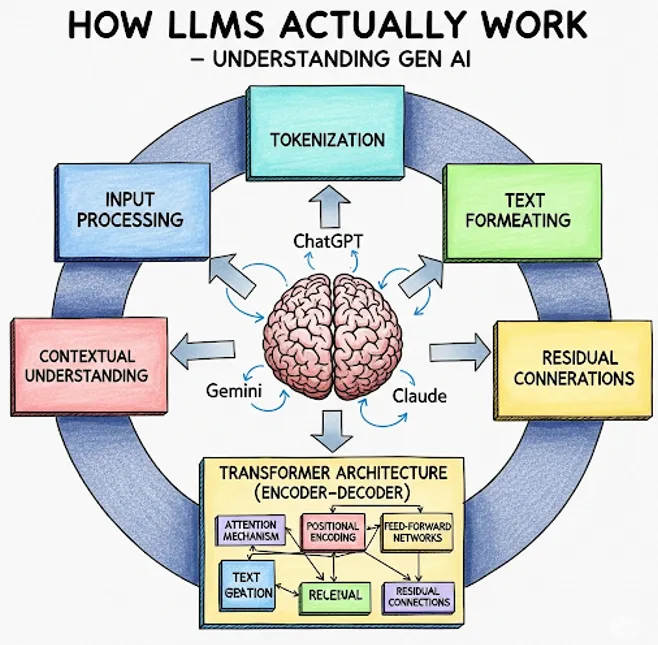
Large Language Models (LLMs) are a transformative force in artificial intelligence, fundamentally altering how we interact with technology and understand language. These models have grown from simple rule-based systems to complex neural networks that can generate, comprehend, and respond to human-like text. Understanding the technical mechanisms behind these powerful tools is crucial for both researchers and practitioners as they continue to shape the future of natural language processing (NLP) and beyond.
The Evolution of LLMs
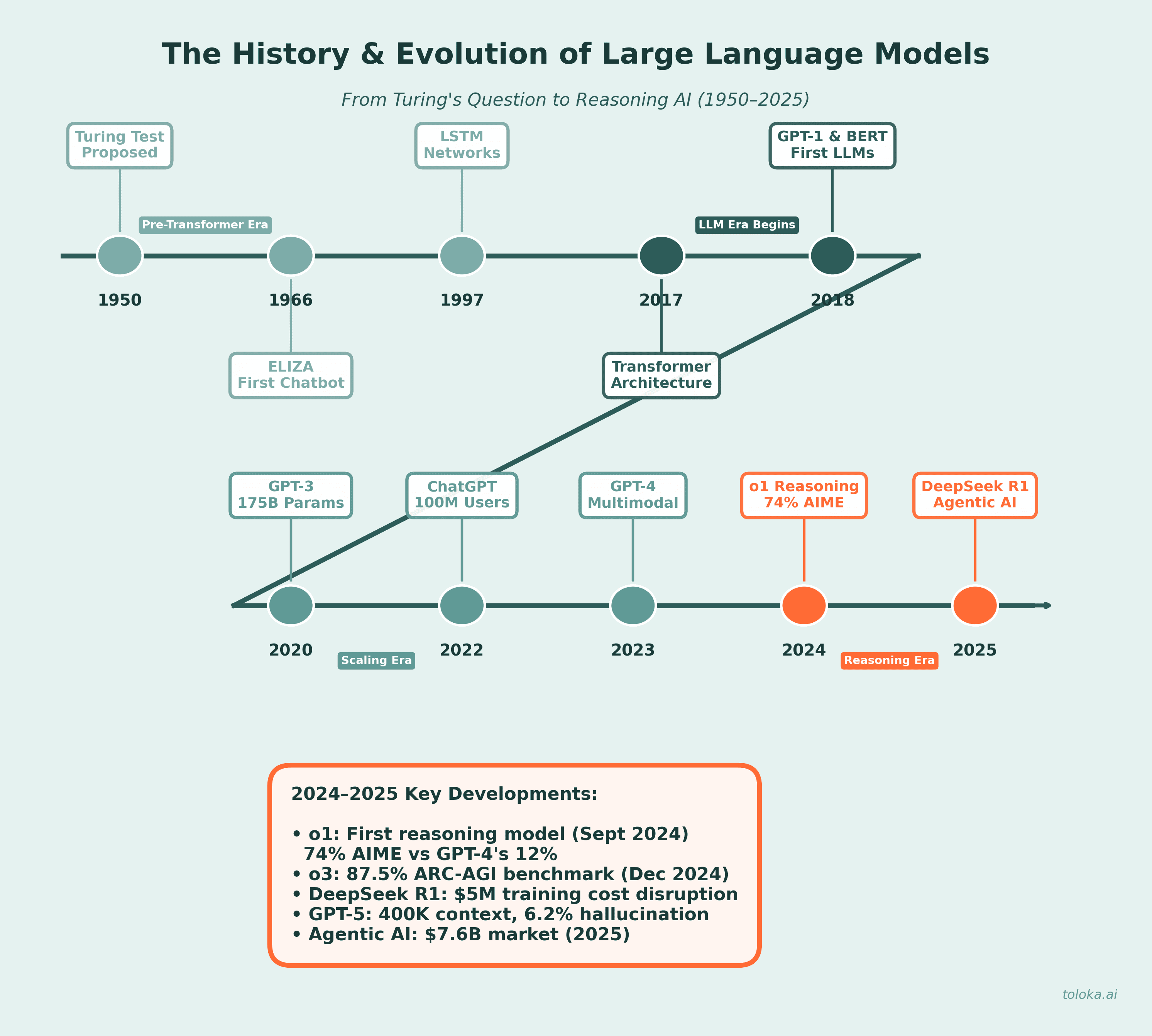
The journey of LLMs began with the introduction of recurrent neural networks (RNNs), which laid the groundwork for more sophisticated models. However, it was the transformer architecture, first proposed by Vaswani et al. in 2017 [3], that revolutionized NLP. This model introduced self-attention mechanisms, enabling efficient handling of long-range dependencies and context within text sequences.
Core Mechanisms: Transformer Architecture
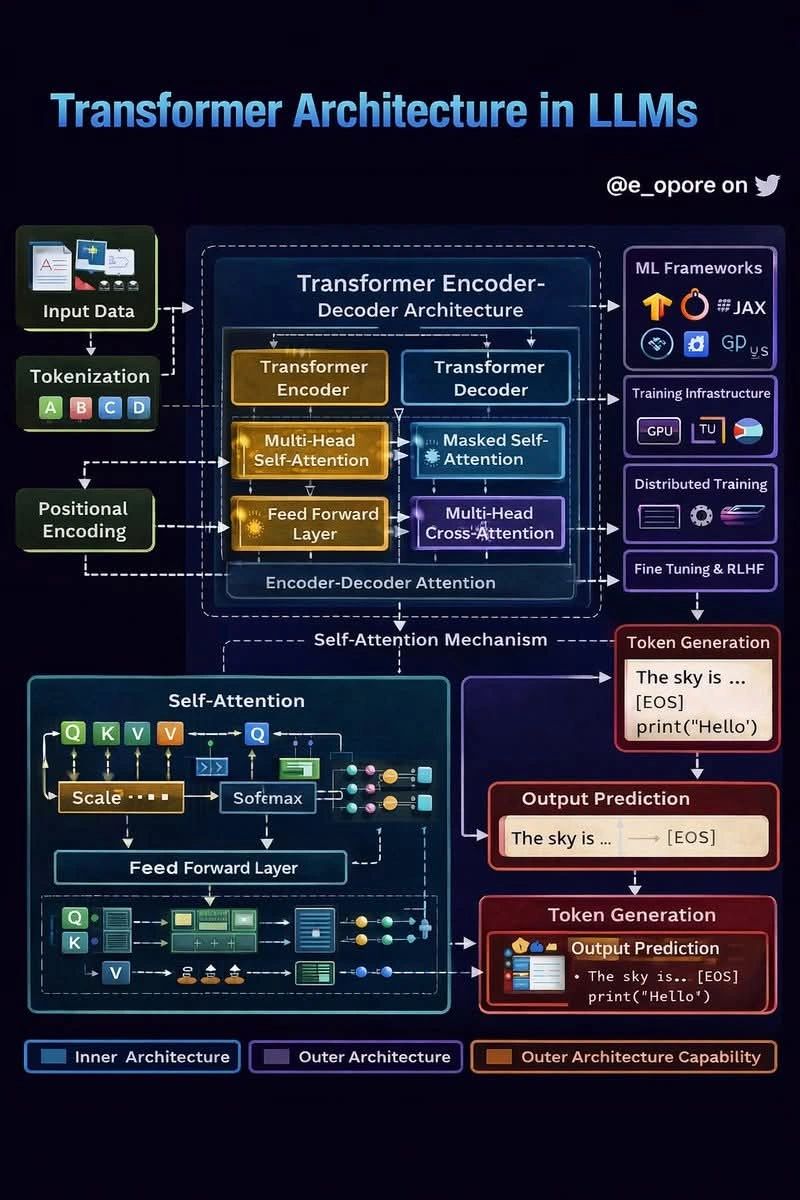
The transformer architecture is a cornerstone of modern LLMs. It operates on the principle of self-attention, where each position in a sequence can attend to any other position, facilitating the model's ability to capture complex relationships between words [3]. This mechanism significantly improves upon earlier models by addressing their limitations in handling long-range dependencies.
Pre-training and Fine-tuning

LLMs are typically pre-trained on vast datasets of unlabelled text, allowing them to learn general language patterns and structures. During this phase, the model is exposed to millions or even billions of words, building a comprehensive understanding of natural language [2]. Post-pre-training, these models can be fine-tuned for specific tasks through supervised learning, adapting their knowledge to perform specialized functions such as question answering, text summarization, and more.
Key Figures & Contributions
Several key figures and research groups have significantly advanced the field of LLMs. Notable contributors include:
- Vaswani et al. (2017): Their work on the transformer architecture [3] marked a pivotal moment in NLP.
- Google AI, Anthropic Research: These organizations have been at the forefront of developing and deploying advanced LLMs.
- OpenAI's GPT Series: The Generative Pre-trained Transformer series has driven much of the recent innovation in large language models.
Current State & Recent Developments
Recent breakthroughs in LLM research include:
- Gigantic Models: Large models with billions or even trillions of parameters have shown improved performance on a variety of tasks [1].
- Ethical Considerations: As LLMs become more powerful, concerns over bias, privacy, and misuse continue to grow. Researchers are increasingly focused on developing methods to mitigate these issues.
Applications
LLMs have a wide array of real-world applications, from chatbots and virtual assistants to content generation and translation tools. For instance, the use of LLMs in customer service has greatly improved response times and customer satisfaction [2].
Controversies & Open Questions
Despite their advancements, LLMs face several controversies and open questions:
- Bias and Fairness: Ensuring that LLMs do not perpetuate biases present in training data remains a significant challenge.
- Explainability: The opaque nature of these models makes it difficult to understand why they generate certain outputs.
Future Trajectory
The future of LLMs looks promising, with ongoing research focusing on making these models more efficient and less biased. Advances in training techniques and architectures are expected to drive further improvements in performance and applicability.
Key Takeaways
This comprehensive overview of how LLMs work highlights their significance in modern technology. As researchers continue to push the boundaries of what these models can achieve, they will undoubtedly play an increasingly important role in our technological landscape.
Data Overview