The Space That Cannot Be Named
There is a word problem at the heart of this conflict, and it is not merely semantic. When journalists, diplomats, scholars, and activists refer to the territory between the Jordan River and the Mediterranean Sea, the name they choose announces their politics before they have uttered a single substantive sentence. "Israel and the occupied territories." "Israel and Palestine." "The Holy Land." "Eretz Yisrael." "Historic Palestine." The label is the argument. This is unusual in geopolitics — most territorial disputes allow for a neutral shorthand — but in this case, the geography itself is contested at a level so fundamental that language collapses under the weight of it.
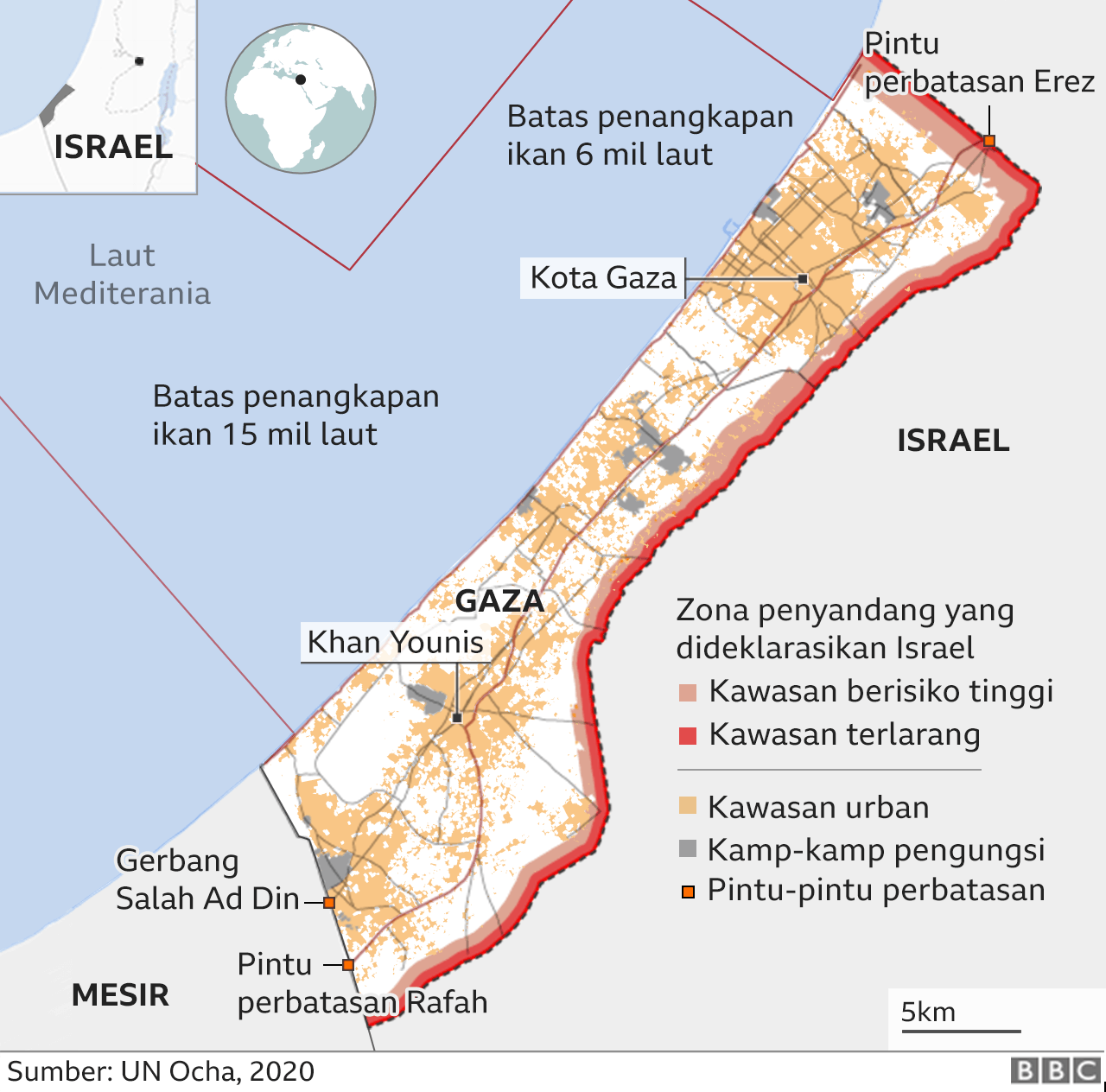
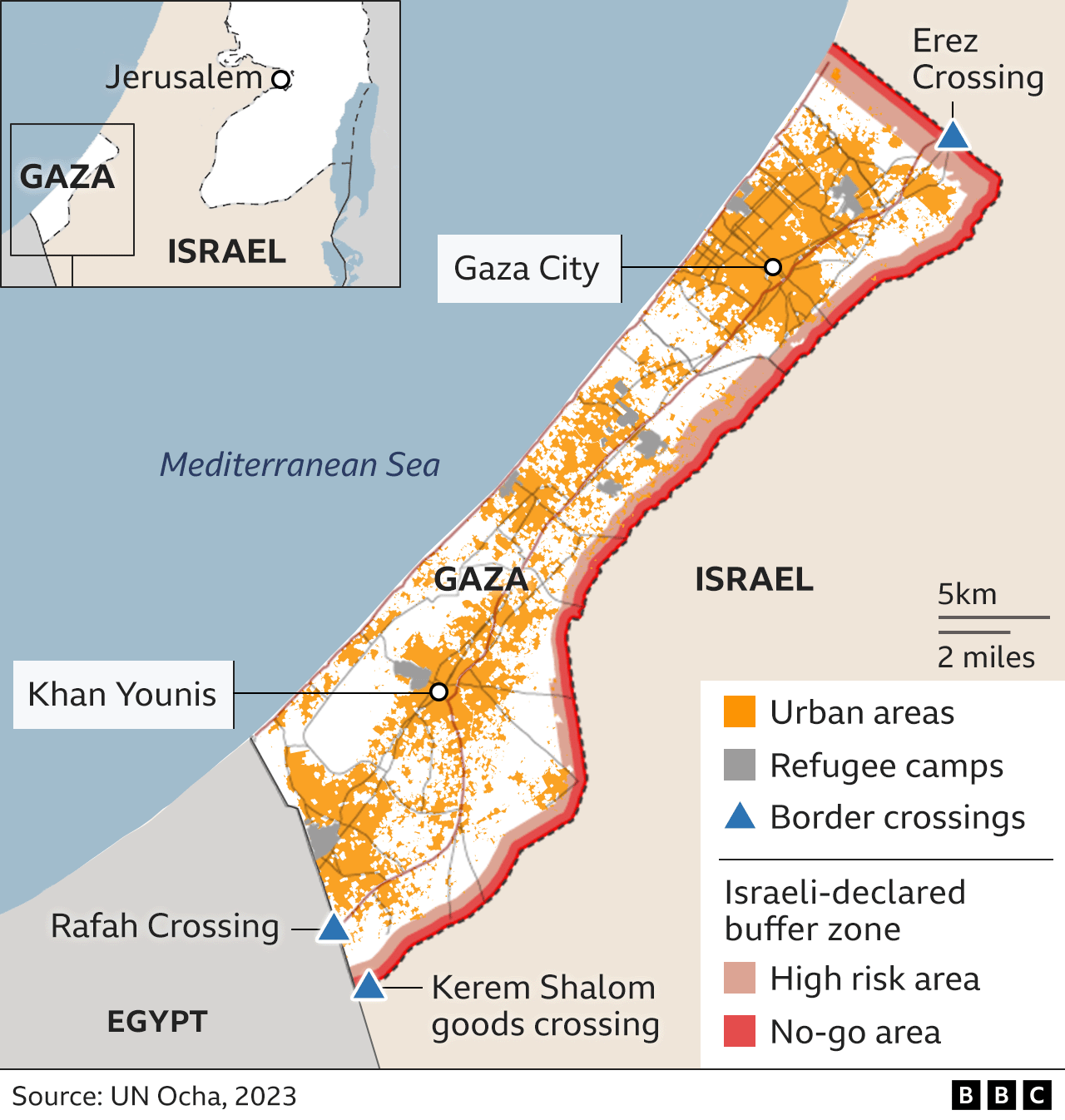
This article calls it "the between" not as a political position but as an honest acknowledgment of that collapse. There is something — a strip of coast, a series of hills, an ancient city layered with the ruins of at least forty civilizations — that exists between competing claims, between competing histories, between competing futures. The Gaza Strip, in particular, occupies an extreme version of this betweenness: between the sea and the fence, between Egypt and Israel, between the 1948 war and the war that has not yet ended, between a population of more than two million people and the question of what political form, if any, can contain their lives.
The existing overview of this conflict touches the surface of a phenomenon whose depth is almost unnavigable. To go further requires engaging with the paradoxes that characterize the situation: how a tiny piece of land (41 kilometers long, between 6 and 12 kilometers wide, approximately 365 square kilometers in total) has become the site of one of the most intensely documented, most morally argued-over, most geopolitically consequential conflicts of the modern era. It requires taking seriously perspectives that are genuinely incompatible with each other. And it requires resisting the twin temptations that dominate public discourse — the temptation to reduce everything to a morality play with a clear hero and villain, and the temptation to retreat into false equivalence and call the complexity itself a kind of wisdom.
The Archaeology of the Conflict: What History Is Being Told, and By Whom
The 1948 War and Its Dual Narrative
Every serious engagement with this conflict must reckon with what Israelis call the War of Independence and Palestinians call the Nakba — the Catastrophe. These are not two names for the same event in the way that, say, "the War Between the States" and "the Civil War" describe the same conflict with different emphases. They describe experiences so different that they might appear, to those living them, to have no overlap whatsoever.
For Jewish Israelis, 1948 represents the culmination of the Zionist project — itself a response to centuries of European antisemitism and, proximately, to the Holocaust — in which a sovereign Jewish state was established against the immediate military opposition of five Arab armies. The survival of the nascent state against those odds carries enormous psychological and political weight. The Declaration of Independence, read by David Ben-Gurion in Tel Aviv on May 14, 1948, called upon Arab inhabitants of Israel to "participate in the upbuilding of the State on the basis of full and equal citizenship." The war that followed, in the Israeli telling, was a war of survival thrust upon a people who had accepted the United Nations partition plan of 1947 while the Arab leadership rejected it.
For Palestinians, 1948 is the year that approximately 700,000 people — roughly half the Arab population of Mandatory Palestine — became refugees. Between 400 and 600 Arab villages were depopulated, many destroyed. Scholars including Benny Morris, an Israeli historian whose work has been foundational (and fiercely contested) in this debate, documented these events in The Birth of the Palestinian Refugee Problem, 1947-1949 (1988), a work that used Israeli military archives to show that the refugee exodus was not, as Israeli official history long maintained, primarily voluntary or the result of Arab leaders urging Palestinians to flee. Morris showed that in many cases, Israeli military forces expelled Arab populations, and that atrocities — including the massacre at Deir Yassin in April 1948 — played a role in generating panic and flight. Crucially, Morris later argued that this expulsion was nevertheless a historical necessity given the existential threat Israel faced — a position that has been criticized sharply by historians like Ilan Pappé, who frames the same events as ethnic cleansing in The Ethnic Cleansing of Palestine (2006).
This historiographical dispute is not academic. It shapes how both sides understand the nature of the conflict's origin. If 1948 was a war of survival with tragic but understandable consequences, the conflict becomes a tragedy of competing national movements. If 1948 was a colonial dispossession and ethnic cleansing, the conflict becomes a crime whose perpetrators remain unpunished and whose remedy must involve some form of restitution.
Gaza specifically fell under Egyptian administration after 1948, a period that is often overlooked in popular history. Egypt did not annex Gaza or grant Palestinian refugees citizenship; the Gaza Strip became, from 1948 onward, a territory of compressed, stateless people — a liminal zone even before the word became fashionable in political science.
1967 and the Creation of the Occupation
The Six-Day War of June 1967 is the second foundational rupture. In six days, Israel defeated the combined forces of Egypt, Jordan, and Syria, and in doing so captured the Sinai Peninsula and Gaza Strip from Egypt, the West Bank and East Jerusalem from Jordan, and the Golan Heights from Syria. The occupation of Gaza and the West Bank that began in June 1967 has now lasted more than fifty-seven years — longer than the occupation of Alsace-Lorraine by Germany, longer than the Soviet occupation of Eastern Europe, one of the longest military occupations in modern history.
The occupation created a legal and political condition that has no clean precedent. Gaza was not annexed by Israel — a move that would have required either granting citizenship to its Arab population or engaging in overt apartheid. Nor was it ever allowed to develop toward independent statehood. It became instead something for which international law has inadequate vocabulary: a territory under belligerent occupation whose inhabitants lack citizenship in any recognized state with full sovereignty, yet who also lack the rights typically accorded to civilians under occupation when the occupying power is also besieging them.
The settler movement that emerged after 1967 — driven by a religious-nationalist ideology crystallized in organizations like Gush Emunim — reframed the West Bank and Gaza not as occupied territory but as Judea and Samaria, the biblical heartland of the Jewish people. This framing, now dominant in Israeli right-wing politics, treats the establishment of Jewish settlements in the West Bank as a religious and national imperative rather than a violation of international law. The International Court of Justice, in multiple opinions including its landmark 2004 advisory opinion on the separation barrier, and its 2024 ruling declaring the entire Israeli occupation illegal, has consistently held the opposite view. The legal question and the theological-nationalist question operate in entirely different registers and speak past each other almost entirely.
The Oslo Accords: The Architecture of a Failed Peace
The Oslo Accords of 1993 and 1995 deserve more careful analysis than they typically receive, because they created the institutional framework within which the current conflict operates, and because their failure is instructive about why peace agreements fail.
The Accords, negotiated secretly in Norway between Israeli officials and the PLO under Yasser Arafat, were greeted with extraordinary optimism. The famous handshake between Arafat and Israeli Prime Minister Yitzhak Rabin on the White House lawn, facilitated by President Clinton, became one of the iconic images of the post-Cold War moment when history seemed to be moving inexorably toward liberal democratic peace.
What Oslo actually created, however, was a set of interim arrangements that both sides understood differently. Israel understood Oslo as a framework for phased negotiations toward a final status agreement that might or might not produce a Palestinian state. The PLO understood it as a pathway toward statehood. The gap between these understandings was never bridged. In the meantime, Israeli settlement construction in the West Bank — which the Accords did not halt — accelerated. The settler population in the West Bank grew from approximately 110,000 in 1993 to more than 700,000 today, including East Jerusalem. Each new settlement, in the Palestinian reading, was a unilateral annexation of land that was supposed to be negotiated in final status talks. In the Israeli government's reading (at least of center-right and right-wing governments), settlements were a legitimate exercise of the right of Jews to live anywhere in the Land of Israel.
The assassination of Rabin in November 1995 by a Jewish religious nationalist, Yigal Amir, who believed Rabin's peace negotiations constituted a betrayal of divine commandment, removed the Israeli leader most committed to the Oslo process. Subsequent Israeli governments — under Netanyahu, Barak, Sharon, Olmert, and again Netanyahu — pursued the peace process with varying degrees of sincerity. The Camp David summit of 2000, where Barak and Arafat met under Clinton's facilitation, collapsed, and a bitter dispute about who bears responsibility for that failure continues. The conventional narrative, propagated by Clinton and Barak's camp, was that Barak offered a "generous offer" that Arafat rejected. The counter-narrative, advanced by scholars like Robert Malley (who was part of the US negotiating team) and Hussein Agha, holds that the offer was neither as generous nor as clearly defined as the conventional story suggests, and that Arafat's refusal reflected real limitations in what was on the table rather than rejectionism.
What is not disputed is that the Second Intifada followed — a wave of Palestinian suicide bombings and Israeli military operations between 2000 and 2005 that killed approximately 1,000 Israelis and more than 3,000 Palestinians, shattered the Israeli peace camp, and hardened positions on both sides in ways that have not been reversed.
Gaza Specifically: The Making of a Siege
Disengagement and Its Aftermath
Ariel Sharon's 2005 unilateral disengagement from Gaza — the removal of all Israeli settlers and military forces from the Strip — is a crucial and underanalyzed moment. Sharon, a hawk who had been one of the architects of the settlement enterprise, concluded that the demographic and security costs of maintaining Israeli settlements in Gaza (8,000 settlers protected by a large military presence among 1.4 million Palestinians) were unsustainable. The disengagement was unilateral — it was not negotiated with the Palestinian Authority — and its consequences were therefore uncontrolled.
In January 2006, Hamas won Palestinian legislative elections in a result that surprised almost everyone, including Hamas itself. The elections were internationally monitored and generally deemed free and fair. The response of the United States and European Union was to refuse to recognize the Hamas government and to impose sanctions — a decision that raised profound questions about the sincerity of Western commitments to democratic outcomes in the Middle East. The argument for non-recognition was that Hamas was a terrorist organization that refused to recognize Israel's right to exist, renounce violence, and abide by previous PLO agreements (the so-called Quartet conditions). The counter-argument was that refusing to engage with a democratically elected government punished Palestinian voters for voting "incorrectly" and guaranteed that the moderate path within Palestinian politics would be discredited.
In June 2007, after a brief and bloody intra-Palestinian civil conflict between Hamas and Fatah, Hamas took full control of Gaza. The subsequent Israeli and Egyptian blockade of Gaza — which restricted the movement of people, goods, fuel, building materials, and almost everything else in and out of the Strip — transformed Gaza into what has been described by various UN officials as "the world's largest open-air prison," a phrase popularized by former UN Special Rapporteur John Dugard and repeated by many human rights organizations. Israel disputes this characterization, arguing that the blockade is a legitimate security measure against a terrorist organization that has launched thousands of rockets into Israeli civilian areas.
The economics of blockade deserve specific attention because they reveal a paradox that is rarely examined. The blockade was intended to weaken Hamas by impoverishing Gaza and thereby generating popular pressure on Hamas to moderate or surrender. For seventeen years, this strategy has failed by its own stated logic. Hamas has not moderated or surrendered. It has, if anything, consolidated its control of Gaza, in part because the blockade eliminated most of the formal economy and created conditions in which Hamas's ability to distribute patronage and control resources made it the dominant power in Gazan society. The blockade that was supposed to pressure Hamas into collapse instead eliminated the economic foundations of any civil society that might have offered an alternative to Hamas.
This is a documented pattern in the literature on economic warfare against non-state actors. Political scientists including Sara Polo and Burcu Savun have found, across multiple case studies, that external pressure on groups through civilian punishment tends to radicalize rather than moderate them, by increasing group cohesion and eliminating moderate internal voices. Gaza is, in some respects, a textbook illustration of this dynamic, though the Israeli government has consistently argued that the alternative — lifting the blockade and allowing Hamas to import weapons freely — presents unacceptable security risks.
The Population of Gaza and What It Means to Live There
Before October 2023, Gaza had a population of approximately 2.3 million people in 365 square kilometers, making it one of the most densely populated territories on Earth — comparable in density to Singapore or Hong Kong, but without the economic development or political freedom that characterizes those city-states. More than 70 percent of Gaza's population were registered refugees or descendants of refugees from 1948. The median age was approximately eighteen years. More than 60 percent of the population was under the age of twenty-five. Unemployment, before 2023, oscillated between 45 and 60 percent.
These demographic facts matter enormously for understanding the conflict, but they are rarely integrated into political analysis. A population that is young, largely unemployed, descended from refugees who retained a legal and emotional claim to lands now inside Israel, and living under a blockade that restricts their movement and economic activity, is not a population predisposed to peaceful acceptance of the status quo. This is not an argument for any particular form of resistance or any specific political program. It is simply an observation that the structural conditions of life in Gaza generate grievances that any political actor — whether Hamas, Islamic Jihad, or a hypothetical secular nationalist movement — will articulate and mobilize around.
The United Nations Relief and Works Agency for Palestine Refugees in the Near East (UNRWA), established in 1949, has operated in Gaza continuously for seventy-five years. Its role is both practical and symbolic: it provides education, healthcare, and social services to Gaza's refugee population, and its very existence is premised on the unresolved status of Palestinian refugees and their right of return — a right that Israel has consistently refused to accept as a basis for negotiation, arguing that its implementation would demographically overwhelm Israel's Jewish character.
October 7, 2023: The Event and Its Interpretive Wars
What Happened
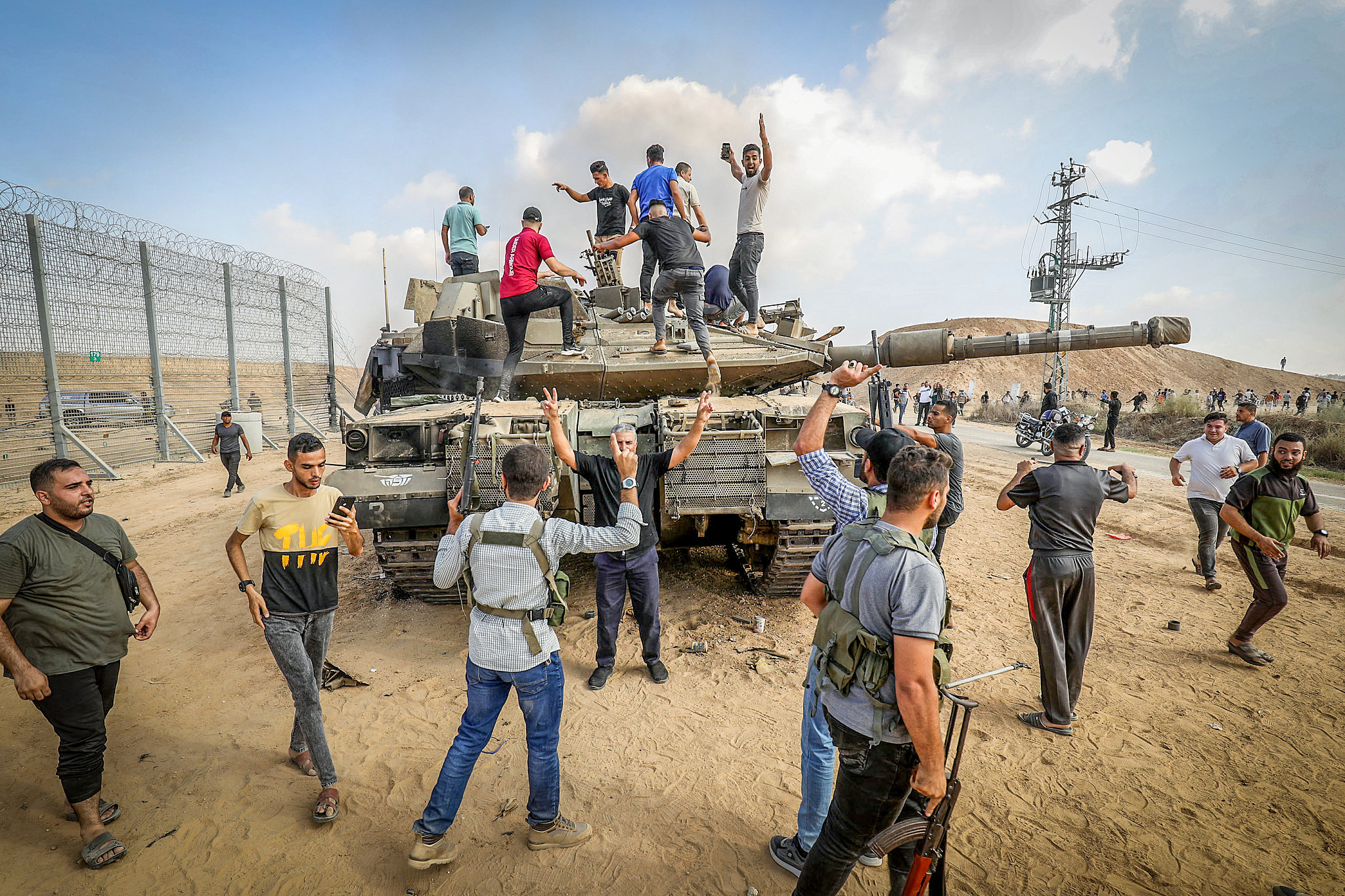
On October 7, 2023, Hamas launched the largest attack on Israeli civilians since Israel's founding. Approximately 3,000 Hamas fighters and allied militants breached the Gaza perimeter fence in multiple locations, infiltrating twenty-two Israeli communities and killing approximately 1,200 people — the majority civilians, including children, elderly people, and foreign nationals. More than 250 people were taken hostage and brought into Gaza. The attacks included mass shootings at the Nova music festival, where approximately 364 people were killed, and house-to-house killings in kibbutzim including Be'eri and Kfar Aza, where families were murdered in their homes. Sexual violence was documented by multiple investigators, including a special UN team whose report in March 2024 found "clear and convincing information" that sexual violence was committed by Hamas and other armed groups during the October 7 attacks.
The attack was not, contrary to some initial speculation, a spontaneous uprising. It was a years-in-the-making military operation, coordinated with significant planning, involving the use of paragliders, motorcycles, and breaches of what had been considered an impenetrable fence equipped with surveillance technology. Hamas's military wing, the Al-Qassam Brigades, led the operation, which was named "Operation Al-Aqsa Flood."
Contrasting Interpretations
The interpretive wars over October 7 began almost immediately and reveal the deeper incompatibilities in how different communities understand the conflict.
Within Israel and among many Jewish communities worldwide, October 7 was experienced as a catastrophic confirmation of existential threat — the worst mass killing of Jewish people since the Holocaust — and as evidence that Hamas's stated commitment to Israel's destruction (articulated in the original 1988 Hamas Charter and never fully repudiated, despite the more moderate 2017 "Document of General Principles") was not rhetorical but operational. The attack generated a consensus within Israel for a military response whose stated aims were the destruction of Hamas's military and governing capabilities and the return of the hostages.
Among many in the Arab world, in parts of the Global South, and among left-wing and anti-colonial academic and activist communities, October 7 was framed primarily as a consequence of the occupation and blockade — a resistance operation that, whatever its methods, cannot be understood outside the context of decades of dispossession. Some went further, celebrating the attack as an act of anti-colonial resistance, a framing that many others found morally obscene given the deliberate targeting and killing of civilians, including infants and the elderly.
These interpretive frameworks are not merely different emphases on the same facts. They reflect fundamentally incompatible moral and political frameworks: one in which the killing of civilians is categorically unacceptable regardless of political context, and one in which political violence against a settler-colonial state is categorically legitimate regardless of form. Both frameworks have internal coherence. Both also have critical weaknesses. The first, strictly applied, would require equally categorical condemnation of Israeli military actions that kill Palestinian civilians — a condemnation that many who apply it to Hamas do not consistently apply. The second, strictly applied, would legitimate virtually any form of violence against almost any population, since the category of settler-colonialism can be, and has been, applied to targets whose civilian populations have no meaningful agency over the political structures being contested.
The Israeli Military Response: Scale, Strategy, and Controversy
Israel's military response to October 7, launched as "Operation Swords of Iron" and subsequently characterized as a major war, was of a scale unprecedented in the history of the Gaza conflicts. By the end of 2024, more than 45,000 Palestinians had been killed according to Gaza's Health Ministry — a source that the Israeli government disputes but that international health and statistics organizations including the Lancet have defended as methodologically credible, with independent analyses suggesting the true death toll including indirect deaths from disease and starvation could be considerably higher.
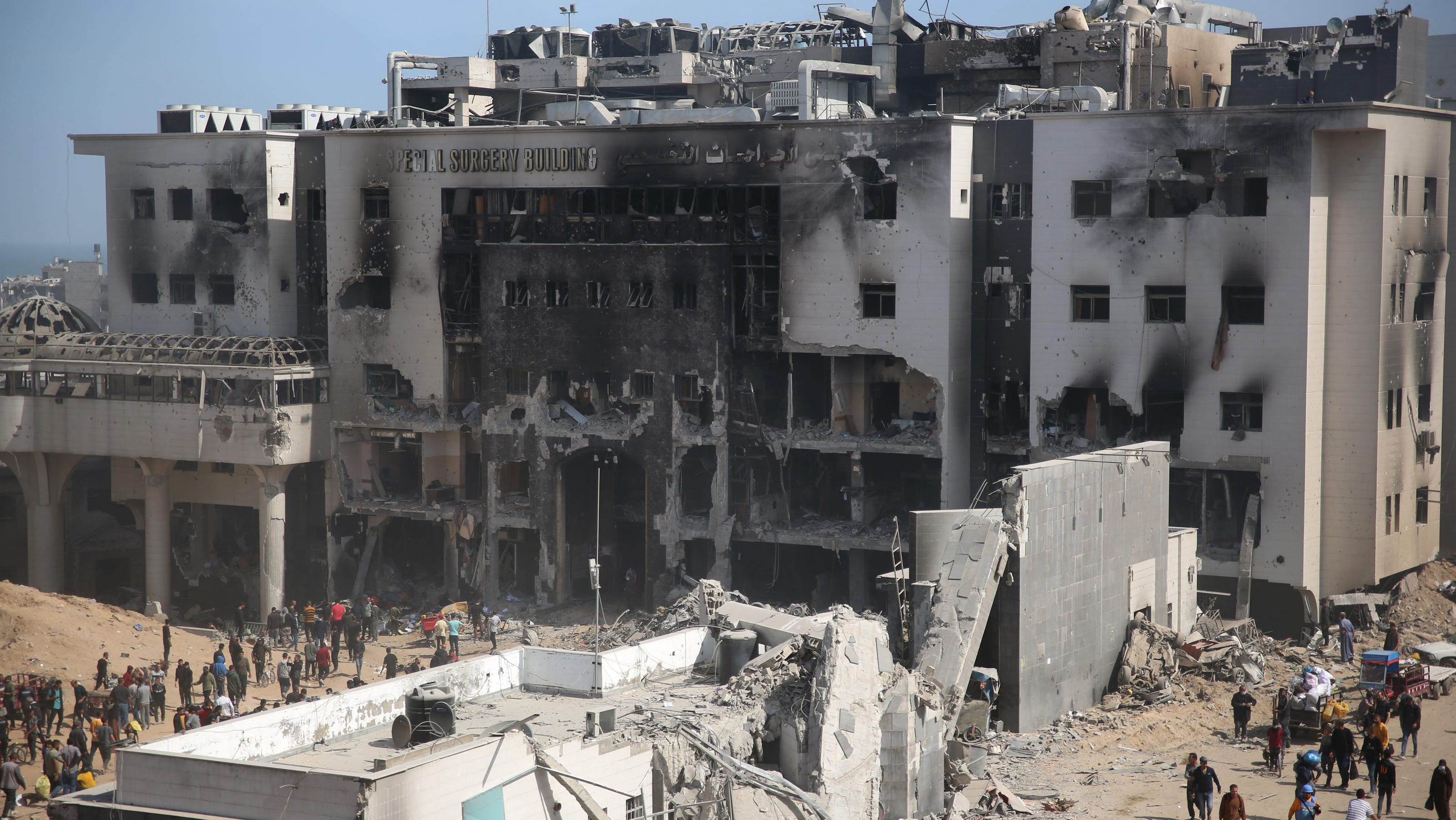
The destruction of physical infrastructure in Gaza has been extraordinary. By early 2024, more than 70 percent of Gaza's housing stock had been damaged or destroyed. All of Gaza's universities had been damaged or destroyed. More than 80 percent of schools. The vast majority of hospitals had been damaged or forced out of operation, though Israel and Hamas offer sharply different accounts of the military relevance of hospital facilities.
The legal and ethical controversies surrounding the Israeli military campaign are extensive and cannot be resolved here, but they deserve substantive engagement rather than dismissal in either direction.
International humanitarian law — specifically the laws of war as codified in the Geneva Conventions and their Additional Protocols — rests on principles of distinction (between combatants and civilians), proportionality (the harm to civilians must not be excessive in relation to the anticipated military advantage), and precaution (all feasible steps must be taken to minimize civilian harm). Israel argues that Hamas's deliberate integration of military infrastructure into civilian areas — tunnels beneath hospitals, rocket launchers in residential buildings, command centers in urban environments — makes it impossible to strike military targets without civilian casualties, and that this constitutes Hamas using its own population as human shields, which is itself a war crime. Hamas's own military doctrine, as articulated by its leaders including Yahya Sinwar (killed by Israeli forces in October 2024), has explicitly incorporated the international response to civilian casualties as a strategic asset — the more Palestinian civilians die, the argument runs, the more international pressure on Israel to halt its operations.
Critics of Israel's conduct — including the International Court of Justice, which in January 2024 found it "plausible" that Israel was committing acts that could constitute genocide and ordered provisional measures including ensuring humanitarian aid, and the UN Special Rapporteur on human rights in the Palestinian territories, Francesca Albanese — argue that the scale of destruction and civilian death cannot be explained by military necessity alone, and that the restrictions on humanitarian aid, the targeting of civilian infrastructure, and the use of particular weapons systems in densely populated areas constitute violations of international law.
The genocide question — whether Israel's military campaign meets the legal definition of genocide under the 1948 Convention on the Prevention and Punishment of the Crime of Genocide — is one of the most contested legal and moral questions in contemporary international law. The Convention requires proof of "intent to destroy, in whole or in part, a national, ethnical, racial or religious group." Intent is the hardest element to prove. Critics who allege genocide cite statements by Israeli officials — including Defense Minister Yoav Gallant's description of Palestinians as "human animals" in the immediate aftermath of October 7, and various statements by other Israeli officials — as evidence of genocidal intent. Defenders of Israel argue that these statements, however morally objectionable, do not constitute legal evidence of state policy, and that the proper characterization of the campaign is as a military operation against a terrorist organization, with civilian deaths being a tragic but legally distinct consequence.
This legal debate is not merely academic. South Africa's case against Israel at the International Court of Justice, initiated in December 2023 under the Genocide Convention, is one of the most significant international legal proceedings in decades, and its outcome will shape international law on state responsibility for mass civilian harm in asymmetric warfare for generations.
The Geopolitics of the Between: Who Wants What, and Why
The United States and Its Contradictions
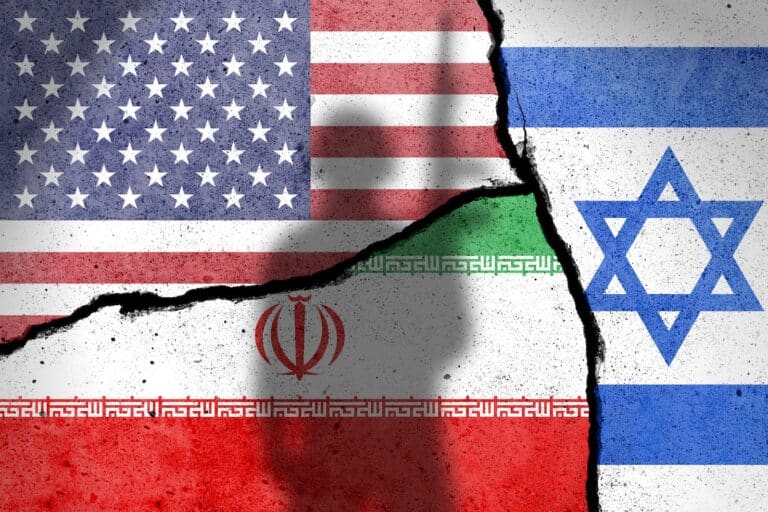
American policy toward Israel-Palestine has been shaped by a combination of strategic interest, domestic politics, and genuine moral commitments that sometimes align and sometimes contradict each other. The United States has provided Israel with approximately $260 billion in military and economic assistance since 1948 — the largest recipient of American foreign aid in that period. The relationship is defended on grounds of shared democratic values, strategic partnership in a volatile region, and the special obligation created by the Holocaust. It is also shaped by domestic political dynamics, including the political organization and fundraising capacity of pro-Israel lobbying groups such as AIPAC, analyzed in detail by political scientists John Mearsheimer and Stephen Walt in The Israel Lobby and U.S. Foreign Policy (2007) — a work that generated enormous controversy but introduced analytical tools for understanding how domestic lobbying shapes foreign policy that have been widely adopted.
The Biden administration's response to October 7 illustrated the contradictions of the American position with unusual clarity. Biden expressed strong solidarity with Israel, provided military assistance including weapons systems, and described himself as a Zionist. Simultaneously, the administration repeatedly expressed concern about civilian casualties, called for a ceasefire on multiple occasions (while also vetoing ceasefire resolutions at the UN Security Council), and eventually paused a shipment of heavy bombs due to concerns about their use in densely populated areas. These contradictions reflected genuine policy tensions within the administration and between the administration and the American public, particularly younger voters and communities of color, among whom support for Israel's military campaign was substantially lower than among older and white Americans.
Iran's Strategic Investment
Hamas is not an Iranian creation — it emerged from the Palestinian Muslim Brotherhood and is primarily a Palestinian movement — but it has received substantial financial, military, and training support from Iran since the 1990s. For Iran, supporting Hamas serves multiple strategic interests: it maintains a pressure point against Israel and the United States at minimal direct cost, it provides Iran with influence in Palestinian politics that it otherwise would not have, and it fits within the broader "Axis of Resistance" framework — Hezbollah in Lebanon, Houthi forces in Yemen, various militia groups in Iraq and Syria — that constitutes Iran's regional strategy for counterbalancing American and Israeli power.
The October 7 attacks created a dilemma for Iran. If Iran had foreknowledge of and gave authorization for the attacks — a question that remains genuinely disputed — it was taking an enormous strategic gamble, risking a regional war it did not want and could not control. If it did not have foreknowledge, the attacks demonstrated the limits of Iran's control over its proxies and created a regional situation that threatened to spiral beyond Iranian strategic management. Iran's subsequent direct attack on Israel in April 2024 — the first direct Iranian military strike on Israeli territory — involving hundreds of drones and ballistic missiles (most of which were intercepted) represented an escalation that was simultaneously carefully calibrated to be militarily ineffective, suggesting that Iran's interest was in demonstration rather than actual conflict escalation.
Qatar, Egypt, and the Architecture of Mediation
The peace negotiations that have sporadically produced ceasefire agreements have been mediated primarily by Qatar, Egypt, and the United States, with Qatar playing the most consistent role because it uniquely maintains relationships with both Hamas (whose political leadership has been based in Doha since 2012) and the United States and Israel. This makes Qatar simultaneously an essential diplomatic actor and a profoundly uncomfortable one — a small Gulf monarchy that hosts the largest American military base in the Middle East while also hosting the organization that conducted the October 7 attacks.
Egypt's role is shaped by its control of the Rafah crossing — the only border between Gaza and a country other than Israel — and by Egypt's own complicated relationship with Hamas, which is an offshoot of the Muslim Brotherhood, the organization that Egyptian President Abdel Fattah al-Sisi came to power by overthrowing. Egypt has its own security interests in preventing Gaza from becoming a base for Sinai-based militant groups, and it has its own economic and political reasons for not wanting an uncontrolled flow of Palestinian refugees into the Sinai — a point that became acute when Israel's military operations pushed Gaza's population toward the Rafah area and created intense international pressure on Egypt to open its border.
The Palestinian Political Condition: Division, Representation, and the Question of What Comes Next
The Fatah-Hamas Split and Its Consequences
The split between Hamas in Gaza and the Palestinian Authority in the West Bank has been one of the most damaging developments for Palestinian political interests since the Oslo period. The Palestinian Authority, dominated by Fatah and led since Arafat's death in 2004 by Mahmoud Abbas, has been the internationally recognized representative of the Palestinian people — a status that gives it formal diplomatic access but that has been increasingly disconnected from its actual political standing among Palestinians.
Abbas, who turned eighty-eight in 2024, has led the Palestinian Authority under circumstances of extraordinary difficulty and with performance that has attracted criticism from across the political spectrum. The Palestinian Authority's security cooperation with Israel — a product of the Oslo framework — has made it appear to many Palestinians as a subcontractor of Israeli occupation rather than a government representing their interests. Human rights organizations including Amnesty International and Human Rights Watch have documented serious violations of human rights by the Palestinian Authority's security services against political dissidents, journalists, and civil society activists. At the same time, the Palestinian Authority has maintained international legitimacy and engaged in diplomatic initiatives — including the recognition of Palestinian statehood by more than 140 countries and a 2024 UN General Assembly vote that significantly upgraded Palestinian representation — that Hamas cannot pursue given its classification as a terrorist organization by the United States, European Union, and others.
The question of Palestinian political representation after the current conflict is one of the most pressing and least resolved. Multiple scenarios have been proposed: a "revitalized" Palestinian Authority taking control of Gaza (the American preference); an interim international administration; a new Palestinian political formation that bridges the Fatah-Hamas divide; some form of governance by Palestinian technocrats not affiliated with either faction. None of these scenarios has broad support from all relevant parties, and all face the fundamental problem that Hamas's political support — whatever it is, and it is genuinely difficult to measure under blockade conditions — cannot simply be wished away.
The Question of Palestinian Civil Society
One of the least-covered dimensions of the conflict is the existence of Palestinian civil society — the network of NGOs, human rights organizations, cultural institutions, universities, labor unions, and community organizations that have operated in both Gaza and the West Bank under extremely difficult conditions. Organizations like Al-Haq (the oldest Palestinian human rights organization, founded in 1979), Addameer (which documents political detention), the Gaza Community Mental Health Programme, and many others have produced decades of careful documentation of human rights conditions and maintained institutional capacity under occupation.
Israel has designated several prominent Palestinian civil society organizations as terrorist organizations — a designation that most human rights experts have described as without evidentiary foundation and as an attempt to silence documentation of violations. The targeting of civil society is significant because any future Palestinian political formation that might offer an alternative to both corrupt Fatah clientelism and Hamas's Islamist authoritarianism would have to be built from this civil society base.
Cross-Domain Connections: What Other Fields Tell Us
Conflict Studies and the Problem of "Intractable" Conflicts
Political scientists who study protracted conflicts — a field developed by scholars including Louis Kriesberg, whose work on constructive conflicts has been influential — have identified a set of features that characterize what are called "intractable" conflicts: conflicts that persist despite their human costs, resist resolution despite extensive negotiation attempts, and become self-perpetuating through the identity investments they generate. By virtually all of these criteria, the Israel-Palestine conflict qualifies.
Kriesberg and others have observed that intractable conflicts generate what might be called "conflict-sustaining narratives" — stories that each side tells about itself and the other that reinforce rather than challenge the conflict's continuation. Each act of violence confirms the narrative of the other side's irremediable hostility. Each peace negotiation that fails confirms the narrative of the other side's bad faith. The conflict becomes its own justification. Breaking these loops requires not just political negotiation but what scholars of conflict transformation call "deep dialogue" — processes that engage with the identity and narrative dimensions of conflict, not just its material and territorial dimensions.
Experiments in dialogue between Israelis and Palestinians have been attempted by organizations including Seeds of Peace, the Parents Circle — Families Forum (which brings together bereaved Israeli and Palestinian families), and various Track II diplomatic initiatives. The evidence base on whether these initiatives produce lasting political change is mixed. They clearly produce profound personal transformations in many participants. Whether personal transformation translates into political change in the context of an ongoing violent conflict is far less clear.
Psychology and the Problem of Moral Disengagement
Albert Bandura's concept of "moral disengagement" — the cognitive mechanisms through which people disengage their moral standards when participating in or supporting harmful actions — is directly relevant to understanding how ordinary people on both sides come to support policies and actions that they might, in other contexts, find morally unacceptable. Mechanisms of moral disengagement include dehumanization of the enemy, diffusion of responsibility, displacement of responsibility upward to leaders, and advantageous comparison (our actions are bad, but theirs are worse).
These mechanisms operate on both sides of this conflict. Israeli political leaders have repeatedly used language that dehumanizes Palestinians — Gallant's "human animals," Finance Minister Smotrich's statement that "there's no such thing as a Palestinian people," former Prime Minister Golda Meir's famous and disputed claim that Palestinians "did not exist." Hamas and Palestinian Islamic Jihad leadership have used comparable dehumanizing language about Jews and Israelis. The psychological normalization of dehumanization in populations under siege or in wartime conditions is well-documented in the experimental and clinical literature and has been studied specifically in Israeli-Palestinian contexts by researchers including Daniel Bar-Tal at Tel Aviv University, whose work on "societal beliefs in intractable conflict" documents how Israeli Jewish society has developed persistent negative stereotypes of Arabs that shape policy preferences.
Economics and the Political Economy of Occupation
The occupation of the West Bank and Gaza has a political economy that is rarely analyzed in popular coverage of the conflict. Israeli companies operate extensively in the occupied territories. Settlement construction is a significant economic activity. The West Bank Palestinian economy is structurally dependent on Israel — Palestinian workers require Israeli permits to work in Israel, and many do; Palestinian imports are channeled through Israeli ports; Palestinian tax revenues are collected by Israel and periodically withheld as leverage. This creates a situation of deep economic interdependence that is simultaneously unequal and exploitative — a colonial economic relationship of the type analyzed by economists including Raja Khalidi in his work on Palestinian development.
The business dimension of the occupation has attracted increasing attention from the international human rights community. The UN Human Rights Council published in 2020 a database of 112 companies operating in Israeli settlements in the West Bank — including international brands — which it described as having operations that raise human rights concerns. Multiple international companies have subsequently withdrawn from settlement-related activities, and the BDS (Boycott, Divestment, Sanctions) movement — launched by Palestinian civil society in 2005 in explicit imitation of the anti-apartheid movement — has achieved significant symbolic victories (like the Ben & Jerry's decision to stop selling in settlements) while remaining contested in terms of its actual economic impact and strategic coherence.
The Information War: Media, Social Media, and the Battle Over Reality
The Gaza Coverage Problem
No conflict in recent decades has been covered with greater intensity and greater dissatisfaction from all sides than Gaza. Israeli officials and supporters argue that international media systematically portrays Palestinian casualties as more significant than Israeli ones, uncritically repeats Hamas-sourced casualty figures, and fails to provide adequate context for Israeli military actions. Palestinian advocates and many journalists covering Gaza argue the opposite — that international coverage has historically underreported Palestinian suffering, given disproportionate weight to Israeli official narratives, and treated Palestinian and Israeli lives as unequal in their news value.
Both critiques contain elements of truth, which is less a finding of "balance" than an observation that media coverage of complex conflicts is shaped by multiple structural factors — access (Israel restricted foreign journalists from entering Gaza during the current war, making independent verification extremely difficult), source relationships, institutional incentives, and the frameworks that journalists bring to their reporting. The Committee to Protect Journalists documented that the Gaza war was the deadliest conflict for journalists in the organization's history, with more than 130 Palestinian journalists killed by the end of 2024, along with several foreign journalists.
Social Media and the Fragmentation of Reality
The October 2023 conflict unfolded simultaneously on multiple social media platforms, each with different content moderation policies, different algorithmic characteristics, and different user demographics. The result was a fragmentation of information reality unprecedented in the history of this conflict. On TikTok, young users — particularly in the United States and Europe — were exposed to Palestinian perspectives at volumes that exceeded what any previous media environment had produced; on X (formerly Twitter), where many journalists and policy elites congregate, coverage tended toward greater representation of Israeli perspectives, though this varied enormously by network and timeline. Instagram became a battleground over what content moderation policies were appropriate, with Meta facing allegations from researchers at 7amleh (the Arab Center for Social Media Advancement) that Palestinian content was being disproportionately suppressed, and from others that pro-Palestinian content that celebrated violence was insufficiently moderated.
This fragmentation is not merely a media problem. It reflects and reinforces the deeper epistemological fragmentation of the conflict, in which not just values but basic facts are disputed: casualty figures, the cause of the Al-Ahli hospital explosion in October 2023 (which killed hundreds; the question of whether it was an Israeli airstrike or a misfired Palestinian rocket was intensely disputed and never fully resolved to broad satisfaction), the extent and location of Hamas's tunnel system, the military significance of facilities that were targeted.
Open Questions and Research Frontiers
What Does "Security" Mean, and For Whom?
The concept of security as typically deployed in discussions of this conflict — Israeli security, Hamas's security, Palestinian security — conceals enormous complexity. Referencing the work of the Copenhagen School of Security Studies (Barry Buzan, Ole Wæver, and colleagues), security is not simply an objective condition but a political speech act that legitimizes emergency measures. The securitization of Gaza — the framing of every aspect of Palestinian life as a potential security threat — has been used to justify a degree of control and restriction that, outside of the security frame, would be clearly recognized as collective punishment.
At the same time, Israeli security concerns are not merely constructed or imaginary. The October 7 attack was real. The rocket attacks on Israeli civilian areas are real. The hostages are real. A security analysis that dismisses Israeli concerns as ideology fails as seriously as one that treats every Palestinian as a security threat.
The research frontier here involves developing security concepts adequate to asymmetric conflict situations — concepts that can hold simultaneously the security needs of a state, the security needs of a stateless population, and the ways in which state security measures generate the insecurity that justifies them, in what political scientists call a "security dilemma" extended to occupation contexts.
The Legal Status of Prolonged Occupation
The International Court of Justice's landmark July 2024 advisory opinion — which found that Israel's occupation of the West Bank and Gaza Strip is illegal under international law, and that Israel is obligated to end the occupation and make reparations — represents a potentially fundamental shift in the legal landscape, even though ICJ advisory opinions are non-binding. No previous international legal body has found the occupation itself to be illegal (as distinct from particular practices within it); the 2004 opinion on the separation barrier, while critical of the barrier's route, did not go this far.
The 2024 opinion creates a legal architecture that the international community will need to grapple with: if the occupation is illegal, what follows? Are states obligated not to recognize the occupation's legitimacy? Are companies conducting business in the occupied territories engaged in unlawful assistance to an illegal regime? These questions remain, as of this writing, at the frontier of international legal scholarship and practice.
The One-State Reality and the Two-State Aspiration
The two-state solution — a Palestinian state alongside Israel — has been the official policy of the United States, the European Union, the United Nations, and the Palestinian Authority for decades. It is also, many analysts argue, a policy that has been functionally rendered impossible by the growth of Israeli settlements in the West Bank and East Jerusalem. The mathematics of settlement geography — the way in which settlements, their access roads, and the security infrastructure around them have fragmented the West Bank into non-contiguous areas — make the establishment of a territorially coherent Palestinian state exceptionally difficult without either a massive removal of settlers (which no Israeli government has proposed and which would face enormous internal resistance) or some form of territorial exchange that Palestinians have consistently rejected as legitimizing colonial facts on the ground.
The alternative to the two-state solution is some form of one-state arrangement — a scenario that takes multiple forms in current political thought. The Israeli right envisions continued Israeli sovereignty over the entire territory between the Jordan and the Mediterranean, with varying degrees of rights and autonomy for Palestinian inhabitants. Some Palestinian intellectuals and international scholars envision a single democratic state with equal rights for all inhabitants — a scenario that would, given demographic trends, produce a Palestinian majority state and raise profound questions about the meaning of Israel as a Jewish state. The South African analogy — apartheid followed by negotiated transition to democracy — is explicitly invoked by some advocates of this vision, and explicitly rejected by Israelis who argue that the Israeli-Palestinian situation differs from apartheid in fundamental ways.
What is clear is that the one-state reality has been developing on the ground for decades, regardless of formal political commitments to two states. The current situation — Israeli military control over the entire territory, Palestinian civil governance of some areas of the West Bank under Israeli security oversight, and Hamas governance of Gaza under Israeli siege — is already a form of one state with radically unequal rights for its different populations. Whether this reality eventually resolves into some kind of acknowledged political formula, or continues indefinitely as an unacknowledged apartheid-like arrangement, or collapses into further rounds of catastrophic violence, is the central political question that open questions cannot answer.
The Moral Philosophy of Impossible Choices
The Problem of Collective Responsibility
One of the most vexing moral questions generated by this conflict involves collective responsibility. Hamas is a political and military organization that governs Gaza and that conducted the October 7 attacks. To what extent are Gazan civilians — who live under Hamas governance, many of whom support Hamas to varying degrees, some of whom voted for Hamas in 2006 — collectively responsible for Hamas's actions, and to what extent does this collective responsibility legitimate military operations that harm them?
Israeli military doctrine has moved along a spectrum on this question. The "Dahiya doctrine," articulated after the 2006 Lebanon war by General Gadi Eisenkot, held that Israel should target civilian infrastructure in areas controlled by Hezbollah or Hamas in order to generate civilian pressure on those organizations — an approach that many international legal scholars argue violates the principle of distinction. The Israeli government's framing of October 7 as a moment that required the destruction of Hamas's "governing and military capabilities" suggests a doctrine in which civilian infrastructure cannot be clearly separated from military infrastructure because Hamas is both.
The moral philosophy literature on this question — engaging with thinkers from Michael Walzer (Just and Unjust Wars, 1977, the foundational modern text in this field) to Jeff McMahan's more recent revisionist work on the moral status of combatants — does not offer a clear resolution. Walzer's account of double effect and military necessity has been used to defend some Israeli military operations while condemning others. McMahan's revisionist view, which grounds the permissibility of killing in individual moral responsibility rather than combatant status, would lead to conclusions deeply uncomfortable to both sides.
The Philosopher's Problem: Two Rights and a Wrong
The German-Jewish philosopher Hannah Arendt observed that the tragedy of the Zionist project was that it succeeded in creating Jewish security by creating a new group of refugees. This formulation — which Arendt wrote in the 1940s and 1950s before the Nakba had been fully documented — captures something important about the moral structure of the conflict: it is not a conflict between right and wrong but between two rights that cannot be simultaneously satisfied. The right of Jewish people to a homeland and physical security, grounded in the history of antisemitic persecution culminating in genocide, is real. The right of Palestinians to their land, their political self-determination, and physical safety is equally real. These rights conflict in ways that cannot be resolved by showing that one side's grievance is more legitimate than the other's.
This is not moral relativism. It is moral complexity. Acknowledging the legitimacy of both claims does not prevent the identification of specific acts as wrong — the deliberate targeting of civilians is wrong, whoever does it; the collective punishment of a civilian population is wrong; torture is wrong; the destruction of civilian infrastructure as a weapon of war is wrong. These specific wrongnesses can be identified and condemned without pretending that the underlying conflict is simply a matter of one side being right and the other wrong.
What Comes Next: Scenarios and Uncertainties
The question of "what comes next" for Gaza is one of the most discussed and least resolvable questions in contemporary geopolitics. The scenarios that have been proposed by various actors — full Israeli reoccupation of Gaza, a "day after" administered by a revitalized Palestinian Authority, some form of international trusteeship, reconstruction under Arab Gulf state financing — all face the fundamental problem that the political will and material capacity to implement any of them is currently absent.
What can be said with some confidence is this: Gaza has been materially devastated to a degree that will require decades of reconstruction and hundreds of billions of dollars of investment, regardless of the political formula that eventually emerges. The human cost — in lives lost, in psychological trauma, in the destruction of educational and health institutions, in the intergenerational effects of mass violence on a young population — will compound for years. The normalization agreements between Israel and Arab states that seemed possible before October 7 — the Abraham Accords had brought Bahrain, the UAE, Sudan, and Morocco into formal relations with Israel, and Saudi-Israeli normalization was being discussed — have been indefinitely complicated, since Arab public opinion, which shifted dramatically in response to images from Gaza, now constitutes a genuine constraint on Arab government decision-making in ways it did not before.
The hostages taken on October 7 — more than a hundred of whom were still believed to be in Gaza, some alive, some dead, as of late 2024 — represent a human dimension of the conflict that defies political analysis. Families whose members are held in Gaza, Israeli society convulsed by the hostage question, the families of those killed on October 7 whose demand for security and accountability coexists uneasily with the hostages' families' demand that lives be prioritized over military objectives — these are not political positions but human realities that complicate the political calculus on all sides.
Conclusion: Living in the Between
The title of this deep dive — "the between" — is borrowed from a concept in the philosophy of Martin Buber, the Jewish philosopher who spent much of his life thinking about Israel-Palestine and who advocated, impractically but insistently, for a binational state in which Jews and Arabs might live as genuine neighbors rather than as enemies or occupiers and occupied. Buber's word Zwischen — the between, the relational space between persons and communities — captures something important about what has been missing from this conflict's political arrangements: a genuine acknowledgment of the other's presence, claim, and humanity.
The "between" in this article's sense is the space of paradox and incompatibility that this conflict inhabits. Gaza is both a territory under military occupation and a territory from which the occupying power has withdrawn its settlements. Hamas is both a terrorist organization that has committed atrocities and a political movement with deep roots in Palestinian society. Israel is both a democracy with real civil liberties and an occupying power that administers one of the world's most restrictive regimes over another people. The conflict is both a contemporary military and political dispute and the continuation of a historical injustice whose remediation has never been adequately addressed.
Living in the between — intellectually, morally, politically — means refusing the comfort of simple narratives without sliding into the paralysis of false equivalence. It means being willing to say that October 7 was an atrocity and that the Israeli military response has produced catastrophic civilian harm, without treating these statements as contradictory or as canceling each other out. It means taking seriously the security concerns of Israeli citizens and the political rights of Palestinian ones, without pretending these can be easily reconciled in the current political environment.
The scholar Edward Said — the Palestinian-American literary critic whose work on Orientalism transformed how scholars understand the representation of the Arab world in Western thought — spent the last decades of his life arguing for exactly this kind of bilateral acknowledgment, for what he called "the contrapuntal" — the ability to hear two voices simultaneously without reducing one to silence. Said's vision was not naïve; he understood the power asymmetries clearly. But he insisted that the humanity of each side was the non-negotiable starting point for any politics worth having.
That insistence — on the humanity of everyone in the between — is where this analysis ends. Not because it resolves the conflict's political questions, which it does not. But because any political resolution that does not begin from that insistence, whatever form it takes, will fail. All the previous ones have.
Sources engaged in this article include: Benny Morris, The Birth of the Palestinian Refugee Problem (1988); Ilan Pappé, The Ethnic Cleansing of Palestine (2006); John Mearsheimer and Stephen Walt, The Israel Lobby and U.S. Foreign Policy (2007); Michael Walzer, Just and Unjust Wars (1977); Jeff McMahan, Killing in War (2009); Edward Said, Orientalism (1978) and Culture and Imperialism (1993); Hannah Arendt, The Origins of Totalitarianism (1951); Louis Kriesberg, Constructive Conflicts (1998); Daniel Bar-Tal, Intractable Conflicts (2013); ICJ Advisory Opinion on Legal Consequences of the Construction of a Wall (2004); ICJ Advisory Opinion on Legal Consequences Arising from the Policies and Practices of Israel in the Occupied Palestinian Territory (2024); Robert Malley and Hussein Agha, Camp David: The Tragedy of Errors, New York Review of Books (2001); UN OCHA, Gaza Strip Situation Reports (2023-2024); Lancet, Counting the dead in Gaza (2024); 7amleh, The Digital Rights of Palestinians (2023); Committee to Protect Journalists, Data on journalist casualties (2024).