There is a moment in every great scientific discovery when the abstract becomes viscerally real — when decades of mathematical symbols scratched on whiteboards suddenly correspond to something that actually happened in the physical world. For particle physics, that moment arrived on July 4, 2012, when physicists at CERN's Large Hadron Collider, in a packed auditorium with Peter Higgs himself in attendance, announced the detection of a new particle consistent with what theorists had been hunting for nearly half a century. Higgs, then 83 years old, wept. The applause lasted several minutes.
But that moment of triumph, however emotionally resonant, is not the end of the story. It is, in the strange way of fundamental physics, closer to a beginning. The discovery of the Higgs boson confirmed one of the most audacious predictions in the history of science — that the universe is permeated by an invisible field that grants mass to the elementary particles that constitute all matter. Yet with that confirmation came a cascade of new questions, paradoxes, and theoretical puzzles that physicists are still grappling with today. The Higgs boson, it turns out, is not merely an answer. It is a mirror held up to the deepest uncertainties in our understanding of nature.
This article goes substantially beyond the history of discovery. It excavates the conceptual architecture of the Higgs mechanism, examines the intense theoretical debates that surrounded it, explores the profound implications of the particle's measured properties, and confronts the disturbing puzzles — including the hierarchy problem, vacuum stability, and the relationship between the Higgs and the cosmos itself — that keep physicists awake at night. To truly understand the Higgs boson is to stand at the frontier where our most successful scientific theory begins to crack at its seams.
The Problem the Higgs Was Invented to Solve
To appreciate the Higgs mechanism, one must first understand the intellectual crisis it was designed to resolve — and that crisis has its roots in gauge symmetry, one of the most powerful and beautiful ideas in all of theoretical physics.
In the 1950s and early 1960s, theoretical physicists were attempting to construct a unified description of the electromagnetic force and the weak nuclear force — the force responsible for radioactive beta decay. The electromagnetic force was beautifully described by quantum electrodynamics (QED), a gauge theory in which the photon is the force-carrying particle. The photon is massless, and its masslessness is intimately connected to the U(1) gauge symmetry of QED. The governing principle is elegant: the laws of physics should remain invariant under certain local transformations of the quantum fields.
The weak force presented a severe problem. Its mediating particles — which we now call the W and Z bosons — are massive, extraordinarily so compared to the photon. This was known from the extremely short range of the weak interaction; the range of a force mediated by a massive particle is inversely proportional to its mass (by the Yukawa mechanism). A massive photon analog, however, breaks gauge symmetry. And breaking gauge symmetry in a naive way destroys the mathematical consistency of the theory, generating nonsensical infinities that cannot be removed by standard renormalization techniques.
This was the wall that theoretical physics hit in the early 1960s. The mathematical tools needed to unify electromagnetism and the weak force — Yang-Mills gauge theories, proposed by Chen-Ning Yang and Robert Mills in 1954 — were aesthetically compelling but seemed to require massless gauge bosons, directly contradicting experimental evidence. The particles mediating the weak force were clearly not massless.
Julian Schwinger and Sheldon Glashow made early attempts to work around this, but it was a different idea — spontaneous symmetry breaking — that ultimately opened the door.
Spontaneous Symmetry Breaking: What Nature Actually Does
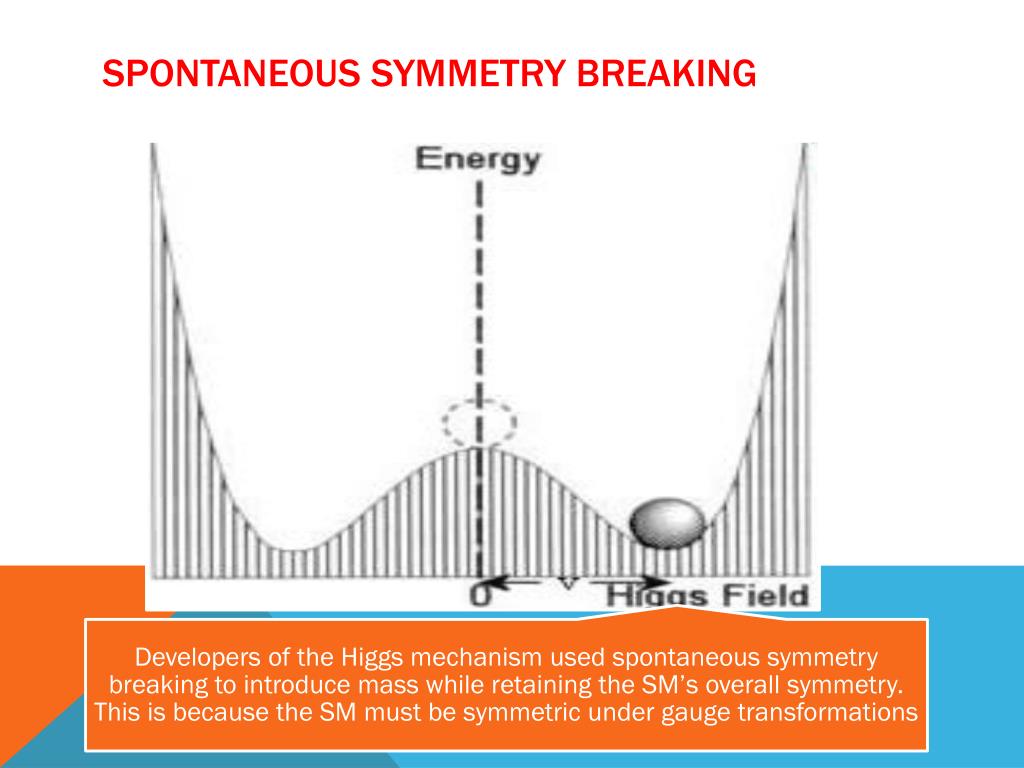
Spontaneous symmetry breaking (SSB) is one of those concepts that seems almost philosophically paradoxical: a system whose underlying laws are perfectly symmetric can nonetheless exist in a state that breaks that symmetry. The laws haven't changed; the ground state of the system has chosen a particular direction.
The standard physical analogy is a ferromagnet. At high temperatures, the iron atoms' magnetic moments point randomly in all directions — the system is rotationally symmetric. Below the Curie temperature, however, the moments align in a particular direction (determined by microscopic fluctuations), and the rotational symmetry is spontaneously broken. The direction chosen is arbitrary, but once chosen, the ground state is no longer symmetric, even though the underlying Hamiltonian still is.
In quantum field theory, the analogous phenomenon was studied extensively by Yoichiro Nambu, who shared the 2008 Nobel Prize in Physics partly for this work. Nambu and Giovanni Jona-Lasinio showed in 1961 that SSB in a relativistic field theory generates massless spin-0 particles — what Jeffery Goldstone then proved more generally in what became known as Goldstone's theorem. These massless particles are called Goldstone bosons.
Here was another wall: if you try to incorporate SSB into a relativistic quantum field theory to generate masses, you get Goldstone bosons that don't exist in nature. A theory that predicts the existence of massless scalar particles in the context of electroweak unification is immediately contradicted by experiment.
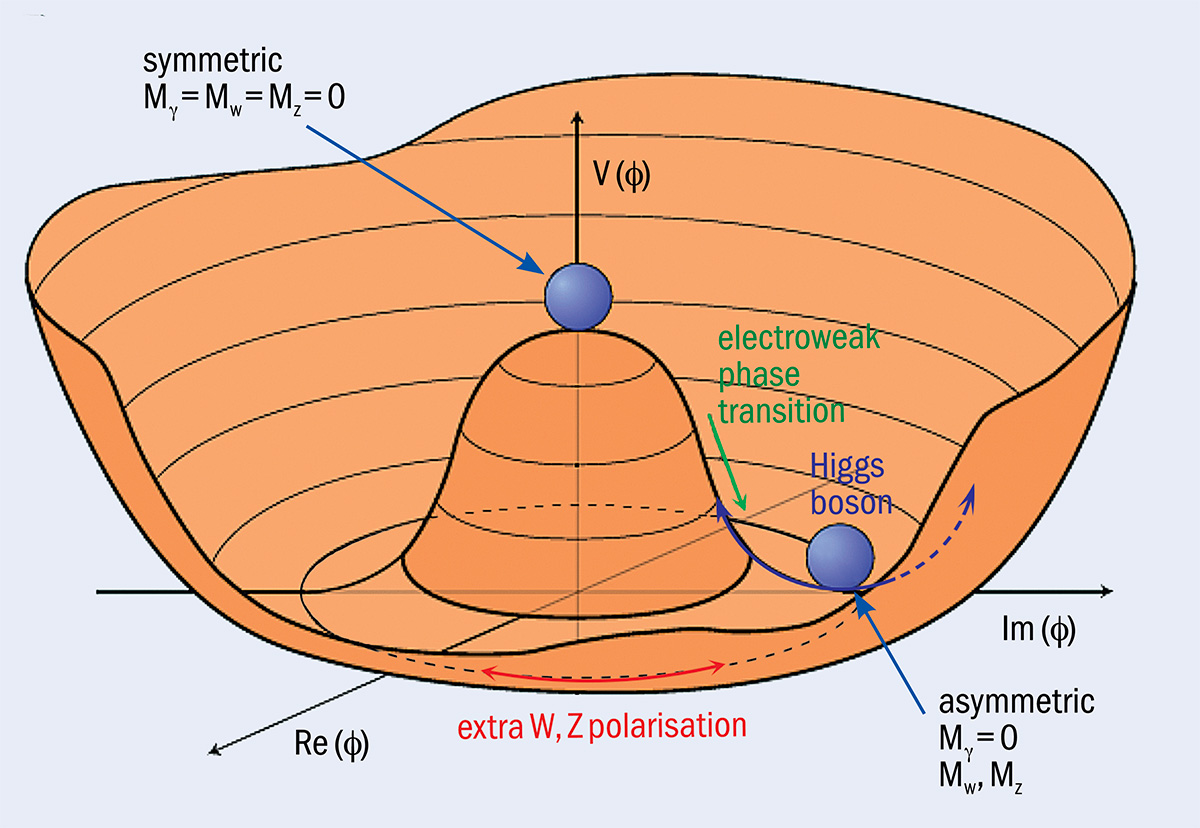
The resolution, which represents perhaps the most brilliant sleight-of-hand in the history of physics, was proposed independently by several groups in 1964. When SSB is applied to a gauge theory, the Goldstone bosons don't remain as physical particles — they are "eaten" by the gauge bosons, providing those gauge bosons with the longitudinal polarization degree of freedom that massive particles possess but massless ones don't. The gauge bosons become massive. The Goldstone bosons disappear from the physical spectrum. The result is a consistent, renormalizable theory with massive gauge bosons. This is the Higgs mechanism, and it is, by any measure, a profound piece of theoretical magic.
The 1964 Papers: A Priority Dispute That Lasted Decades
The history of who deserves credit for the Higgs mechanism is surprisingly contentious and worth examining in detail, both for what it reveals about the sociology of physics and for what it clarifies about the actual intellectual content of the ideas.
Three groups published papers on the mechanism in 1964, and all three papers were submitted to Physical Review Letters within weeks of each other. The first paper appeared in August 1964 by Robert Brout and François Englert, working in Brussels. Englert's Nobel lecture, delivered in 2013, would later describe their central insight: in a gauge theory, SSB does not produce Goldstone bosons as observable particles; instead, the would-be Goldstone bosons are absorbed into the longitudinal components of the gauge fields, which then acquire mass.
Peter Higgs, working independently in Edinburgh, submitted his paper to Physics Letters (where it was initially rejected) and then to Physical Review Letters, where it appeared in the same issue as the Brout-Englert paper. Crucially, Higgs's paper was the first to explicitly mention the existence of a massive scalar boson — the particle that now bears his name. This was not just a technical addendum; it was a remarkable prediction of what we would later call the Higgs boson itself.
The third group — Gerald Guralnik, Carl Hagen, and Tom Kibble — published their paper in November 1964. Their treatment was arguably the most mathematically complete and rigorous, explicitly demonstrating that the theory avoided the constraints of Goldstone's theorem in the context of gauge theories.
The Nobel Committee's decision in 2013 to award the prize only to Englert and Higgs (Brout had died in 2011) was widely criticized, particularly by physicists who felt that Guralnik, Hagen, and Kibble deserved recognition. The American Physical Society awarded all six authors (including Brout posthumously) the J.J. Sakurai Prize in 2010, an acknowledgment of the collaborative nature of the discovery. The episode illuminates a persistent tension in physics: the Nobel Prize, limited to three living recipients, struggles to capture the genuinely distributed nature of major theoretical breakthroughs.
There is also a deeper historical irony. The work by Philip Anderson in 1962 — on mass generation in superconductors through what is essentially a non-relativistic version of the same mechanism — arguably anticipated the central insight. Anderson explicitly suggested that the Goldstone theorem might be evaded in a relativistic gauge theory. This suggestion was not taken seriously by most particle physicists at the time, partly because Anderson was a condensed matter physicist, and the cultural divide between particle physics and condensed matter physics was (and remains) considerable. Steven Weinberg later acknowledged that if particle physicists had paid closer attention to condensed matter physics, the Higgs mechanism might have been discovered years earlier.
The Electroweak Synthesis: Where the Higgs Mechanism Becomes a Theory
The Higgs mechanism, as presented in the 1964 papers, was a beautiful idea looking for a physical application. That application arrived through the work of Sheldon Glashow, Abdus Salam, and Steven Weinberg, who in the period 1961–1968 developed what became the electroweak theory — a unified description of electromagnetism and the weak force that incorporated the Higgs mechanism to give masses to the W and Z bosons.
Weinberg's 1967 paper, "A Model of Leptons," is now recognized as one of the most important papers in the history of physics, but it was largely ignored for several years after publication. It received only one citation in 1968 and was not widely recognized as a major breakthrough until Gerard 't Hooft and Martinus Veltman proved in 1971 that spontaneously broken gauge theories are renormalizable — that is, that the infinities appearing in perturbative calculations can be systematically removed to yield finite, meaningful predictions. This proof transformed the electroweak theory from an intriguing speculation into a serious candidate for the correct theory of nature.
The prediction of the W and Z bosons, along with their masses (the W boson at approximately 80 GeV and the Z boson at approximately 91 GeV), was spectacularly confirmed at CERN in 1983, with the UA1 and UA2 collaborations discovering both particles. Carlo Rubbia and Simon van der Meer were awarded the Nobel Prize in Physics in 1984 for this discovery. By this point, the Higgs boson — the quantum of the field whose vacuum expectation value gives the W and Z their masses — was the last missing piece.
What made the situation philosophically interesting is that the Higgs field is not just responsible for the masses of the W and Z bosons. In the full Standard Model, quarks and leptons (the matter particles) also acquire their masses through what are called Yukawa couplings — direct interactions between the fermion fields and the Higgs field. The strength of these couplings is proportional to the mass of the fermion. The top quark, the heaviest known elementary particle, has a Yukawa coupling close to 1, suggesting a peculiarly intimate relationship with the Higgs field. The electron's Yukawa coupling, by contrast, is approximately 0.000003. Why these couplings have the values they do — why the fermion masses span twelve orders of magnitude — is one of the deepest unsolved problems in particle physics, sometimes called the flavor hierarchy problem or the "why is the electron so light?" problem.
The Large Hadron Collider: An Engineering Marvel Built to Find One Particle
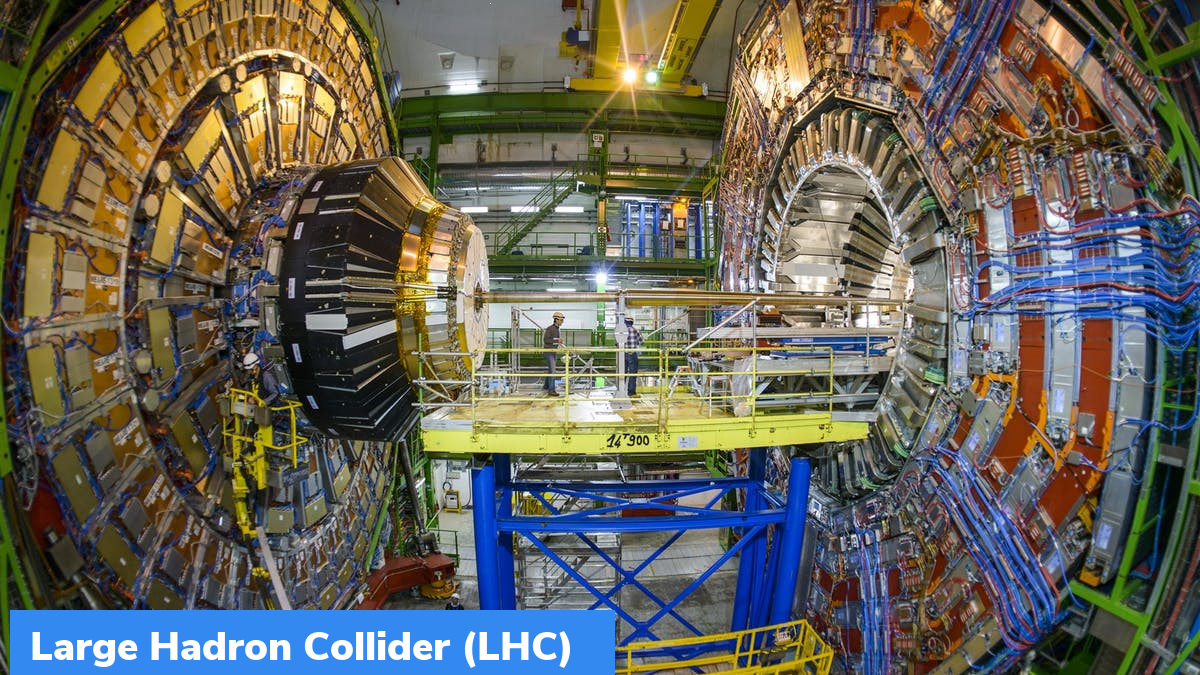
The scale of the experimental enterprise that led to the discovery of the Higgs boson is almost incomprehensible. The Large Hadron Collider is a 27-kilometer circular tunnel buried approximately 100 meters beneath the French-Swiss border near Geneva. It accelerates protons to 99.9999991% of the speed of light — so close that the protons experience time dilation by a factor of more than 7,000 — and collides them at four interaction points. At the time of the 2012 discovery, it was operating at a center-of-mass energy of 7–8 TeV (teraelectronvolts), making it by far the highest-energy particle accelerator ever built.
The two main detectors responsible for the discovery — ATLAS (A Toroidal LHC ApparatuS) and CMS (Compact Muon Solenoid) — are engineering achievements of comparable audacity. ATLAS is 46 meters long and 25 meters high, weighing approximately 7,000 tonnes. CMS, despite the word "compact" in its name, weighs 14,000 tonnes, making it the heaviest particle detector ever built. Each detector involves thousands of scientists and engineers from hundreds of institutions in dozens of countries.
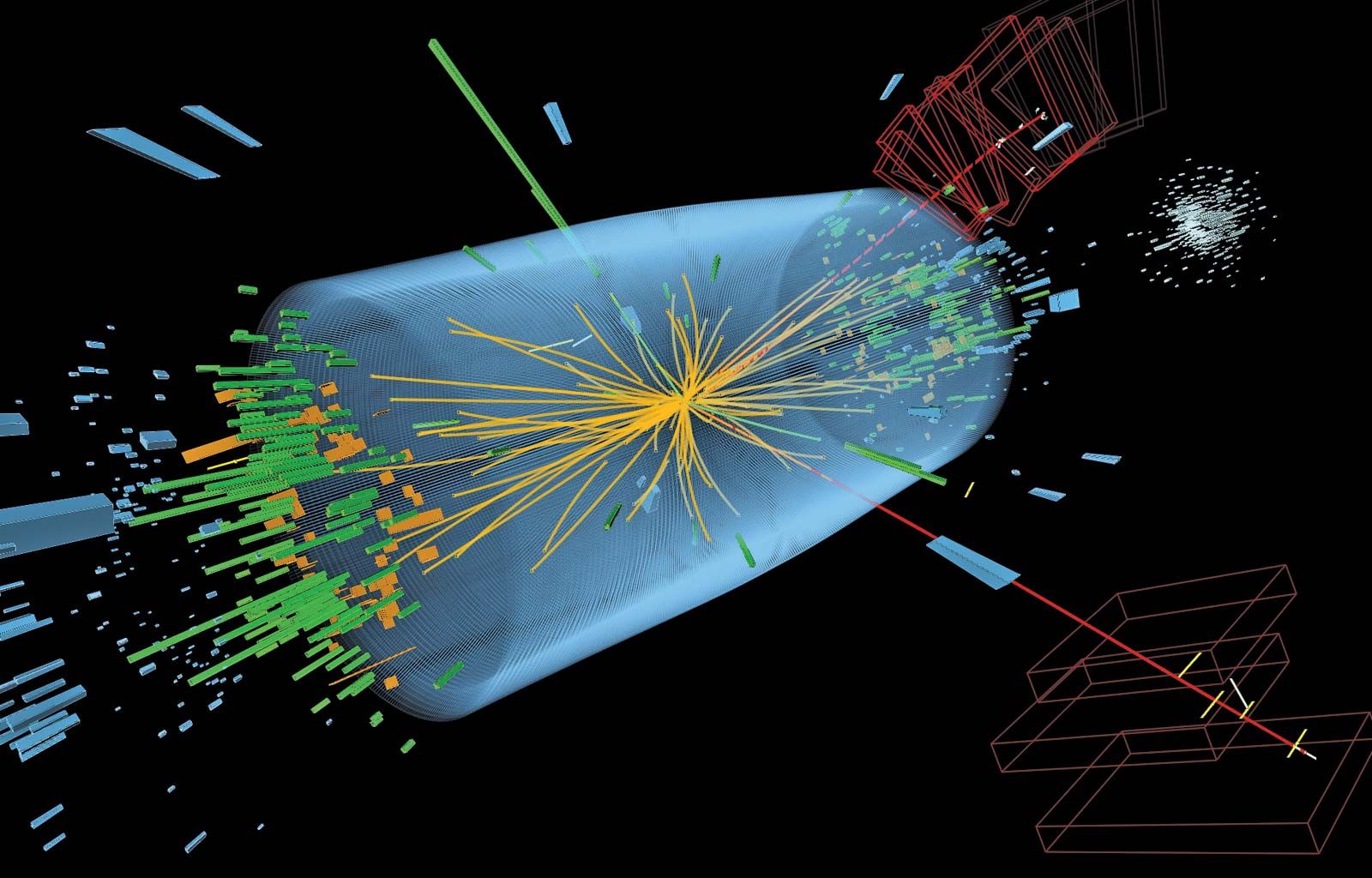
The Higgs boson is extraordinarily difficult to detect not only because it is massive (requiring enormous collision energies to produce) but because it decays almost instantaneously — with a mean lifetime on the order of 10⁻²² seconds. What physicists actually detect are the decay products of the Higgs boson. The primary discovery channels in 2012 were:
H → γγ (Higgs decaying to two photons): This channel is rare (occurring in only about 0.2% of Higgs decays) because the Higgs doesn't couple directly to photons (which are massless), but it proceeds through virtual loops of top quarks and W bosons. Despite its rarity, it provides excellent mass resolution because the photon energies can be measured very precisely, and the invariant mass of the two-photon system reconstructs a sharp peak at the Higgs mass.
**H → ZZ* → 4 leptons (the "golden channel"):** Here the Higgs decays to one real and one virtual Z boson, each of which then decays to a pair of leptons (electrons or muons). While rarer still, this channel provides the cleanest experimental signature — four charged leptons with no missing energy — making background suppression highly effective.
The statistical significance of the combined signal in July 2012 was announced at 5.0 sigma (ATLAS) and 4.9 sigma (CMS) — meaning the probability that the observed excess was a random fluctuation from background was less than one in a million. The Higgs boson mass was measured at approximately 125.09 GeV, a value that carries profound implications discussed below.
The Properties of the Higgs: What Has Been Measured and What It Means
The years following the 2012 discovery have been dedicated to a systematic program of measuring every property of the Higgs boson with increasing precision, comparing each measurement to Standard Model predictions. The results have been simultaneously reassuring and frustrating — reassuring because the particle continues to behave exactly as the Standard Model predicts, and frustrating because every deviation from the Standard Model would be a sign of new physics.
Mass and Spin-Parity
The Higgs boson mass of approximately 125.09 ± 0.24 GeV (as of the most recent combined measurements from Run 2 of the LHC) is measured with extraordinary precision. Its spin has been confirmed to be 0 — it is a scalar particle, the only fundamental scalar particle in the Standard Model. Its parity has been measured to be positive (making it a scalar rather than a pseudoscalar), consistent with Standard Model predictions. Alternative hypotheses — spin-2, pseudoscalar — have been ruled out at high confidence levels.
Couplings to Other Particles
Perhaps the most telling measurements concern how strongly the Higgs couples to other particles. The Standard Model makes a specific and powerful prediction: the Higgs coupling to any particle should be proportional to that particle's mass. A particle that couples more strongly to the Higgs field acquires more mass; this is the definition of the mechanism.
Remarkably, this prediction has been confirmed across an enormous range of masses and particle types. The coupling to the top quark (top quark mass ≈ 173 GeV), the W boson (≈ 80 GeV), the Z boson (≈ 91 GeV), the bottom quark (≈ 4.2 GeV), the tau lepton (≈ 1.78 GeV), and the muon (≈ 0.106 GeV) have all been measured and found consistent with the linear mass-coupling relationship. The coupling to gluons (zero mass) and photons (zero mass) proceeds through virtual loops, as predicted.
This confirmation of the mass-proportional coupling is not trivial. It means we now have direct experimental evidence that the Higgs mechanism is indeed the source of mass for all these particles. The alternative — that particles might have intrinsic masses independent of the Higgs — is directly ruled out by these measurements.
The Self-Coupling Problem
One crucial Higgs property remains unmeasured: the Higgs self-coupling, which determines the shape of the Higgs potential and is responsible for the spontaneous symmetry breaking itself. The Higgs potential, in the Standard Model, takes a characteristic "Mexican hat" shape — a potential that has a maximum at zero field value and a minimum at a nonzero value (the vacuum expectation value of approximately 246 GeV). This self-coupling can in principle be measured by looking for events in which two Higgs bosons are produced simultaneously (di-Higgs production).
Di-Higgs production is extraordinarily rare — occurring at the LHC with a cross-section roughly 1,000 times smaller than single Higgs production — and has not been observed as a statistically significant signal as of 2024. The HL-LHC (High-Luminosity LHC), expected to operate from approximately 2029 onward, will accumulate roughly ten times more data than the current LHC runs, providing the statistical power needed to observe di-Higgs production and begin measuring the self-coupling. This measurement is considered one of the most important physics goals in high-energy physics because the shape of the Higgs potential directly determines the nature of the electroweak phase transition and has profound cosmological implications.
The Hierarchy Problem: Why the Higgs Mass Is Disturbing
Here we arrive at what is arguably the most troubling conceptual problem associated with the Higgs boson — a problem that has driven theoretical physics for four decades and has yet to be resolved. It is called the hierarchy problem, or sometimes the naturalness problem, and it can be stated simply: Why is the Higgs boson mass 125 GeV, rather than 10¹⁸ GeV?
This question may seem bizarre. The Higgs mass is what it is; why should it be anything different? The answer involves what physicists call radiative corrections. In quantum field theory, every physical quantity receives quantum corrections — contributions from virtual particle loops that can be computed in perturbation theory. For most particles, these corrections are proportional to the particle's own mass, so they don't destabilize the mass — the correction and the original mass are "of the same order."
The Higgs boson is different. Because it is a scalar particle (spin-0), it receives quantum corrections that are proportional not to the Higgs mass itself, but to the square of the highest energy scale in the theory — the ultraviolet cutoff. If the Standard Model is valid only up to some energy scale Λ (beyond which new physics takes over), then the Higgs mass squared receives a correction of order:
δm²_H ~ (g²/16π²) Λ²
where g is the relevant coupling constant. If Λ is the Planck scale (~10¹⁸ GeV), the correction to the Higgs mass squared is approximately 10³⁶ times larger than the observed Higgs mass squared (~10⁴ GeV²). To maintain a Higgs mass of 125 GeV, the "bare" Higgs mass (the mass before quantum corrections) and the correction must cancel to one part in 10³², a seemingly miraculous cancellation that must be tuned by hand to extraordinary precision.
This is "unnatural" in the technical sense used by physicists: a theory is natural if all parameters are of order unity in appropriate units, or if small parameters are protected by symmetries. The Higgs mass receives no such symmetry protection in the Standard Model — unlike, say, fermion masses, which are protected by chiral symmetry.
The hierarchy problem has generated several major proposed solutions, each with its own theoretical framework and experimental signatures.
Supersymmetry
The most extensively studied solution is supersymmetry (SUSY), which proposes that every particle in the Standard Model has a "superpartner" with spin differing by one-half. The key property of SUSY is that the quantum corrections to the Higgs mass from loops of Standard Model particles are exactly cancelled by the corrections from loops of their superpartners — the cancellation is guaranteed by the symmetry, not by arbitrary fine-tuning. This is because bosons and fermions contribute to loop corrections with opposite signs.
SUSY predicts an entire new spectrum of particles — squarks, sleptons, gluinos, neutralinos, charginos — with masses ideally of order 1 TeV or below to solve the hierarchy problem without reintroducing fine-tuning. Despite enormous experimental effort at the LHC, no supersymmetric particles have been observed. This non-discovery has placed severe constraints on SUSY parameter spaces and has led many physicists to question whether low-energy SUSY is realized in nature.
The Higgs mass of 125 GeV has itself placed constraints on SUSY models. In the minimal version of SUSY (the MSSM), the lightest Higgs boson should have a mass below approximately 135 GeV — the observed mass is consistent with SUSY, but places the theory in a somewhat strained corner of parameter space requiring heavy stop quarks (superpartners of the top quark), which in turn requires some degree of fine-tuning to maintain naturalness. This uncomfortable situation is sometimes called the "little hierarchy problem" within SUSY models.
Extra Dimensions
An alternative solution to the hierarchy problem involves extra spatial dimensions. In the Randall-Sundrum model (proposed by Lisa Randall and Raman Sundrum in 1999), there are two three-dimensional "branes" embedded in a five-dimensional spacetime with warped geometry. The exponential warping of the fifth dimension naturally generates the hierarchy between the Planck scale and the electroweak scale without fine-tuning. In this framework, the Higgs boson is localized on one brane and its effective mass is exponentially suppressed relative to the Planck scale.
Extra-dimension models predict the existence of Kaluza-Klein excitations — heavier copies of Standard Model particles corresponding to momentum modes in the extra dimension. These would appear as new heavy resonances in collider data, and searches for them at the LHC have so far come up empty.
Composite Higgs Models
Another class of solutions proposes that the Higgs boson is not an elementary particle at all, but a composite state — a bound state of more fundamental constituents held together by a new strong force, analogous to how pions are composite states of quarks. In these "composite Higgs" models, the Higgs boson emerges as a pseudo-Nambu-Goldstone boson of a global symmetry of the new strong sector, providing a natural explanation for its lightness.
Composite Higgs models predict modifications to the Higgs couplings (at the few-percent level), additional scalar resonances, and possibly new vector resonances at TeV scales. The LHC measurements of Higgs couplings are becoming precise enough to begin constraining composite Higgs scenarios.
The Multiverse and Anthropic Selection
Perhaps the most philosophically radical response to the hierarchy problem invokes the multiverse — the idea that our universe is one of an enormous (perhaps infinite) ensemble of universes with different values of physical parameters, and that we observe a universe with a small Higgs mass because only in such universes does the complexity necessary for observers exist. This anthropic approach was advocated by Steven Weinberg in the context of the cosmological constant and has been extended to the Higgs mass problem by a number of theorists.
The anthropic explanation is scientifically problematic because it makes no falsifiable predictions — any value of the Higgs mass consistent with our existence becomes equally "explained." Many physicists find it deeply unsatisfying, viewing it as a surrender of the explanatory ambitions of physics. Others, including some of the most prominent theorists in the field, have come to accept it as the most honest acknowledgment of our situation. The debate is unresolved and touches on fundamental questions about what science can and cannot explain.
Vacuum Stability and the Fate of the Universe
The measured Higgs mass of approximately 125 GeV carries a disturbing cosmological implication that became clear only when combined with precise measurements of the top quark mass. The Standard Model vacuum — the state of minimum energy in which we exist — may not be the true minimum of the Higgs potential. It may be only a metastable local minimum, with a deeper, true minimum at much larger Higgs field values.
This possibility arises from the running of the Higgs self-coupling with energy scale, calculated using the renormalization group equations. The self-coupling λ is positive at low energies (as required for vacuum stability), but its evolution with energy depends sensitively on the Higgs mass, the top quark mass, and the strong coupling constant. For the measured values (Higgs mass ~125 GeV, top quark mass ~173 GeV), the self-coupling λ runs to negative values at very high energies (around 10¹⁰–10¹² GeV), suggesting that the true minimum of the Higgs potential is actually at a much larger field value.
If this is correct, the electroweak vacuum in which we live is metastable — like a ball sitting in a shallow valley, with a deeper valley somewhere far away. The lifetime of the metastable vacuum can be computed, and it comes out to be astronomically long — far greater than the current age of the universe. So the practical implications for our immediate cosmic neighborhood are zero. We are not in imminent danger of a phase transition that would destroy the known laws of physics.
But the conceptual implications are profound. A quantum tunneling event (an "instanton") could nucleate a bubble of true vacuum anywhere in space, and this bubble would expand at the speed of light, altering the fundamental laws of physics within it. The fact that we exist in a metastable vacuum, if true, has implications for cosmology and for the ultimate fate of the universe on timescales vastly exceeding its current age.
Crucially, the precise determination of whether our vacuum is stable, metastable, or unstable depends critically on the accurate measurement of the top quark mass and the Higgs mass, as the boundary between stability regions passes remarkably close to the measured values. This has led to speculation that perhaps a deeper principle — possibly related to asymptotic safety or some boundary condition at the Planck scale — selects these precise values. The Japanese physicist Yutaka Kawamura and the physicists Froggatt and Nielsen have explored such ideas, though no consensus has emerged.
The Higgs Boson and the Early Universe
The Higgs field was not always in its current symmetry-broken state. In the very early universe, at temperatures above approximately 10¹⁵ Kelvin (corresponding to energies above ~100 GeV), the thermal fluctuations of the Higgs field were so large that the symmetry-breaking vacuum expectation value was washed out — the Higgs field sat at zero, and the electroweak symmetry was restored. All particles were effectively massless.
As the universe expanded and cooled through what is called the electroweak phase transition, the Higgs field settled into its current vacuum state, spontaneously breaking the electroweak symmetry and giving masses to the W and Z bosons and to the fermions. The nature of this phase transition — whether it was "first order" (abrupt, with bubble nucleation) or "second order" (smooth, continuous) — is a question of intense current interest because it has direct implications for baryogenesis: the generation of the matter-antimatter asymmetry that allowed matter to dominate the early universe.
For the observed Higgs mass of 125 GeV, lattice calculations indicate that the electroweak phase transition in the Standard Model was actually a smooth crossover, not a first-order transition. This is cosmologically unfortunate: first-order transitions are required for electroweak baryogenesis (one of the leading mechanisms for generating the baryon asymmetry) because they provide the necessary departure from thermal equilibrium. The smooth crossover in the Standard Model is not sufficient to produce the observed baryon-to-photon ratio.
This means that extensions of the Standard Model — modifications to the Higgs sector — may be required to explain why there is more matter than antimatter in the universe. Many BSM scenarios, including those with additional scalar fields (singlet extensions, two-Higgs-doublet models) or with a composite Higgs, can restore a first-order electroweak phase transition. The gravitational wave signal from a first-order electroweak phase transition is potentially detectable by future space-based gravitational wave observatories, most notably LISA (Laser Interferometer Space Antenna), planned for launch in the 2030s. This represents a genuinely novel intersection between particle physics and gravitational wave astronomy — a measurement that could probe the Higgs potential at a cosmological scale.
The Higgs and Dark Matter: A Potential Connection
The Standard Model accounts for approximately 5% of the energy content of the universe. Dark matter (approximately 27%) and dark energy (approximately 68%) remain entirely outside its scope. The Higgs boson offers several intriguing potential connections to the dark sector.
In the simplest dark matter models, a neutral scalar particle (the dark matter candidate) interacts with ordinary matter through the Higgs boson — what physicists call "Higgs portal" dark matter. In these models, the dark matter particle couples directly to the Higgs field through a scalar or vector interaction. The Higgs portal is theoretically elegant precisely because the Higgs is the only Standard Model particle that can couple to a gauge-singlet scalar without violating any symmetry.
Searches for invisible Higgs decays — where the Higgs decays into dark matter particles that escape the detector, leaving only missing energy — are among the most actively pursued analyses at the LHC. The branching ratio of the Higgs to invisible particles has been constrained to be less than approximately 19% at 95% confidence level (as of 2022), using both direct searches and precision coupling measurements. This places significant constraints on Higgs portal dark matter models, particularly those with relatively light dark matter candidates.
In SUSY models, the lightest supersymmetric particle (LSP) — often the lightest neutralino — is a natural dark matter candidate, and its mass and couplings to the Higgs are directly connected. The lack of evidence for supersymmetric particles at the LHC has largely (though not entirely) ruled out the "well-tempered neutralino" scenarios that were considered most natural before the LHC era.
Beyond One Higgs: Extended Higgs Sectors
The Standard Model requires only a single Higgs doublet — a complex doublet of scalar fields with four degrees of freedom, three of which become the longitudinal polarizations of the W⁺, W⁻, and Z bosons, while the fourth gives the physical Higgs boson. But there is no fundamental reason why nature must be so parsimonious. Many BSM theories predict extended Higgs sectors with additional scalar particles.
Two-Higgs-Doublet Models (2HDM)
The simplest extension adds a second Higgs doublet, resulting in a physical spectrum containing five Higgs bosons: two neutral scalars (h and H), one neutral pseudoscalar (A), and two charged scalars (H±). Different types of 2HDMs (classified by which doublet couples to up-type quarks, down-type quarks, and leptons) make different predictions for the coupling patterns of the additional scalars.
The MSSM is itself a specific type of 2HDM, and the presence of two doublets in SUSY is required by anomaly cancellation and by the impossibility in SUSY of using a single doublet to generate masses for both up-type and down-type quarks (since the doublet and its conjugate cannot simultaneously appear in the superpotential).
Searches for charged Higgs bosons, which would decay primarily to tb̄ or τν in different mass regimes, are ongoing at the LHC. The existence of a charged Higgs would immediately confirm physics beyond the Standard Model.
Triplet Extensions and the ρ Parameter
Extensions of the Higgs sector to include larger representations (triplets, for example) are more constrained by precision electroweak data, particularly the measurement of the "ρ parameter" (also called the T parameter), which measures the ratio of the W and Z masses in a specific combination. The Standard Model with a single Higgs doublet predicts ρ = 1 at tree level, in excellent agreement with experiment. Higgs triplets generally break this relation and are therefore constrained to have vacuum expectation values that are small compared to the doublet's VEV.
The Type II seesaw mechanism for neutrino mass generation, which involves a Higgs triplet with a small VEV, is one physically motivated example of such an extension. Its Higgs sector includes doubly charged scalars (H±±) that would decay to same-sign lepton pairs — a spectacular and distinctive experimental signature.
The Muon Anomalous Magnetic Moment and the Higgs
No discussion of the Higgs boson's role in contemporary physics can avoid the persistent tension surrounding the muon's anomalous magnetic moment, often written as (g-2)_μ. The magnetic moment of the muon is one of the most precisely measured quantities in physics, and its deviation from the simple Dirac prediction — the "anomalous" part — can be calculated in the Standard Model by accounting for quantum corrections from loops of virtually every particle in the theory, including the Higgs boson.
For decades, there has been a discrepancy between the measured value of (g-2)_μ and the Standard Model prediction at a level hovering around 3.5–4.5 sigma, depending on how the hadronic contributions (which are the hardest to compute from first principles) are evaluated. The Fermilab Muon g-2 experiment, which reported its first result in 2021 and updated measurements subsequently, has confirmed and slightly strengthened this discrepancy.
The Higgs boson itself contributes to (g-2)_μ at a calculable level — the Yukawa coupling of the Higgs to the muon, combined with virtual Higgs loops, makes a specific, tiny prediction. The Standard Model prediction for this Higgs contribution is too small to account for the discrepancy. However, in extended Higgs sectors (particularly those with additional neutral scalars coupling to muons with enhanced strength), there could be contributions to (g-2)_μ large enough to resolve the discrepancy. This has motivated theoretical work on "muon-specific" BSM models in which new scalars have enhanced couplings to the muon.
A complicating factor emerged in 2021–2022 when new lattice QCD calculations of the hadronic vacuum polarization contribution to (g-2)_μ were published by the BMW collaboration, finding a value that would bring the Standard Model prediction into agreement with experiment, eliminating the discrepancy. This result is in tension with the traditional "dispersive" approach using data from electron-positron collisions, and the community has not yet reached consensus on which calculation is more reliable. The discrepancy may dissolve, or it may persist — the answer depends on extremely difficult QCD calculations that are still in progress.
Cross-Domain Connections: The Higgs Mechanism Beyond Particle Physics
One of the most intellectually satisfying aspects of the Higgs mechanism is that it is not an isolated idea invented specifically for particle physics. It is an instance of a profound and general phenomenon — spontaneous symmetry breaking and the generation of effective mass for gauge fields — that appears in completely different physical contexts.
Superconductivity and the Anderson-Higgs Mechanism
The Meissner effect in superconductivity — the expulsion of magnetic fields from a superconductor — is precisely the non-relativistic analog of the Higgs mechanism. In BCS theory, the formation of Cooper pairs (pairs of electrons with opposite momenta and spins) leads to a condensate that breaks the U(1) gauge symmetry of electromagnetism. As a result, the photon acquires an effective mass inside the superconductor (characterized by the London penetration depth), and magnetic fields are exponentially screened — they cannot penetrate the superconductor.
This mathematical correspondence is not a superficial analogy. The field equations in both cases are related by taking the non-relativistic limit and making appropriate identifications. Philip Anderson made this connection explicit in 1963, noting that the "Meissner effect" of gauge field mass generation in superconductors provides an existence proof for the mechanism now called the Higgs mechanism in particle physics.
Condensed Matter Physics: Nambu-Goldstone Modes and "Higgs Modes"
In condensed matter physics, "Higgs modes" — amplitude oscillations of an order parameter — have been observed in a variety of systems. In a superconductor, the Higgs mode corresponds to amplitude oscillations of the superconducting gap. In antiferromagnets, in cold atomic systems near quantum phase transitions, and in charge density wave systems, Higgs modes have been detected using techniques such as terahertz spectroscopy and Raman scattering.
The experimental detection of Higgs modes in condensed matter systems was itself challenging, because these amplitude modes are typically weakly coupled to standard probes and can be obscured by Nambu-Goldstone modes. Their observation represents a beautiful instance of cross-disciplinary transfer: the theoretical framework developed for the particle physics Higgs boson informed the search for and interpretation of analogous excitations in many-body quantum systems, and the experimental techniques of condensed matter physics are, in turn, providing new perspectives on the physics of order parameters and symmetry breaking.
Cosmological Inflation and Scalar Fields
The Higgs boson is the only fundamental scalar particle confirmed to exist, which makes it a subject of intense interest in cosmology, where scalar fields play a central role in the theory of inflation — the hypothetical period of exponential expansion in the very early universe that smoothed out the cosmos and generated the primordial density perturbations from which galaxies formed.
The simplest inflationary models require a scalar field (the "inflaton") slowly rolling down a potential. Could the Higgs boson itself be the inflaton? This "Higgs inflation" scenario, proposed by Fedor Bezrukov and Mikhail Shaposhnikov in 2008, involves adding a non-minimal coupling between the Higgs field and the Ricci scalar curvature of spacetime. With a sufficiently large non-minimal coupling (ξ ~ 10⁴), the Higgs potential is flattened at large field values, producing a spectrum of primordial density perturbations consistent with CMB observations.
Higgs inflation remains one of the most economical inflationary models, requiring no new scalar fields beyond the Standard Model Higgs. However, it faces challenges related to unitarity violation at energies below the Planck scale, which may require the addition of new physics (such as specific SUSY completions) to be fully consistent.
The Future: Experimental Frontiers
High-Luminosity LHC
The High-Luminosity LHC (HL-LHC), the upgrade of the current LHC expected to begin operation around 2029, will collide protons at the same maximum energy (14 TeV center-of-mass) but with approximately five to seven times higher instantaneous luminosity, accumulating a total dataset of 3,000 inverse femtobarns — compared to the approximately 300 inverse femtobarns collected by the end of LHC Run 3. This enormous dataset will enable:
- Measurement of Higgs couplings to all particles at the percent level, providing stringent tests of Standard Model predictions and sensitivity to BSM modifications
- First observation of di-Higgs production and initial constraints on the Higgs self-coupling
- Searches for rare Higgs decays, including H → μμ (already observed with Run 2 data at low significance) and H → Zγ
- Improved searches for invisible Higgs decays and exotic Higgs decays
Future Colliders
Beyond the HL-LHC, the global physics community is debating the design and justification for next-generation colliders. The leading proposals include:
The Future Circular Collider (FCC): CERN is studying a 100-kilometer circular tunnel that could first operate as a high-luminosity electron-positron collider (FCC-ee) running at and near the Higgs mass to produce millions of Higgs bosons with extraordinary precision — making it a genuine "Higgs factory." In a second phase, the same tunnel would house a proton-proton collider (FCC-hh) reaching 100 TeV center-of-mass energy, providing access to new particles far beyond LHC reach.
The International Linear Collider (ILC): A proposed electron-positron linear collider with a center-of-mass energy of 250 GeV to 1 TeV, optimized for Higgs measurements. Japan has expressed interest in hosting the ILC, and there have been periodic discussions about international funding, though as of 2024 no formal commitment has been made.
The Circular Electron Positron Collider (CEPC): China's proposal for a 100-kilometer electron-positron collider, also primarily motivated by Higgs factory physics, with similar physics reach to FCC-ee.
The Compact Linear Collider (CLIC): CERN's design for a multi-TeV linear electron-positron collider using a novel two-beam acceleration technique.
Each of these projects represents an investment of tens of billions of euros or dollars and a commitment spanning decades. The decision about which (if any) to build will shape the direction of particle physics for a generation.
The Higgs Boson and the Philosophy of Physics
The Higgs boson has forced physicists and philosophers of science to engage with a set of conceptual questions that go beyond the purely technical. What does it mean for a field to "permeate all of space"? Is the Higgs field more "real" than other quantum fields, given that it has a nonzero vacuum expectation value? Does the mass generated by the Higgs mechanism represent a genuinely different kind of mass than gravitational mass?
Philosopher of physics David Wallace has argued that quantum field theory, properly understood, requires us to take quantum fields — including the Higgs field — as the fundamental ontological entities, with particles being emergent phenomena (localized excitations) rather than primary objects. On this view, the Higgs field is "real" in a very strong sense, and asking what it is "made of" is a category error.
The concept of naturalness — the idea that a physical theory should not require extraordinary fine-tuning — has also come under philosophical scrutiny. Some philosophers of science, notably Richard Dawid, have argued that naturalness is essentially an aesthetic or sociological criterion rather than a rigorous scientific principle, and that the failure of BSM physics to appear at the LHC should prompt a reassessment of naturalness as a guide to theory construction. Others, including Nobel laureate Gerard 't Hooft (who codified the technical definition of naturalness), maintain that it reflects a deep physical principle about the separability of scales — the idea that physics at very different energy scales should be largely independent of each other.
The question of what the LHC's null results (the non-discovery of supersymmetry, extra dimensions, and other BSM physics) mean for the future of theoretical physics is one of the most actively debated in the field. Some physicists, like Nima Arkani-Hamed, argue that the situation is an unprecedented crisis requiring radical new ideas. Others, like Nigel Lockyer (former director of Fermilab), note that the Standard Model has passed every test and that we should be patient. Still others are exploring frameworks — asymptotic safety, relaxion models, clockwork mechanisms — that provide new approaches to naturalness without supersymmetry or extra dimensions.
What We Don't Know: The Honest Accounting
After more than a decade of precision measurements, here is an honest accounting of what remains unknown about the Higgs boson and the physics it embodies:
The Higgs self-coupling: Not yet measured. Expected to be accessible at the HL-LHC and required by any future Higgs factory.
Why the Higgs mass is 125 GeV: No explanation within the Standard Model. Every proposed BSM solution (SUSY, extra dimensions, composite Higgs, etc.) remains unconfirmed by experiment.
The nature of the electroweak phase transition: Lattice QCD indicates a smooth crossover in the SM, but extensions of the Higgs sector (measurable through di-Higgs production and Higgs self-coupling) could change this.
Whether there are additional Higgs bosons: Theoretically well-motivated, experimentally unconstrained in large regions of parameter space.
The connection between the Higgs field and dark matter: The Higgs portal remains viable but constrained. No dark matter signal has been detected.
Whether the electroweak vacuum is stable: Current best estimates suggest metastability, but the answer depends on sub-percent precision measurements of the top quark mass and the Higgs self-coupling.
Why the Yukawa couplings have the values they do: The flavor hierarchy — why the top quark is 300,000 times heavier than the electron — is entirely unexplained.
Whether the Higgs boson has any role in inflation: Higgs inflation is possible but faces theoretical challenges and makes predictions testable only through future CMB B-mode measurements.
Conclusion: The Weight of the Invisible
The Higgs boson is, in one sense, the most successfully predicted particle in the history of science — proposed in 1964, found forty-eight years later almost exactly where and how theorists said it would be. But in another sense, the Higgs boson is the most disquieting discovery in decades of particle physics. It confirms a mechanism that, upon confirmation, immediately raises the question of why that mechanism has the particular properties it does — properties that seem fine-tuned, fragile, and cosmologically peculiar.
The Higgs field is not merely a technical device for mass generation. It is a physical reality — an invisible background field of scalar quanta that permeates the entire universe, whose vacuum state is responsible for the masses of everything you have ever touched, seen, or are composed of. It was set into its current state within the first trillionth of a second of the universe's history, through a phase transition whose precise nature may have determined whether matter or antimatter survived to form the world we inhabit. Its stability over cosmic time is not guaranteed. Its connection to the dark sector remains opaque. Its mass value, sitting in a strange no-man's-land between stability and instability, may be telling us something about Planck-scale physics that we do not yet have the mathematical tools to read.
There is a particular kind of scientific courage in holding two thoughts simultaneously: that we have achieved something extraordinary in discovering and characterizing the Higgs boson, and that this achievement has revealed, with uncommon clarity, how much we do not yet understand. The Higgs boson is not the period at the end of a sentence. It is a question mark — one of the largest and most precisely formed question marks in the entire history of natural philosophy. The physicists who will answer what it is pointing toward have, in many cases, not yet been born. The experiments that will tell us the answer have, in many cases, not yet been designed.
That, in the end, is the gift of a truly great scientific discovery: not the comfort of a final answer, but the illumination of the next dark room, stretching away into territories we have not yet begun to map.