There is a photograph, taken on February 14, 1990, from a distance of approximately 6 billion kilometers, in which the Earth appears as a pale blue dot—a mote of dust suspended in a sunbeam, barely distinguishable from the noise in the image. Carl Sagan, who had lobbied NASA for years to turn Voyager 1's camera backward for precisely this purpose, wrote about it with the kind of philosophical weight that few scientific observations have ever generated: "Our planet is a lonely speck in the great enveloping cosmic dark." That image—and Sagan's meditation on it—became one of the most reproduced photographs in history, not because it showed us something new about the universe, but because it showed us something devastating and clarifying about ourselves.
The Voyager Program is often described in superlatives: the farthest, the longest, the most productive robotic missions ever launched. These superlatives are all technically true, but they risk reducing something genuinely extraordinary to a highlight reel. The real story of Voyager is messier, more contingent, more philosophically weighted, and more scientifically surprising than any summary can capture. It is a story about a rare gravitational alignment that occurs once every 175 years, about engineers who built machines designed to last five years that are still operating nearly fifty years later, about the slow strangulation of a mission by the unstoppable physics of radioactive decay, about what it means to send a physical object—and a message—into a void so vast that it will travel for 40,000 years before making its closest approach to another star.
This article attempts to do justice to all of it.
The Grand Tour: A Window That Almost Closed
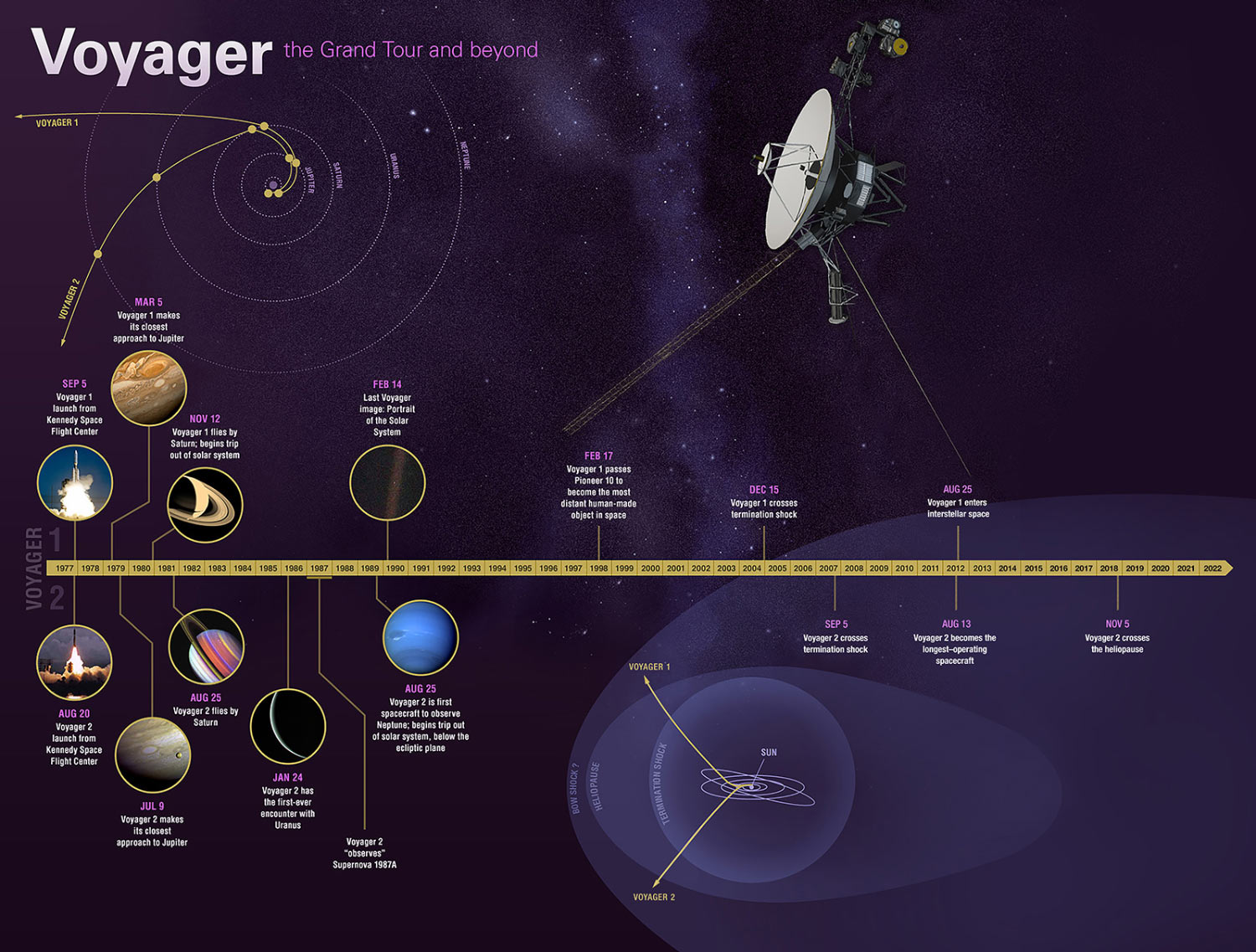
To understand why the Voyager missions exist at all, you have to understand a specific quirk of orbital mechanics that a then-young aerospace engineer named Gary Flandro noticed in 1965 while working at NASA's Jet Propulsion Laboratory. Flandro was tasked with identifying future trajectories for outer planet missions, and in doing so he recognized that in the late 1970s, Jupiter, Saturn, Uranus, and Neptune would be arranged on the same side of the Sun in a configuration that would allow a single spacecraft to visit all four using gravitational assist maneuvers—essentially using the gravity of each planet to accelerate toward the next, like a billiard ball ricocheting between cushions. This alignment occurs roughly once every 175 years. The last time it had presented itself, the Wright Brothers hadn't yet flown.
Flandro published his findings in a 1966 paper that generated significant internal excitement at JPL and NASA. The resulting conceptual program was grandly named the "Grand Tour," and initial planning envisioned a fleet of spacecraft launching in 1976 and 1977 to take advantage of the alignment. The full Grand Tour concept, however, was ambitious to the point of political toxicity. In its most expansive form, it called for four spacecraft—two visiting Jupiter, Saturn, and Pluto, two others visiting Jupiter, Uranus, and Neptune—at an estimated cost that, adjusted for the budget pressures of the early 1970s, NASA simply could not secure.
The Nixon administration's Office of Management and Budget gutted the Grand Tour funding in 1972. What survived was a substantially scaled-back program initially called the Mariner Jupiter-Saturn project—two spacecraft, targeting only Jupiter and Saturn, with Uranus and Neptune not in the baseline mission plan at all. It was only later, and somewhat quietly, renamed Voyager. The philosophical gap between the Grand Tour that almost was and the Voyager program that actually launched represents one of the great counterfactual questions in space exploration history: what would we know today if the full constellation of spacecraft had flown?
What actually happened is remarkable enough. The Voyager spacecraft were designed with enough capability—and enough fuel margin for trajectory corrections—that mission planners never fully closed the door on extended missions to Uranus and Neptune. Voyager 2 in particular was launched on a trajectory that kept those options open, though they were not official mission objectives at launch. This decision, embedded quietly in the engineering margins, would eventually enable what became the only close-up reconnaissance of Uranus and Neptune humanity has ever conducted.
The Engineering Achievement: Building for a Journey Without Maps
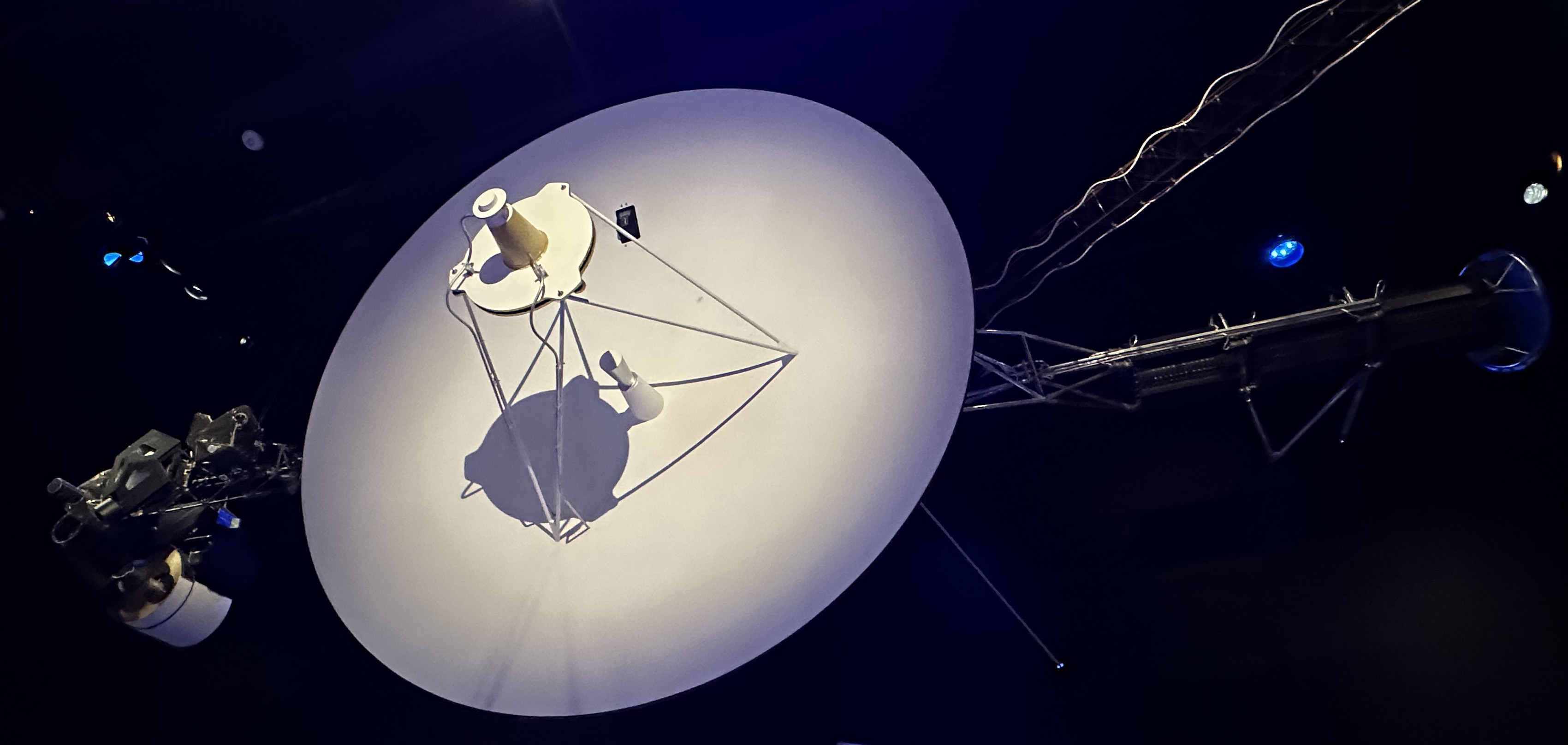
The Voyager spacecraft are, by any measure, astonishing engineering artifacts. Each weighed approximately 773 kilograms at launch and was built around a decagonal (ten-sided) aluminum framework bus roughly 47 centimeters deep. But their instruments—cameras, magnetometers, plasma analyzers, cosmic ray detectors, ultraviolet spectrometers, infrared radiometers, and more—extended outward on booms to distances that made the total spacecraft footprint nearly 13 meters across. The entire assembly had to survive launch vibrations, deep space thermal extremes, intense radiation environments near Jupiter, and decades of continuous operation.
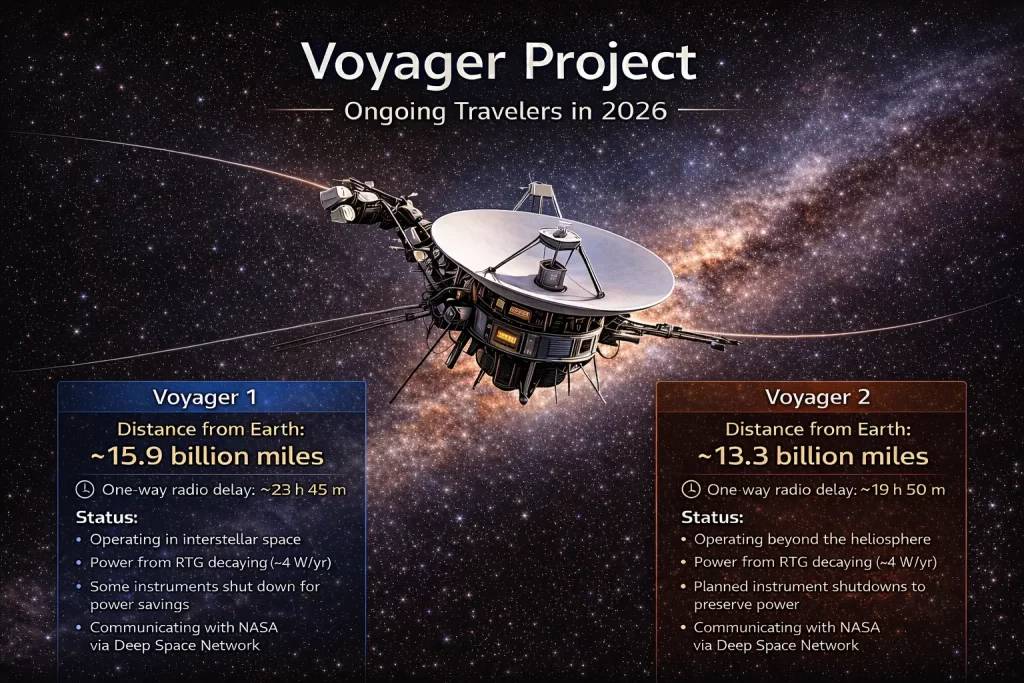
The power source deserves particular attention. Rather than solar panels—which at the distance of Jupiter receive only about 4% of the solar energy available at Earth, and at Neptune less than 0.1%—the Voyagers were powered by three Radioisotope Thermoelectric Generators (RTGs) containing plutonium-238 dioxide. These devices exploit the Seebeck effect: thermoelectric couples convert the temperature difference between the hot plutonium heat source (~750°C at launch) and the cold space environment into electrical current. At launch, each spacecraft generated approximately 470 watts. But plutonium-238 has a half-life of 87.7 years, which means the power output declines continuously and predictably. By 2025, each Voyager is generating roughly 250–260 watts—barely enough to power a few incandescent light bulbs, and critically, not enough to run all scientific instruments simultaneously.
The consequence of this power budget has been a slow triage of the mission's scientific instruments. Since the late 1990s, JPL engineers have been systematically shutting down instruments and heaters, a process that requires extraordinary care because some components, never designed to be thermally cycled, can crack or fail permanently when they cool below certain temperatures. The management of this power decline has been described by JPL engineers as something like performing surgery on a patient who is miles away, in freezing conditions, with communication delays of over 22 hours each way for Voyager 1. The latest crisis came in late 2023, when Voyager 1 began transmitting garbled data—not science data, but the engineering telemetry that tells controllers whether the spacecraft is healthy. For five months, the team worked to diagnose the problem: a single chip in the flight data system computer had failed, corrupting memory. In April 2024, they successfully patched the spacecraft's software, rerouting data around the damaged memory chip. It was, to use a metaphor that barely captures the difficulty, like performing emergency brain surgery on a patient 24 billion kilometers away using Morse code.
The Computers Aboard Voyager
The computational architecture of the Voyager spacecraft reflects the technology of the mid-1970s and is, by modern standards, almost incomprehensibly constrained. Each spacecraft carries three computer systems: the Computer Command System (CCS), which handles high-level command execution; the Flight Data System (FDS), which formats science and engineering data for transmission; and the Attitude and Articulation Control System (AACS), which maintains the spacecraft's orientation and points the antenna toward Earth. Together, these computers operate on roughly 69.63 kilobytes of memory and execute instructions at speeds measured in thousands of operations per second—compared to the billions of operations per second available on modern smartphones.
The operating system is written in assembly language and was designed in an era when software updates to deep space probes were essentially theoretical. Yet JPL engineers have repeatedly demonstrated that they can, in fact, patch and update Voyager's software—a capability that has saved the mission multiple times. The 2024 repair of Voyager 1 required engineers to divide the corrected code into segments small enough to fit around the damaged memory chip, a solution that required intimate knowledge of software written nearly fifty years ago by engineers, many of whom are no longer alive.
The Planetary Encounters: What Voyager Actually Found
Jupiter: A World More Violent Than Anyone Expected
When Voyager 1 reached Jupiter in March 1979, the scientific community believed it had a reasonably good understanding of the largest planet in the solar system. Pioneer 10 and 11 had made earlier flybys in 1973 and 1974, returning limited data and some images. What Voyager revealed was that Jupiter was far more dynamic, violent, and complex than those earlier missions had suggested.
The Jovian atmosphere resolved into a baroque tapestry of competing storms, jet streams, and weather systems operating at scales dwarfing anything on Earth. The Great Red Spot, observed by telescope since the 17th century, was revealed to be an anticyclonic storm—a high-pressure system rotating counterclockwise—with wind speeds exceeding 400 kilometers per hour, sustained across centuries by mechanisms still not fully understood. Its persistence poses genuine puzzles: on Earth, high-pressure systems lose energy to surface friction and dissipate within weeks. Jupiter has no solid surface to provide that friction, but it does have internal dynamics that should theoretically dissipate such a structure over centuries. The Great Red Spot's longevity remains one of planetary science's genuinely open questions, though recent observations from the Juno mission have begun to probe its deep roots.
But the single most significant discovery at Jupiter was not atmospheric at all. Linda Morabito, a navigation engineer at JPL processing a Voyager image used to calibrate the spacecraft's position, noticed an anomalous plume extending from the surface of Io, Jupiter's innermost Galilean moon. She had discovered active volcanic eruption—the first ever observed on a body other than Earth. Io, it turned out, is the most volcanically active body in the solar system, driven not by radiogenic heating (as on Earth) but by tidal flexing: Jupiter's immense gravitational field, combined with orbital resonances with other Galilean moons, continuously kneads Io's interior, generating enough heat to power hundreds of volcanoes. The discovery fundamentally altered our understanding of where geological activity could occur and why—with immediate implications for the search for habitable environments in the outer solar system.
Europa, meanwhile, revealed a surface covered in fractured ice suggesting a liquid water ocean beneath—an observation that Voyager could only hint at but that subsequent missions, particularly the Galileo spacecraft, would confirm. The astrobiological implications of Europa's subsurface ocean constitute one of the most active research frontiers in planetary science today.
Voyager 1 also discovered a faint ring system around Jupiter, making Jupiter the third planet known to have rings (after Saturn and Uranus, whose rings were discovered from Earth in 1977). The Jovian rings are primarily composed of small, dark dust particles—the debris of micrometeorite impacts on the inner moons—and are nothing like Saturn's spectacular ice rings, but their existence was nonetheless surprising.
Saturn: The Rings Revealed in Their True Complexity
When Voyager 1 arrived at Saturn in November 1980, planetary scientists anticipated a complex ring system, but the degree of structure Voyager revealed exceeded all predictions. The rings, which appear smooth and largely featureless in Earth-based observations, resolved into thousands of individual ringlets, gaps, waves, and braided structures. The F ring, narrow and located just outside the A ring, was found to be "braided" and "kinked"—a structure maintained by two small moons, Prometheus and Pandora, acting as "shepherd moons" whose gravitational influence confines ring particles. No theory existing at the time could explain the braiding, and the full explanation took decades of subsequent theoretical work.
The Cassini Division, a prominent gap in the ring system, had been assumed to be nearly empty—cleared by a resonance with the moon Mimas. Voyager found it to be populated with material, not a void. The ring dynamics generally proved to be far richer than resonance theory alone could account for, and they remain an active area of modeling research.
Titan, Saturn's largest moon, was a particular target. Pre-Voyager theories had suggested it might have surface liquid hydrocarbons, and some scientists hoped Voyager might image its surface. Instead, Voyager found a thick, opaque orange haze—a complex organic chemistry laboratory in atmospheric form, with surface pressure of 1.45 atmospheres and a nitrogen-dominated atmosphere laced with hydrocarbons. The surface was completely hidden from Voyager's cameras. It would take the Cassini-Huygens mission, with its radar and the Huygens probe's descent, to finally reveal Titan's surface: a world with lakes of liquid methane, hydrocarbon dunes, and river systems carved not by water but by ethane.
The discovery at Saturn that perhaps most surprised non-specialists was the confirmation that several Saturnian moons—including Enceladus—were geologically active. Voyager found that Enceladus had an unusually smooth, bright surface suggestive of recent resurfacing, though it couldn't image the geysers that Cassini would later find jetting water vapor from the moon's south polar region.
Uranus: A World Tilted Beyond Understanding
Voyager 2's January 1986 encounter with Uranus remains the only close-up examination of the planet ever conducted. It arrived at a scientifically awkward moment: Uranus's axial tilt of 97.77 degrees means the planet orbits the Sun essentially on its side, and when Voyager arrived, the south pole was pointing almost directly at the Sun. The planet appeared nearly featureless in visible light—a smooth, blue-green sphere with almost none of the atmospheric banding seen on Jupiter and Saturn.
This visual monotony was scientifically puzzling. Uranus has an internal heat source—all the gas giants do, radiating more energy than they receive from the Sun—but Uranus is anomalous: it radiates barely more energy than it receives, suggesting either that its heat is efficiently trapped or that it was somehow robbed of its primordial heat early in its history. The leading hypothesis for the latter involves a massive impact early in solar system history that both tilted the planet and mixed its interior in a way that suppressed convection. But this hypothesis has difficulties, and the actual explanation for Uranus's thermal anomaly remains genuinely unresolved.
Voyager discovered ten previously unknown moons and two new rings, and found that Uranus's magnetic field was not only offset from the planet's center by about one-third of the planetary radius, but tilted at 59 degrees from the rotational axis. This bizarre magnetic configuration—which creates a wildly asymmetric magnetosphere that wobbles through space as the planet rotates—has no good analog in the solar system and has not been fully explained theoretically.
Miranda, one of Uranus's moons, presented perhaps Voyager's most visually startling close-up image of any moon: a body apparently assembled from fragments of different geological histories, with cliffs (the Verona Rupes) that may be the tallest in the solar system at roughly 20 kilometers high, and bizarre geological formations dubbed "coronae" whose origin is still debated. Some theorists proposed Miranda was catastrophically disrupted and gravitationally reassembled; others favor endogenic explanations involving tidal heating. No mission has returned to examine it more closely.
Neptune: The Edge of Known Territory
By the time Voyager 2 reached Neptune in August 1989, the team at JPL had refined their knowledge of the spacecraft and its capabilities to a remarkable degree. Twelve years of interplanetary flight and four planetary encounters had made Voyager 2 one of the most thoroughly understood spacecraft ever operated. The Neptune encounter required extraordinary precision: the spacecraft had to pass within 4,950 kilometers of Neptune's cloud tops to use the planet's gravity to bend toward Triton, the largest moon. This close approach—the tightest of the entire mission—demanded trajectory control that would have been impossible in the program's early years.
Neptune rewarded the precision. Despite being only slightly smaller than Uranus, it turned out to be dramatically more dynamic. Voyager found a massive storm system, the Great Dark Spot, comparable in scale to Jupiter's Great Red Spot but accompanied by bright, rapidly changing clouds of methane ice. Wind speeds in Neptune's upper atmosphere reached 2,100 kilometers per hour—the fastest measured in the solar system. How Neptune, receiving only 0.1% of Earth's solar flux, generates enough energy to drive such winds remains mysterious; the planet's internal heat source (it radiates about 2.6 times more energy than it receives) is almost certainly involved.
The rings of Neptune, hinted at by occultation observations from Earth that had produced confusing, asymmetric results, were revealed to be complete rings with distinct bright arcs—clumps of material within specific ring segments. The arcs are gravitationally confined by the moon Galatea but their precise dynamics, and why they haven't spread evenly around the ring, continue to be studied.
Triton, Neptune's largest moon, was in many ways Voyager's most surprising final chapter. It orbits Neptune in a retrograde direction—opposite to Neptune's rotation—which is unique among large moons in the solar system and strongly suggests it was captured from the Kuiper Belt rather than formed in place. Its orbit is slowly decaying due to tidal interaction; in approximately 3.6 billion years, Triton will cross inside Neptune's Roche limit and be torn apart into a ring system. Triton's surface, photographed at close range, was found to have geysers—dark, nitrogen-gas plumes erupting from the surface, driven by solar heating of subsurface nitrogen ice. At 38 Kelvin (-235°C), Triton holds the distinction of being the coldest measured surface in the solar system, and yet it is not geologically dead.
Crossing the Heliopause: What Interstellar Space Actually Is
For most of its existence, the Voyager program was celebrated primarily for its planetary science. But in a sense, the most profound scientific work of the Voyager spacecraft has been conducted in the years since they left the planets behind—work that has dismantled several confident theoretical pictures of how the solar system interfaces with interstellar space.
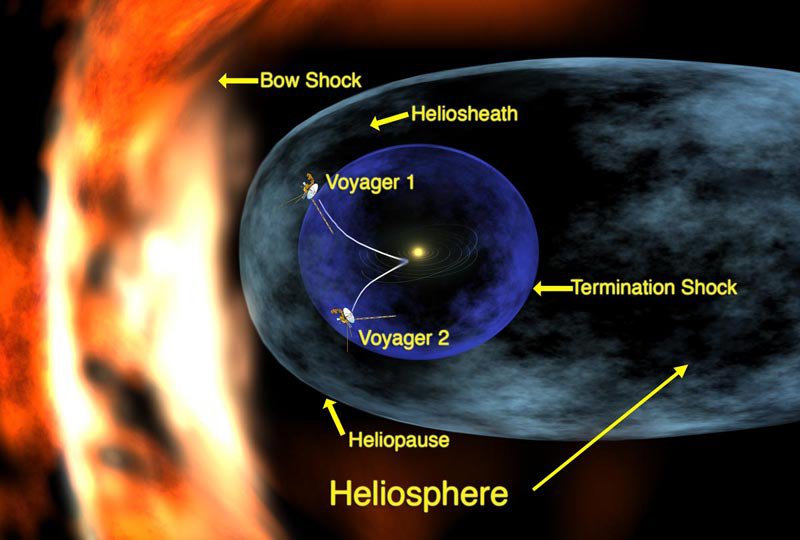
The heliosphere is the region of space dominated by the solar wind—the continuous stream of charged particles emitted by the Sun. Its outer boundary, the heliopause, is where the solar wind is deflected by the interstellar medium. Between the heliopause and the supersonic region of the solar wind lies the heliosheath, a turbulent transition region where the solar wind has slowed to subsonic speeds. The boundary where the solar wind first slows from supersonic to subsonic is called the termination shock.
Voyager 1 crossed the termination shock in December 2004, at a distance of about 94 astronomical units (AU) from the Sun. Voyager 2 crossed it in August 2007, at about 84 AU—a different distance, confirming that the heliosphere is not a symmetric sphere but an irregular, dynamic structure pushed and pulled by the pressure of the interstellar medium.
Voyager 1 officially entered interstellar space—crossed the heliopause—on August 25, 2012, as determined by a sudden change in the density of the plasma it was measuring. Voyager 2 crossed the heliopause in November 2018, providing the first opportunity to compare conditions at two locations on the heliospheric boundary simultaneously.
Several features of what the Voyagers found were unexpected and continue to generate active theoretical debate.
The Heliospheric Boundary: Shape and Structure
Pre-Voyager models generally depicted the heliosphere as a comet-shaped structure—an elongated bubble with a blunt "nose" pointing in the direction of the Sun's motion through the galaxy and a long tail (heliotail) trailing behind. This model seemed physically intuitive: the Sun moves through the local interstellar medium at about 26 kilometers per second, and the resulting ram pressure should push the heliosphere into an asymmetric shape.
Data from Voyager 1 and 2, combined with observations from the Interstellar Boundary Explorer (IBEX) satellite and, more recently, the IMAP mission (launched 2024), have challenged this picture substantially. IBEX, which images the heliospheric boundary indirectly by detecting energetic neutral atoms (ENAs) created when solar wind ions charge-exchange with interstellar neutral atoms, produced global maps of the heliosphere's boundary suggesting it might be far more spherical—or even shaped like a crescent—rather than comet-like. Multiple competing models now exist.
A particularly contentious issue involves the magnetic field orientation at the heliopause. Voyager 1 and 2 measured different magnetic field directions at the points where they crossed the heliopause, which is either evidence for a genuinely complex and irregular boundary or suggests that our models of how the interstellar magnetic field drapes around the heliosphere are substantially wrong. Several research groups have published competing interpretations of this discrepancy, and no consensus has been reached.
Cosmic Rays and the Galactic Environment
One of the most significant scientific contributions of the interstellar Voyager data has been the direct measurement of galactic cosmic rays in the local interstellar medium. Before Voyager's crossing of the heliopause, measurements of cosmic rays were always affected by modulation within the heliosphere—the heliosphere's magnetic field and solar wind partially deflect lower-energy cosmic rays, creating a "cosmic ray deficit" inside the heliosphere. Voyager 1, after crossing the heliopause, measured the unmodulated cosmic ray spectrum for the first time.
What it found was that the local interstellar medium cosmic ray spectrum differs measurably from what models based on indirect measurements had predicted, particularly at lower energies. This has implications for our understanding of how cosmic rays propagate through the galaxy, how they are accelerated in supernova remnants, and how they affect the chemistry and temperature of interstellar molecular clouds. It is also directly relevant to planning future crewed missions to deep space—cosmic radiation is one of the most significant biological hazards for astronauts on long-duration missions.
The Interstellar Medium at Closest Range
The Voyagers have now been in the Very Local Interstellar Medium (VLISM) for over a decade, and the picture they are painting is more complex than anticipated. The plasma density measured in the VLISM is slightly higher than pre-crossing models predicted. The temperature of the plasma is lower than predicted. The magnetic field orientation does not match what was inferred from remote sensing.
A particularly surprising finding from Voyager 1 in 2020 involved plasma oscillations—waves in the electron plasma that Voyager detected continuously for the first time at interstellar distances. Stella Koch Ocker, then a doctoral student at Cornell University, and her collaborators analyzed these oscillations and used them to measure the plasma density in the interstellar medium more continuously than had been possible before. Their 2021 paper in Nature Astronomy found a persistent, low-level "hum" in the interstellar plasma that enabled continuous density measurements, resolving the interstellar medium at a finer grain than previously possible. The density measurements suggest the local interstellar medium may be structured more finely—with more small-scale variation—than our models have assumed.
The Golden Record: Science, Message, and Controversy
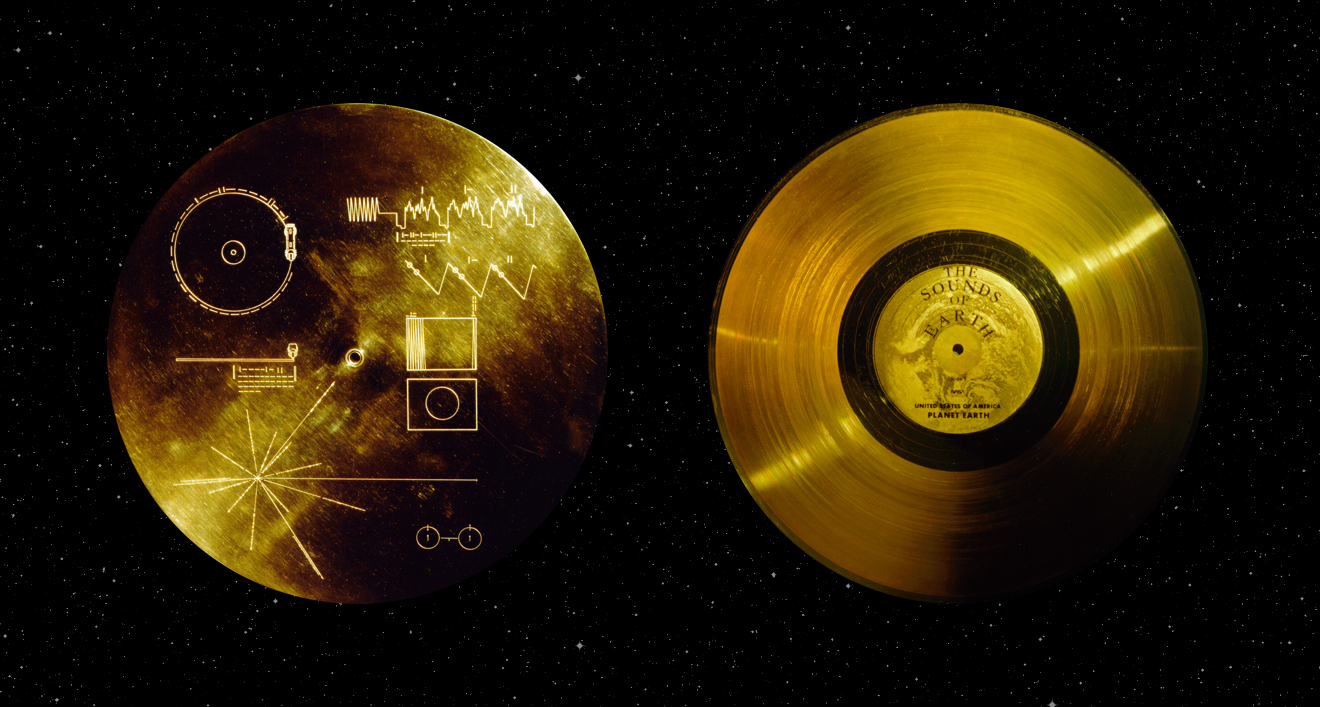
No element of the Voyager program has generated more philosophical commentary, more artistic response, or more genuine controversy than the Golden Record—the 12-inch gold-plated copper disk attached to the exterior of each spacecraft. Carl Sagan chaired the committee that assembled its contents, working with a team that included Frank Drake, Ann Druyan, Timothy Ferris, Jon Lomberg, and Linda Sagan.
The record contains 116 images encoded as analog video signals, greetings in 55 languages, natural sounds (surf, wind, thunder, birds, whales, laughter), and 90 minutes of music ranging from Beethoven and Bach to Chuck Berry, Blind Willie Johnson, Azerbaijani folk music, Peruvian panpipes, and a Pygmy girls' initiation song. Instructions for playback are encoded in the record's cover using diagrams based on the hyperfine transition of hydrogen—an effort to ground the instructions in universal physics rather than arbitrary convention.
The Science of Communication Across the Cosmos
The attempt to create a message intelligible to a hypothetical extraterrestrial intelligence raises genuinely difficult epistemological questions. Frank Drake, who designed the encoding scheme, made specific choices based on assumptions about what physical principles an advanced civilization would understand. The hydrogen hyperfine transition—at 1,420 MHz—was used as a universal unit of time and length, following the precedent Drake himself had established in thinking about SETI. The binary encoding of images used a specific format meant to be reconstructable from the binary data.
But critics, including the linguist and anthropologist David Hymes, pointed out that even the assumption that another intelligence would parse binary data in the same way humans do reflects culturally specific cognitive habits that cannot be assumed to be universal. More philosophically challenging: the record's contents were assembled in 1977 by a committee of Americans, and its selection of what constitutes representative "humanity" has been criticized as filtered through the cultural sensibilities of that committee. There is almost no representation of illness, poverty, war, or human violence—the Golden Record presents an idealized humanity. Sagan was aware of this tension and addressed it partially in his writing, but the selection process itself encodes values and assumptions that are far from universal.
Ann Druyan, who served as the record's creative director, has written movingly about a more personal dimension: the record includes her brain waves, recorded after she had fallen in love with Carl Sagan (the two eventually married). She described it as "a love letter to the cosmos." This intersection of scientific communication and personal emotion embedded in an artifact now traveling at 17 kilometers per second through interstellar space is one of the more remarkable facts of the 20th century.
The Question of Whether It Will Ever Be Found
The honest scientific answer to whether the Golden Record will ever be found and decoded is: almost certainly not. Voyager 1 is traveling in the direction of the constellation Ophiuchus and will make its closest approach to a star—the red dwarf Gliese 445, currently in the constellation Camelopardalis—in approximately 40,000 years, at which point it will be no closer than 1.7 light-years (roughly 16 trillion kilometers). Gliese 445 is known to have no planets, and even if it did, there is no reason to assume any intelligence would detect, retrieve, and decode a small metallic disk traveling through the system.
The Golden Record was never primarily a practical attempt at interstellar communication. It was, as Sagan himself acknowledged, a message about humanity to humanity—an attempt to see ourselves as others might see us, to curate what we would want our civilization to be remembered as, to perform the cognitive and ethical exercise of imagining an audience so different from ourselves that we would have to strip our assumptions down to physics. In this sense it is less a scientific instrument than a philosophical one, and its value has been entirely realized on Earth, in the billions of conversations it has prompted about what it means to be human.
The Pale Blue Dot and the Cultural Dimension of Deep Space Science
Carl Sagan's campaign to turn Voyager 1's cameras back toward the inner solar system for a final family portrait is worth examining in detail, both as a scientific decision and as an example of how science and culture interact at deep space distances.
By 1989, Voyager 1's cameras had been powered down—there was nothing scientifically interesting in interstellar space to photograph, and the power budget was needed for instruments. Sagan had been arguing since at least 1981 for a "family portrait" session, but there was legitimate scientific resistance: the camera operation required real resources (both power and communication bandwidth), and the value was explicitly humanistic rather than scientific. Several Voyager scientists argued against it on grounds that the resources could be better used. NASA eventually approved the portrait, and on February 14, 1990, Voyager 1 turned its camera back and took a mosaic of 60 images.
The Earth appears in one of them as a single bright pixel—the Pale Blue Dot. Sagan's meditation on it, first published in his 1994 book of the same name, has sold millions of copies and been read aloud at memorial services, played at the opening of scientific conferences, and cited in philosophical works on human humility and existential risk. It argues, essentially, that the image demonstrates the foolishness of human conflict and the importance of environmental stewardship, and the weight it carries is disproportionate to its scientific content.
This raises a genuine tension in science communication. The Pale Blue Dot image is not science—it is philosophy illustrated by a data point. Its power comes from the accumulated understanding of what those pixels represent: billions of years of Earth's history, every human life ever lived, compressed into a fraction of a pixel of reflected sunlight. That understanding is scientific, but the conclusion Sagan draws—that we should take better care of our planet and each other—is ethical. The image has done more to communicate the significance of the Voyager program to the general public than any scientific paper.
This is not a coincidence. Sagan was a theorist of science communication as well as a practicing scientist, and he understood that the emotional and humanistic dimensions of space exploration are not separate from its scientific significance—they are part of the reason we do science at all.
Open Questions and Active Controversies
The Shape of the Heliosphere
As noted above, whether the heliosphere is comet-shaped, spherical, or crescent-shaped is genuinely unresolved. The difference matters for understanding how the Sun's environment interacts with galactic cosmic rays—which in turn affects life on Earth's surface and the evolution of planetary atmospheres. It also matters for planning future missions. The IMAP mission (Interstellar Mapping and Acceleration Probe), launched in May 2024, is designed specifically to address this question with much higher sensitivity than IBEX, and its early data are eagerly awaited.
What Is the True Nature of the Heliosheath?
The heliosheath—the turbulent region between the termination shock and the heliopause—was found by both Voyagers to be far more complex and irregularly structured than theoretical models predicted. The magnetic field in the heliosheath is folded, tangled, and non-uniform in ways that existing magnetohydrodynamic models struggle to reproduce. Some researchers, including Eric Christian and colleagues at NASA Goddard, have proposed that the heliosheath may contain large-scale "magnetic bubbles" formed by the reconnection of oppositely directed magnetic field lines. This model, initially suggested by IBEX data and subsequently supported by Voyager magnetic field measurements, represents a fundamental revision of how we understand the solar wind's outer boundary—but it has not been universally accepted.
Anomalous Cosmic Rays and the Termination Shock
Before Voyager 1 crossed the termination shock, there was theoretical consensus that the shock was the primary acceleration site for "anomalous cosmic rays"—particles that are accelerated to intermediate energies and form a distinct population between normal cosmic rays and solar energetic particles. When Voyager 1 crossed the shock in 2004, the expected spike in anomalous cosmic ray flux did not appear at the crossing; instead, the flux continued to increase beyond the shock, suggesting the acceleration site was elsewhere—possibly at the flanks or nose of the heliopause. This remains an unresolved problem in heliophysics, with competing models invoking different geometries of the termination shock and different mechanisms for particle acceleration.
The Fate of Voyager Data
Both spacecraft will eventually exhaust their power supplies and go silent. Current projections suggest Voyager 1 will have insufficient power to operate any scientific instrument by approximately 2025–2026, and Voyager 2 shortly after. At that point, the data transmission will cease, and the spacecraft will become silent, anonymous objects traveling through interstellar space indefinitely. The scientific community is actively working to extract as much data as possible before this happens—including analyses of archival Voyager data that were never fully processed due to computational limitations available at the time.
There is a poignant irony here: the instruments generating the most irreplaceable data—sensors positioned in a region of space no human instrument has ever occupied—will soon go dark, potentially before we fully understand what they have been measuring. The case for a follow-on mission to the interstellar medium has been made repeatedly in planetary science decadal surveys. The 2023–2032 Planetary Science and Astrobiology Decadal Survey from the National Academies endorsed an interstellar probe as a priority large mission, proposing a spacecraft that could reach 1,000 AU (compared to Voyager 1's current ~165 AU) within 50 years using a solar gravity assist and advanced propulsion.
Cross-Domain Connections and Broader Implications
Astrobiology and the Search for Life
The discoveries made during the planetary flyby phase of the Voyager mission—volcanism on Io, the hinting of a liquid water ocean on Europa, the complex organic chemistry of Titan's atmosphere, geysers on Triton—collectively transformed astrobiology from a largely theoretical field into one with specific, identified targets in our own solar system. Each of these worlds represents a potential habitable environment by criteria that are difficult to explain away. The current landscape of astrobiology missions—Cassini's confirmed detection of plumes from Enceladus, the proposed Europa Clipper mission, the Dragonfly rotorcraft mission to Titan—flows directly from Voyager's initial reconnaissance.
Cosmic Ray Biology
The Voyager measurements of unmodulated galactic cosmic ray spectra in interstellar space have direct implications for human space exploration. NASA's Human Research Program and independent researchers including Cary Zeitlin (Southwest Research Institute) have used Voyager data as part of the input for models of radiation exposure on interplanetary journeys. The measurements confirm that the radiation environment outside the heliosphere is significantly more intense than within it, posing biological challenges for any crewed mission to deep space.
Philosophy of Science: What Constitutes a Discovery?
The Voyager program raises interesting questions about the philosophy of scientific discovery. Many of its findings—Io's volcanism, Neptune's rings, Miranda's bizarre geology—were not predicted and could not have been predicted from existing theory. They were genuinely surprising. In philosophy of science terms, these are "no-miracles" moments: the predictions made on the basis of existing theory were wrong, and the discoveries required revision of those theories. The Voyager missions were, in this sense, hypothesis-generating rather than hypothesis-testing exercises—which is to say, they were doing some of the most fundamental kind of science, the kind that changes the questions we ask rather than just answering them.
This creates interesting tensions with the hypothesis-driven model of science that dominates research funding culture. Exploratory missions that return genuinely surprising results are, by definition, doing work that could not have been fully anticipated in a grant proposal. The case for Voyager-style exploration science is partly a case against the reduction of all science to confirmatory hypothesis testing.
Computing Heritage
The Voyager spacecraft are, paradoxically, both primitive and irreplaceable as computing artifacts. Their assembly language software, running on 1970s hardware, has been kept alive—debugged, patched, and maintained—across a period of technological change that makes the underlying hardware essentially archaeological. Engineers at JPL who work on Voyager today must become fluent in computing paradigms that are decades removed from modern practice. This situation has prompted serious discussion within NASA about "software archaeology"—the systematic preservation of legacy code and the documentation of institutional knowledge that cannot be reconstituted if it is lost.
The Human Dimension: Who Made Voyager?
The Voyager program was the work of thousands of people across decades, but certain figures stand out as exemplary of the program's character.
Edward Stone, the program's project scientist from 1972 until 2022—fifty years—is arguably the longest-serving project scientist in NASA history. Stone's leadership style emphasized scientific openness and collaboration: unlike some large projects where the principal investigator guards their data closely, Stone fostered an environment in which Voyager data was shared and discussed broadly among the international scientific community. His longevity meant that he served as an institutional memory for the program, bridging its origins and its current frontier.
Charley Kohlhase served as mission design manager and was responsible for the trajectory decisions that kept Uranus and Neptune options open for Voyager 2. His insistence on maintaining mission flexibility against budget pressure is one of the unsung engineering decisions of the space age—without it, humanity would have no close-up data on the ice giants.
The team that executed the 2024 repair of Voyager 1 includes engineers who were not yet born when the spacecraft was launched, working from documentation and institutional memory assembled over half a century. Suzanne Dodd, the project manager at JPL, has led the Voyager program since 2010 and has described managing the aging spacecraft as "like tending to a very old, very important patient"—with the awareness that each intervention carries the risk of permanent damage but inaction guarantees slow decline.
The Next Voyager: What Comes After
The scientific community's appetite for interstellar medium science—sharpened rather than satisfied by Voyager's findings—has produced serious discussion of a dedicated Interstellar Probe mission. The proposal, championed by Ralph McNutt of the Johns Hopkins Applied Physics Laboratory and elaborated in the 2023 decadal survey, envisions a spacecraft that would reach 1,000 AU within 50 years. To accomplish this, it would need to be launched on a solar gravity assist trajectory—passing close to the Sun to gain speed from the Sun's gravity well—reaching velocities of roughly 6–7 AU per year, compared to Voyager 1's current 3.6 AU per year.
Such a mission would carry instrumentation orders of magnitude more capable than Voyager's, would be designed to return substantially higher data rates, and would be purpose-built for interstellar medium science rather than planetary flybys. It would answer the shape-of-the-heliosphere question definitively, measure cosmic ray spectra continuously through the heliosheath and beyond, characterize the structure of the VLISM at finer resolution, and potentially detect the boundary of the Local Interstellar Cloud—the diffuse cloud of gas and dust within which the Sun currently moves. The Sun is expected to exit the Local Interstellar Cloud within the next 10,000 to 20,000 years, and the change in the heliosphere's structure that will result could affect cosmic ray fluxes reaching Earth.
Whether a dedicated Interstellar Probe will be funded—and what it would cost—remains unclear. The decadal survey classified it as a "large strategic mission" with cost estimates ranging from $1.5 billion to $3 billion. In the current NASA budget environment, that is a significant competition. But the scientific case is compelling, and the advocates are persistent.
Conclusion: The Ongoing Conversation
The Voyager spacecraft are now so far away that the signals they transmit, traveling at the speed of light, take over 22 hours to reach Earth. They are moving through a region of space that no human instrument has ever examined before and that no other instrument is likely to examine for decades. They are doing so on computers that predate the personal computer revolution, powered by the slow decay of radioactive material, guided by the accumulated institutional knowledge of a program now in its sixth decade.
There is something almost medieval about this—the way Voyager's survival depends not on new technology but on the preservation and transmission of old knowledge, the way its findings accumulate slowly and require sustained interpretation across generations of scientists. In an era of rapid technological obsolescence, the Voyager program stands as an argument for the value of deep time commitments in science.
The story of Voyager is not finished. Both spacecraft are still transmitting, still returning data from a frontier we do not fully understand. The theoretical models built to explain their findings are still being contested and revised. The data archived in NASA's databases—some of which has never been fully analyzed—still holds surprises. The people who will eventually launch a successor mission are likely already working in planetary science or engineering.
And somewhere, at this moment, two machines built by human hands in the 1970s are hurtling silently through the space between stars, carrying with them the sounds of surf, the music of Bach and Chuck Berry, the greetings of 55 languages, and a single frame in which the Earth appears as a pale blue dot—a message from one moment in one species' brief existence, aimed at an audience that may never exist, bearing witness to the fact that once, on this world, there were creatures curious enough to try.
References and Further Reading
- Flandro, G. A. (1966). "Fast Reconnaissance Missions to the Outer Solar System Utilizing Energy Derived from the Gravitational Field of Jupiter." Acta Astronautica, 12(4), 329–337.
- Stone, E. C. et al. (2013). "Voyager 1 Observes Low-Energy Galactic Cosmic Rays in a Region Depleted of Heliospheric Ions." Science, 341(6142), 150–153.
- Ocker, S. K. et al. (2021). "Persistent plasma waves in interstellar space detected by Voyager 1." Nature Astronomy, 5, 761–765.
- Sagan, C. (1994). Pale Blue Dot: A Vision of the Human Future in Space. Random House.
- National Academies of Sciences, Engineering, and Medicine. (2022). Origins, Worlds, and Life: A Decadal Strategy for Planetary Science and Astrobiology 2023–2032.
- McNutt, R. L. et al. (2019). "Interstellar Probe—Humanity's First Explicit Step in to the Galaxy." Acta Astronautica, 162, 284–299.
- Gurnett, D. A. et al. (2013). "In Situ Observations of Interstellar Plasma with Voyager 1." Science, 341(6153), 1489–1492.
- Druyan, A. (2019). Cosmos: Possible Worlds. National Geographic.
- Kohlhase, C. (Ed.) (1989). The Voyager Neptune Travel Guide. JPL Publication 89-24.
- Ness, N. F. et al. (1986). "Magnetic Fields at Uranus." Science, 233(4759), 85–89.