What Led to the Iran War? A Timeline From 2002 to Today
In brief
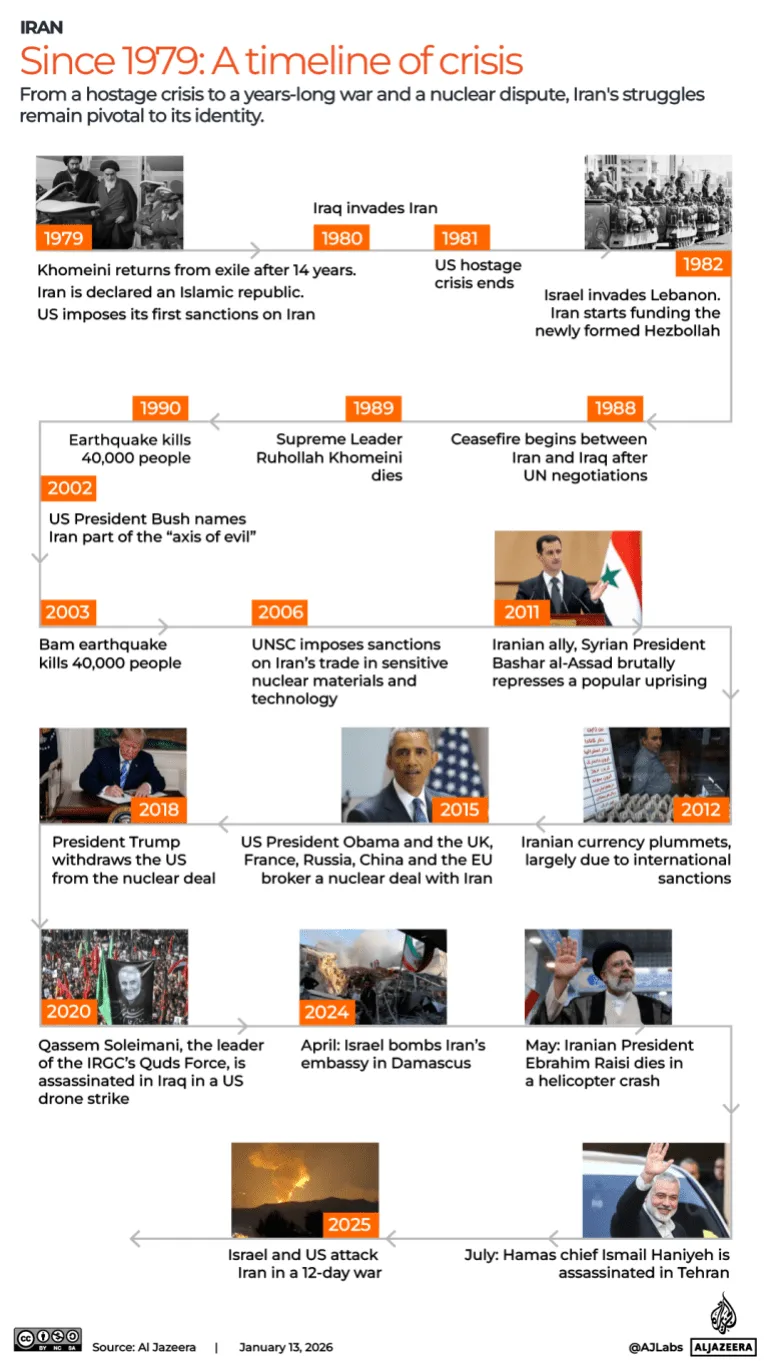
The war that began on February 28, 2026, did not come out of nowhere. It followed 24 years of a nuclear program the world knew about, under five presidents and both parties. Each one tried something different: sanctions, sabotage, a deal, walking away from the deal, pressure, talks, and finally open war.
This timeline traces that path, administration by administration. It shows where Iran's enrichment stood at each point, what each president did, and the main arguments for and against each approach.
The short version: Iran went from secretly building an enrichment plant in 2002 to holding about 400 kilograms of uranium enriched to 60% by 2025, close to the 90% used in a weapon. Diplomacy capped the program for a few years and then fell apart. Covert action slowed it down. Open military strikes in 2025 and 2026 destroyed most of its known sites, but the 60% stockpile was never accounted for.
At a glance
| Period | President | Iran's top enrichment level | The main U.S. approach |
|---|---|---|---|
| 2002–2009 | George W. Bush | Secret program revealed. About 3.5% by 2006 | U.N. sanctions; covert cyber program begins |
| 2009–2017 | Barack Obama | 20% from 2010; capped at 3.67% after 2016 | Sanctions, the Stuxnet cyberattack, then the 2015 nuclear deal |
| 2017–2021 | Donald Trump (first term) | Back above the deal's limits by 2019 | Left the deal, "maximum pressure," killed Soleimani |
| 2021–2025 | Joe Biden | 60% from April 2021 | Diplomacy; strikes on Iran's proxies, not Iran |
| 2025–today | Donald Trump (second term) | About 400 kg at 60% before the strikes | Talks, then strikes in June 2025 and a war from February 2026 |
2002–2009: The secret comes out (Bush)
- August 2002: An Iranian opposition group, the National Council of Resistance of Iran, the political arm of the Mujahideen-e Khalq, held a press conference revealing two secret sites: an enrichment plant at Natanz and a heavy-water plant at Arak. This is the moment Iran's enrichment program became public knowledge.
- October 21, 2003: Under pressure from the International Atomic Energy Agency (IAEA), Iran agreed to suspend enrichment.
- April 11, 2006: Iran announced it had enriched uranium to about 3.5% at Natanz, its first enriched uranium.
- 2006–2008: The U.N. Security Council passed four resolutions demanding Iran stop enriching, most of them with sanctions attached.
- 2006: According to later reporting by the New York Times, the Bush administration started a secret U.S.-Israeli cyber program against Iran's nuclear sites, code-named "Olympic Games."
The IAEA later concluded, in reports in 2011 and 2015, that Iran had run an organized nuclear weapons program before 2003, with some activities possibly continuing after.
2009–2017: Sabotage, then a deal (Obama)
- September 25, 2009: President Obama, with the leaders of Britain and France, revealed a second secret enrichment site built inside a mountain at Fordow. Iran acknowledged it only after the U.S. found it.
- February 9, 2010: Iran began enriching to 20%.
- June 9, 2010: The U.N. passed a fifth sanctions resolution, the toughest yet.
- 2009–2010: Obama sped up the covert cyberattacks, according to David Sanger's 2012 New York Times report. The best-known weapon, the Stuxnet worm, was built to sabotage the enrichment plant at Natanz. It escaped Natanz in 2010 and spread worldwide. The U.S. has never officially confirmed its role.
- November 24, 2013: An interim deal, the Joint Plan of Action, froze parts of the program while talks went on.
- July 14, 2015: The Joint Comprehensive Plan of Action (JCPOA) was announced. Iran agreed to cap enrichment at 3.67% and keep no more than 300 kilograms of low-enriched uranium, in exchange for sanctions relief. It took effect on January 16, 2016.
The debate over the deal: Supporters say it capped enrichment far below weapons grade and put inspectors in place, and that Iran stuck to the limits while the deal held. Critics say its limits had expiration dates, it left Iran's missile program alone, and the sanctions relief gave Iran money to fund its proxies across the region.
2017–2021: Out of the deal, maximum pressure (Trump, first term)
- May 8, 2018: President Trump withdrew from the JCPOA and brought back U.S. sanctions.
- July 1–8, 2019: Iran announced it had gone over the deal's 300 kg stockpile limit, then began enriching to about 4.5%, above the 3.67% cap.
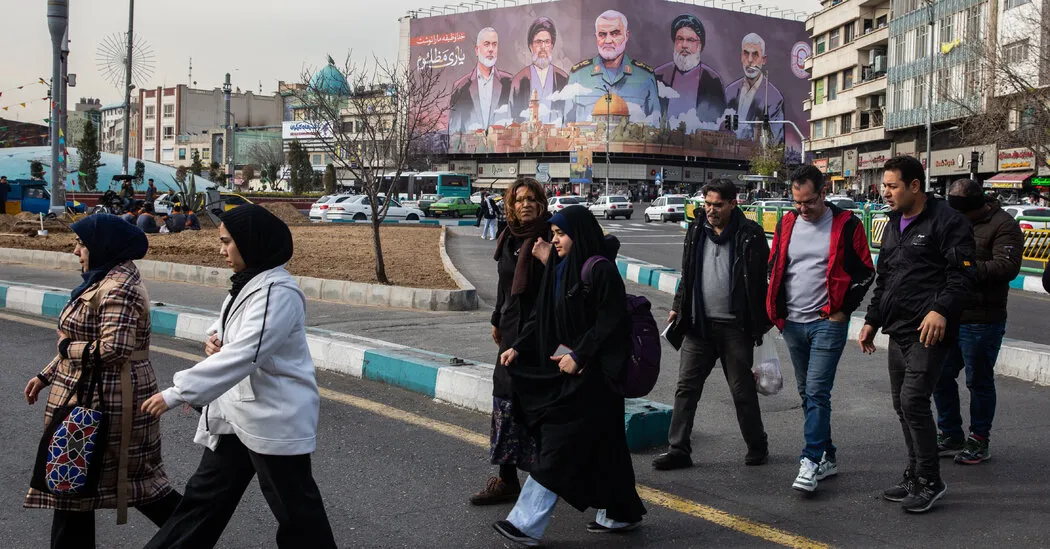
- January 3, 2020: A U.S. strike killed Qassem Soleimani, the commander of Iran's Quds Force.
- January 8, 2020: Iran fired about 22 ballistic missiles at U.S. forces at Ain al-Asad air base and in Erbil, Iraq. About 110 U.S. personnel were later diagnosed with traumatic brain injuries.
- November 2020: Iranian nuclear scientist Mohsen Fakhrizadeh was killed. No country has publicly claimed it.
The debate: Supporters say the deal was too weak to keep, and that sanctions and the Soleimani strike showed Iran there were real costs. Critics say leaving the deal freed Iran from its limits, and that the program grew fastest after 2018.
2021–2025: Diplomacy and a shadow war (Biden)
- February 23, 2021: Iran stopped carrying out its nuclear commitments under the JCPOA, according to the IAEA.
- April 2021: After sabotage knocked out power at Natanz, which Iran blamed on Israel, Iran began enriching to 60%.
- January 28, 2024: A drone attack by Iran-backed militias on Tower 22, a U.S. outpost in Jordan, killed three U.S. soldiers and wounded dozens. On February 2, the U.S. struck Revolutionary Guard and militia targets in Iraq and Syria.
- April 13–14, 2024: After an Israeli strike on Iran's consulate in Damascus, Iran launched its first direct attack on Israel, about 300 drones and missiles.
- October 1, 2024: Iran fired about 200 ballistic missiles at Israel.
- October 26, 2024: Israel struck Iranian missile factories and air defenses, its largest attack on Iran since the Iran-Iraq War.
The debate: Supporters say Biden avoided a wider war while helping defend Israel and hitting back at Iran's proxies. Critics say he let Iran reach 60% without serious consequences, and that his response to attacks on U.S. troops never reached Iran itself.
2025–2026: From strikes to war (Trump, second term)
- Spring 2025: The U.S. and Iran held five rounds of nuclear talks with no deal.
- May 2025: According to an IAEA summary, Iran had more than 14,500 advanced centrifuges installed at Natanz and Fordow and about 400 kg of uranium enriched to 60%.
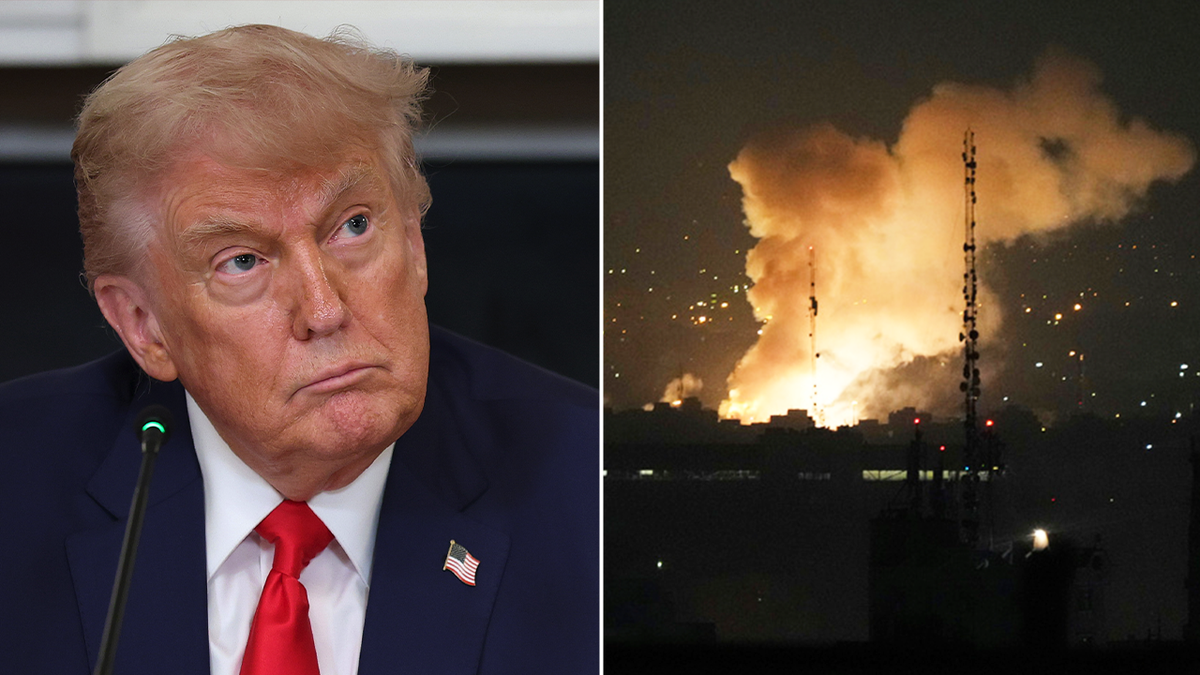
- June 13, 2025: Israel struck Iran's nuclear sites, military leaders and missile bases, starting what Trump called the "12 day war."
- June 22, 2025: In Operation Midnight Hammer, seven U.S. B-2 bombers dropped 14 bunker-busting bombs on Fordow, Natanz and Isfahan. Iran fired missiles at a U.S. base in Qatar in response.
- June 24, 2025: A ceasefire took hold. Iranian state media reported at least 935 dead in Iran. Israeli authorities reported 28 dead in Israel. The fate of the 60% stockpile was never confirmed, because Iran kept inspectors out.
- July 2025: Iran suspended its cooperation with the IAEA.
- August 28 to late September 2025: Britain, France and Germany triggered "snapback," and U.N. sanctions on Iran came back into force. Russia and China disputed the move's legality.
- Late December 2025 to January 2026: Protests broke out across Iran over a collapsing currency and inflation above 40%. The government cracked down hard. One human-rights group confirmed 734 deaths by mid-January, and activists reported thousands more. Trump warned Iran's leaders they would "pay hell" for killing protesters.
- January–February 2026: Three rounds of new talks failed. The biggest dispute was enrichment: Iran offered to dilute its stockpile at home, and the U.S. demanded it be shipped out of the country. On February 27, Trump said: "I say no enrichment. Not 20 percent, 30 percent."
- February 28, 2026: The U.S. and Israel launched coordinated strikes, called Operation Epic Fury, that killed Supreme Leader Ali Khamenei. Iran closed the Strait of Hormuz.
The war since: A ceasefire came on April 8. Talks led by Vice President JD Vance in Islamabad failed on April 12, and the U.S. blockaded Iran's ports. A 14-point agreement signed on June 17 briefly reopened the strait, but it collapsed on July 8 after reported Iranian attacks on ships. The fighting and the blockade resumed. On November 2–3, U.S. forces struck radar and missile sites on Qeshm Island.
Why February 2026?
The administration's case: Trump said Iran "rejected every opportunity to renounce their nuclear ambitions" across three rounds of talks. He listed his goals as stopping Iran from getting a nuclear weapon, destroying its missile arsenal, weakening its proxy network and sinking its navy. The killing of protesters and Israeli pressure to act were also part of the build-up. Israel said the aim was to "remove the existential threat" posed by Iran's government.
The critics' case: Analysts at CSIS noted that Iran had made no major effort to rebuild its bombed sites since June 2025, and that few high-value nuclear targets were left. The Atlantic Council found no immediate Iranian threat that set off the operation, and some of its experts argued the strikes broke international law.
What both sides agree on: Nobody outside Iran knows where the roughly 400 kg of 60% uranium is. That unanswered question drove the pressure for strikes and is still the biggest risk now.
What the timeline shows
- Every approach bought time, and none of them ended the program. Sanctions, sabotage, a deal, pressure and bombing each slowed Iran down. Iran's enrichment level still went up in almost every administration.
- The red line stayed the same while the tools escalated. Every president said Iran could not have a bomb. Over 24 years, the methods moved from inspections to cyberattacks to airstrikes to war.
- The same events support both readings. People who favor diplomacy point to the years the JCPOA held. People who favor force point to how fast Iran advanced once the deal collapsed, and to how much the 2025 strikes destroyed.
Sources
- Timeline of nuclear diplomacy with Iran (Arms Control Association)
- How concerns grew over Iran's nuclear programme (The National, June 17, 2025)
- Obama ordered cyberattacks on Iran, says New York Times (PRI, June 1, 2012)
- NYT: US and Israel did Stuxnet (The Register, June 1, 2012)
- Iran to defy uranium enrichment limits of 2015 nuclear deal after attack (CNBC, April 13, 2021)
- Iran begins enriching uranium to 60% (World Nuclear News, April 2021)
- Iran missiles target US troops: what we know (The Week, January 2020)
- Operation Martyr Soleimani (Wikipedia)
- Three US troops killed, 25 injured in drone attack on base in Jordan (Military Times, January 28, 2024)
- US starts retaliatory strikes in Iraq and Syria (Reuters via Inquirer, February 2024)
- October 2024 Iranian strikes on Israel (Wikipedia)
- October 2024 Israeli strikes on Iran (Wikipedia)
- Iran launches unprecedented retaliatory drone and missile strikes on Israel (Africanews, April 14, 2024)
- What Operation Midnight Hammer means for the future of Iran's nuclear ambitions (CSIS)
- Twelve-Day War (Wikipedia)
- Over 900 killed in Iran during 12-day war with Israel: state media (AFP via Free Malaysia Today, June 30, 2025)
- UN atomic watchdog chief says Iran's enriched uranium still under rubble (Washington Times, October 23, 2025)
- Iran's nuclear program and 2025 UN sanctions reimposition (Congressional Research Service)
- UN Security Council rejects bid to continue Iran sanctions relief (UN News, September 2025)
- Security Council debates Iran nuclear programme amid dispute over snapback (UN, 2026)
- Death toll from crackdown on protests in Iran jumps to over 2,500, activists say (AP via Michigan Public, January 14, 2026)
- Trump again threatens Iran with "hell" if it kills protesters (Times of Israel, January 2026)
- Operation Epic Fury: an analysis of events leading up to the US-Israel strikes on Iran (Silobreaker, 2026)
- Operation Epic Fury and the remnants of Iran's nuclear program (CSIS, February 28, 2026)
- Experts react: The US and Israel just unleashed a major attack on Iran (Atlantic Council, February 2026)
- Why are the U.S. and Israel attacking Iran? (NPR, February 28, 2026)
- 2026 Strait of Hormuz campaign (Wikipedia)
- U.S. launches limited strikes on Iranian targets in Strait of Hormuz (CBS News, November 2026)
Limits: This is based on web research on November 4, 2026. Several pages couldn't be opened directly, so some details come from search summaries of those articles. Death tolls in Iran are disputed and can't be independently verified. Covert operations like Stuxnet and the Fakhrizadeh killing have never been officially claimed.